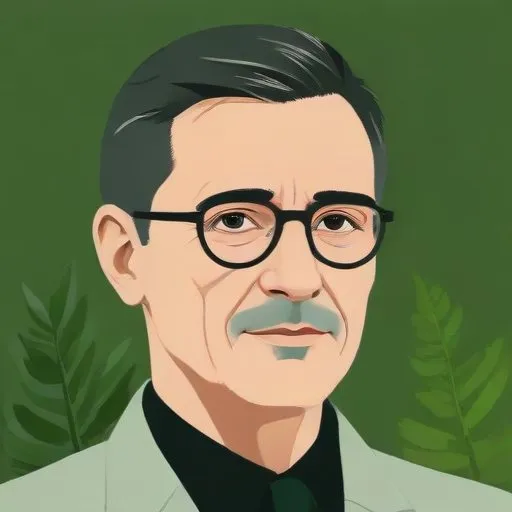
Jac. P. Thijsse: The Visionary Conservationist Behind the Netherlands' First Wildlife Garden
A Pioneer in Nature Conservation
Jac. P. Thijsse is renowned for founding the Society for Preservation of Nature Monuments in the Netherlands, an endeavor that cemented his position as a trailblazer in conservation efforts. His tireless work in the field of botany and conservation led to the creation of Thijsses Hof, the Netherlands' first wildlife garden, a testament to his dedication to preserving the natural beauty of his homeland.
Early Life and Career
Born on July 25, 1865, in Mijdrecht, Netherlands, Thijsse's fascination with the natural world began at a young age. He pursued his passion for botany, earning a degree in the field and eventually becoming a respected botanist. His commitment to conservation led him to establish the Society for Preservation of Nature Monuments, which aimed to protect and preserve the Netherlands' natural heritage.
Thijsses Hof: A Gift to the Nation
In 1925, on the occasion of his 60th birthday, Thijsse's friends honored him with the gift of Thijsses Hof, a wildlife garden in Bloemendaal near Haarlem. This pioneering project was the first of its kind in the Netherlands and one of the oldest worldwide, setting a precedent for conservation efforts. The garden served as a sanctuary for native flora and fauna, showcasing Thijsse's vision for preserving the natural balance.
Contributions to Science and Education
Thijsse's work extended beyond conservation to include scientific contributions and educational endeavors. In the late 1920s and 1930s, he collaborated with the Verkade company to create a series of collector albums on the flora of the Netherlands. These albums, featuring picture cards, were hugely popular among the Dutch population before World War II. Thijsse's work not only advanced scientific understanding but also made complex information accessible to the general public.
Awards and Recognition
Thijsse's impact on Dutch society was acknowledged in 2004, when he was ranked 87th on De Grootste Nederlander (The Greatest Dutchman) list, a testament to his enduring legacy.
Legacy and Impact
Today, Jac. P. Thijsse's work continues to inspire generations of conservationists and scientists. The Jac. P. Thijssepark in Amstelveen, another wildlife garden, was named in his honor, ensuring his contributions to nature conservation remain at the forefront of public consciousness. Thijsse's pioneering spirit and dedication to preserving the natural world have left an indelible mark on the Netherlands, solidifying his position as a true champion of conservation.
Personal Milestones and Key Life Events
- 1865: Born on July 25th in Mijdrecht, Netherlands
- 1925: Founded Thijsses Hof, the Netherlands' first wildlife garden
- 1920s-1930s: Collaborated with Verkade company on flora collector albums
- 1945: Passed away on January 8th
Trivia and Fun Facts
- Thijsse's work on the flora collector albums was so popular that it became a cultural phenomenon in the Netherlands
- He was known for his infectious enthusiasm and ability to inspire others to take action in conservation efforts
Historical Context and Legacy
Jac. P. Thijsse's contributions to conservation and botany have had a lasting impact on the Netherlands. His pioneering work in establishing wildlife gardens and promoting conservation efforts has inspired generations of scientists, conservationists, and citizens alike. Thijsse's legacy serves as a reminder of the importance of preserving the natural world for future generations.
FAQ
What was Jac. P. Thijsses role in the development of botany?
Jac. P. Thijsse played a significant role in the development of botany, making important contributions to our understanding of plant classification and evolution. He was a pioneer in the field of plant ecology and conservation.
How did Jac. P. Thijsses work on plant ecology influence conservation efforts?
Jac. P. Thijsses work on plant ecology influenced conservation efforts by highlighting the importance of preserving natural habitats and ecosystems. He was a strong advocate for the protection of endangered species and the preservation of natural areas.
What were Jac. P. Thijsses contributions to the field of mycology?
Jac. P. Thijsse made significant contributions to the field of mycology, studying the classification and evolution of fungi. His work in this field helped to shed light on the importance of fungi in ecosystems and their role in decomposition and nutrient cycling.
How did Jac. P. Thijsses work on plant classification impact our understanding of plant evolution?
Jac. P. Thijsses work on plant classification impacted our understanding of plant evolution by providing a framework for understanding the relationships between different plant species. His work helped to shed light on the patterns and processes of plant evolution and the diversity of plant life on Earth.
What legacy did Jac. P. Thijsse leave behind?
Jac. P. Thijsse left behind a legacy as a pioneering botanist and conservationist who helped to shape our understanding of plant ecology and evolution. His work continues to influence botanical research and conservation efforts today.