


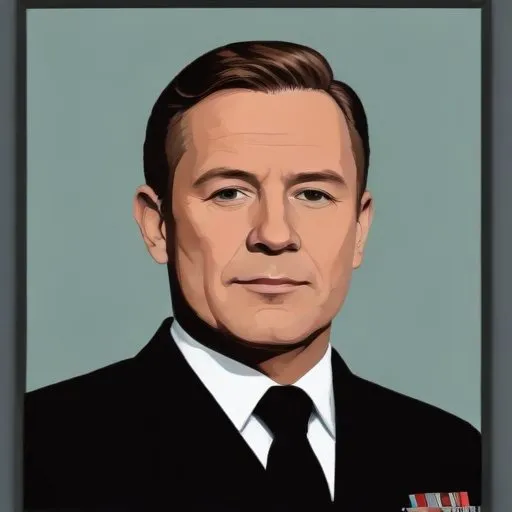
A lawyer and politician who served as the 28th Prime Minister of New Zealand, leading the country's government from 1972 to 1972. He's known for his brief but significant tenure during a time of great social change.
Sir John Ross Marshall, fondly known as "Gentleman Jack," was a New Zealand politician who served as the 28th Prime Minister of New Zealand from February to December 1972. As a member of the National Party, Marshall was a seasoned politician who spent 12 years as the Deputy Prime Minister before taking the helm.
Marshall was born on March 5, 1912, in Wellington, New Zealand. He grew up in Wellington, Whangarei, and Dunedin, attending Whangarei Boys High School and Otago Boys High School. Marshall was an exceptional sportsman, particularly in rugby.
He pursued higher education at Victoria University College, where he earned an LL.B. in 1934 and an LL.M. in 1935. During his studies, Marshall worked part-time in a law office and was actively involved with the Presbyterian Church, serving as the president of the New Zealand Bible Society.
In 1941, Marshall joined the New Zealand Military Forces during World War II and received officer training. He was posted to the 36th Battalion and served in Fiji and Norfolk Island.
After the war, Marshall entered politics in 1946, becoming a member of the National Party. He was first promoted to Cabinet in 1951 and served as the Deputy Prime Minister for 12 years.
In February 1972, Marshall became the Prime Minister of New Zealand, succeeding Keith Holyoake. However, his tenure was short-lived, as the National Party lost the general election in December 1972.
Marshall's leadership style was characterized by his politeness, courtesy, and preference for a calmer, less confrontational approach. He was a strong believer in pragmatism and disliked populism in politics.
After losing the election, Marshall became the Leader of the Opposition. However, he faced a leadership challenge from Robert Muldoon in July 1974 and ultimately stepped down as the leader of the National Party.
Marshall's legacy is marked by his commitment to public service and his dedication to the people of New Zealand. He remained a respected figure in politics until his death on August 30, 1988.
Marshall's life was marked by his dedication to public service, his commitment to his values, and his legacy as a respected leader in New Zealand politics.
Born in 1904
A farmer-turned-politician who served as Prime Minister of New Zealand, known for his leadership during a period of significant economic and social change. He's remembered for his pragmatic and consensus-driven approach to governance.
74 Years Old
A renowned cancer researcher and professor who made significant contributions to the understanding and treatment of cancer, particularly in the field of p53 tumor suppressor gene.
91 Years Old
The 35th Prime Minister of New Zealand, serving from 1990 to 1997, known for leading the country through significant economic reforms and free trade agreements. He's also recognized for his role in shaping New Zealand's modern economy.
77 Years Old
Leader of the New Zealand Labour Party, serving as Prime Minister from 1990 to 1991, known for his strong union background and advocacy for workers' rights.
74 Years Old
The first female Prime Minister of New Zealand, serving from 1997 to 1999, known for her conservative economic policies and reform efforts. She played a significant role in shaping the country's social and economic landscape.
76 Years Old
The first female Prime Minister of New Zealand, serving three consecutive terms from 1999 to 2008, known for her progressive policies and commitment to social justice.
82 Years Old
A German-Canadian singer-songwriter, guitarist, and producer, known for his eclectic style blending rock, folk, and blues, and as the frontman of the rock band Steppenwolf. He's famous for hits like "Born to Be Wild" and "Magic Carpet Ride".
64 Years Old
A farmer-turned-politician who served as the Prime Minister of New Zealand from 2016 to 2017, known for his efforts to reduce poverty and improve the country's economy.
