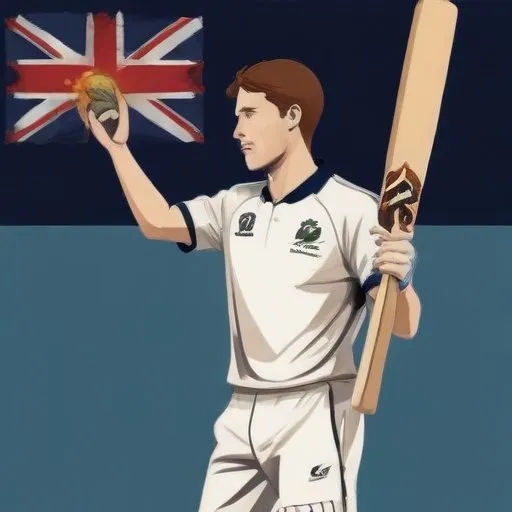
Jack Ryder: The Cricketing Icon of Australia
Early Life and Cricketing Career
Jack Ryder, born on August 8, 1889, in the inner-city Melbourne suburb of Collingwood, is remembered as one of the most celebrated cricketers of his time. Known as the "King of Collingwood" for his long association with the local cricket team, Ryder's impressive career spanned over three decades.
Rising to Prominence
Ryder's cricketing prowess was evident from an early age. He made his debut for Victoria in 1912 and went on to play for Australia in four series against England and one against South Africa. His aggressive batting style and strong medium-pace bowling earned him a reputation as a formidable all-rounder.
Career Highlights and Major Works
Ryder's cricketing career was marked by several notable achievements. In the 1921-1922 series against South Africa, he averaged over 100, showcasing his exceptional batting skills. His best performance came in 1924-1925, when he scored an unbeaten 201 against England at Adelaide, featuring century partnerships with Tommy Andrews and
Bert Oldfield.
- In 1926-1927, Ryder scored his highest first-class score of 295 in four hours for Victoria against New South Wales, contributing to a world record team total of 1,107.
- He claimed 150 wickets for Victoria and 805 in all grades, establishing himself as a skilled bowler.
- Ryder's exceptional fielding skills earned him the distinction of catching five English batsmen in a single Test innings.
Selector and Legacy
Ryder's involvement in cricket extended beyond his playing career. He served as a selector for the Australian team for 23 years, working alongside Sir Donald Bradman and Chappie Dwyer. During this period, he played a significant role in shaping the future of Australian cricket.
Statistics and Records
Ryder's impressive statistical record includes:
- 612 wickets and 12,677 runs in 338 district matches.
- Holding the record for games played and runs scored in Melbourne District Cricket for over 50 years.
- Being the only Test cricketer to be run out in both innings of his debut Test match.
Personal Milestones and Key Life Events
Ryder's life was marked by several significant events, including his appointment as a selector for the Australian team in 1946 and his eventual passing on April 3, 1977.
Influence on Modern Society and Cricket
Jack Ryder's legacy continues to inspire Australian cricket. His exceptional cricketing skills, combined with his dedication to the sport as a selector, have left an indelible mark on the game. Ryder's remarkable career serves as a testament to his perseverance, skill, and passion for cricket.
Final Thoughts
Jack Ryder's remarkable cricketing career, spanning multiple decades, has cemented his place as one of the most celebrated cricketers of his time. His impressive statistical record, combined with his significant contributions as a selector, have solidified his legacy in Australian cricket.
FAQ
What was Jack Ryders cricketing career like?
Jack Ryder was an Australian cricketer who played for Victoria and Australia between 1924 and 1932. He was a left-handed batsman and left-arm medium-pace bowler, known for his aggressive playing style.
What are Jack Ryders most notable cricketing achievements?
Jack Ryder scored over 4,000 runs in first-class cricket, with a highest score of 295 not out. He also took 141 wickets at an average of 25.62, making him a valuable all-rounder for his teams.
How did Jack Ryder contribute to Australian cricket?
Jack Ryders performances helped establish Victoria as a dominant force in Australian cricket during the 1920s and 1930s. His aggressive style of play also influenced future generations of Australian cricketers.
What was Jack Ryders role in the Australian cricket team?
Jack Ryder played 20 Tests for Australia, scoring over 1,300 runs at an average of 34.47. He was a key player in the team during the late 1920s and early 1930s, known for his attacking batting and useful bowling.
What is Jack Ryders legacy in Australian cricket?
Jack Ryders legacy in Australian cricket is that of a talented all-rounder who played a significant role in Victorias and Australias cricketing success during the inter-war period.