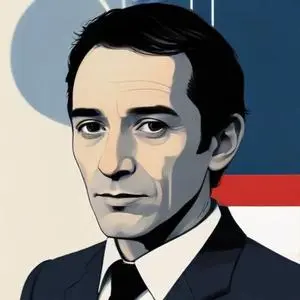
The Maverick of the French New Wave: Jacques Rivette
A Pioneer of Cinematic Innovation
Jacques Rivette, a French film director and critic, is renowned for his contributions to the French New Wave movement, a cinematic revolution that transformed the landscape of world cinema in the 1960s. With a career spanning over five decades, Rivette is celebrated for his unconventional, improvisational style, often characterized by loose narratives and lengthy running times.
Early Inspirations and Formative Years
Inspired by
Jean Cocteau, Rivette began his filmmaking journey at the tender age of 20, shooting his first short film. He later moved to Paris, where he frequented the iconic Cinémathèque Française and other ciné-clubs, rubbing shoulders with future New Wave luminaries such as
François Truffaut,
Jean-Luc Godard, Éric Rohmer, and
Claude Chabrol.
A Critic's Eye and a Filmmaker's Vision
Rivette's writing career began in 1953, when he was hired by
André Bazin to write for the esteemed film magazine, Cahiers du Cinéma. His articles, praised by his peers, were known for their wit, insight, and critical acumen. Rivette's admiration for American genre directors like
John Ford,
Alfred Hitchcock, and
Nicholas Ray was palpable, and he was vocal in his criticism of mainstream French cinema.
Short Films and the Birth of the New Wave
Rivette's short film, Le Coup du Berger (1956), is often cited as the first New Wave film. This marked the beginning of a new era in French cinema, one that would shatter conventions and challenge audiences. Rivette's feature film debut, Paris Belongs to Us (1961), although released after his contemporaries' films, cemented his position as a pioneer of the New Wave movement.
A Unique Cinematic Style and Notable Works
Rivette's L'Amour Fou (1969) marked a turning point in his career, as he began to develop a distinctive cinematic style characterized by improvisation and loose narratives. This was followed by Out 1 (1971), Céline and Julie Go Boating (1974), and La Belle Noiseuse (1991), all of which garnered critical acclaim and solidified his reputation as a master filmmaker.
Influence and Legacy
Rivette's influence on modern cinema is undeniable. His innovative approach to storytelling and filmmaking has inspired generations of directors, including the likes of
Martin Scorsese and Nanni Moretti. His contributions to the French New Wave have left an indelible mark on the history of cinema, ensuring his legacy as a true pioneer and maverick of the medium.
Quotes and Memorabilia
- "The cinema is not an art of reality, but an art of the possible."
Timeline of Notable Works and Milestones
- 1928: Born on March 1st in Rouen, France
- 1953: Began writing for Cahiers du Cinéma
- 1956: Released short film Le Coup du Berger
- 1961: Released feature film debut Paris Belongs to Us
- 1969: Released L'Amour Fou, marking a new direction in his career
- 1971: Released Out 1, a 13-hour epic
- 1974: Released Céline and Julie Go Boating
- 1991: Released La Belle Noiseuse, earning the Palme d'Or at Cannes
- 2016: Passed away on January 29th, leaving behind a legacy of cinematic innovation
This article is dedicated to the memory of Jacques Rivette, a true visionary and master of the cinematic arts.
FAQ
What was Jacques Rivettes role in the French New Wave?
Jacques Rivette was a key figure in the French New Wave, a movement of young filmmakers who sought to revolutionize French cinema in the 1960s. He was known for his experimental and innovative approach to filmmaking.
What are some of Jacques Rivettes most famous films?
Jacques Rivette directed several acclaimed films, including Paris Belongs to Us, La Religieuse, and Céline and Julie Go Boating. His films often explored themes of love, relationships, and the human condition.
How did Jacques Rivettes filmmaking style influence French cinema?
Jacques Rivettes filmmaking style, characterized by long takes, improvisation, and a focus on character development, influenced a generation of French filmmakers. He is considered one of the key figures in the development of the French New Wave.
What was Jacques Rivettes relationship with Cahiers du Cinéma?
Jacques Rivette was a co-founder of Cahiers du Cinéma, a influential French film magazine that played a key role in shaping the French New Wave. He wrote extensively for the magazine and helped to promote the work of other young filmmakers.
How has Jacques Rivettes legacy been remembered?
Jacques Rivettes legacy has been remembered as a pioneering filmmaker who helped to shape the course of French cinema. He continues to be celebrated for his innovative and influential body of work.