


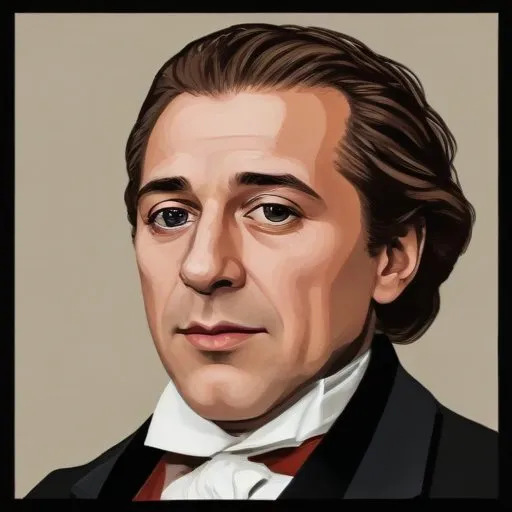
Austrian tenor and composer who performed at the Vienna Court Opera and wrote over 40 operas, earning him recognition in the classical music scene.
Jakob Haibel, a multifaceted talent of 18th century Austria, left an indelible mark on the world of opera, composition, and music direction. As an Austrian composer, operatic tenor, and choirmaster, Haibel's remarkable contributions continue to reverberate through the centuries.
In 1762, Haibel was born in Graz, Austria, and began his journey in the world of music. Around 1789, he joined Emanuel Schikaneder's esteemed company of performers at the Freihaus-Theater auf der Wieden, where he honed his skills as an actor, singer, and composer.
Haibel's breakthrough came in 1795 with the premiere of his ballet Le nozze disturbate, which enthralled audiences and garnered critical acclaim. The work's success was unprecedented, with 39 performances that year alone. The celebrated composer Ludwig van Beethoven even drew inspiration from Haibel's work, basing his 12 Variations on a Menuett à Vigan, WoO 68 on an air from the ballet.
In 1796, Haibel's opera Der Tiroler Wastel premièred at the Freihaus-Theater, receiving rave reviews and cementing its place as Haibel's magnum opus. This masterpiece was performed an astonishing 66 times that year, and a total of 118 times during its run. The opera's impact extended far beyond Vienna, with performances across the Austro-German region.
Although Haibel continued to compose music for the theater, his productivity slowed after the death of his first wife, Katharina, in 1806. He eventually left Vienna in 1804 to assume the position of cathedral choirmaster in Diakovo, Slavonia, where he spent the remainder of his life.
In 1807, Haibel married Sophie Weber, the sister of Constanze Mozart, making him Mozart's posthumous brother-in-law. During his time in Diakovo, Haibel penned 16 masses, which were rediscovered in the Kuha collection at the Nacionalna i Sveučilišna Knjižnica in Zagreb.
Hailed as a prominent figure in Austrian opera, Haibel's legacy extends beyond his compositions to his lasting impact on the opera world. He passed away in 1826, leaving behind a rich cultural heritage that continues to inspire and delight audiences to this day.
Jakob Haibel's contributions to the world of opera, composition, and music direction have left an indelible mark on the cultural landscape. His works continue to inspire and influence contemporary musicians, ensuring that his legacy will endure for generations to come.
Born in 1756
A child prodigy and master of classical music, he composed over 600 works, including symphonies, operas, and chamber music, that continue to inspire and influence musicians today.
Born in 1770
A musical genius who expanded the possibilities of classical music, creating iconic symphonies and piano sonatas that continue to inspire and influence generations of artists.
Born in 1797
A renowned composer of symphonies, operas, and chamber music, particularly famous for his emotional and expressive lieder (art songs) that showcased his mastery of melody and harmony.
Born in 1792
Operatic mastermind behind iconic comedies like "The Barber of Seville" and "William Tell," crafting catchy, witty, and playful music that still delights audiences today.
Born in 1797
A renowned Italian composer of the Romantic era, best known for his operas, particularly "L'elisir d'amore" and "Don Pasquale", which are still widely performed today.
Born in 1801
Operatic mastermind behind bel canto classics like "Norma" and "La Sonnambula", renowned for their beautiful, expressive melodies and dramatic flair.
