


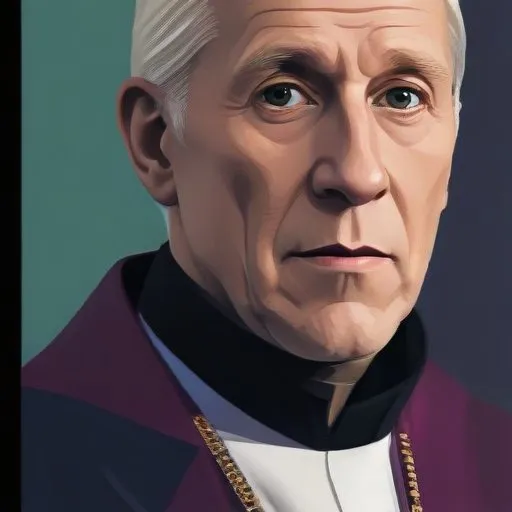
A 19th-century Norwegian bishop and politician who played a key role in shaping the country's education system and church policies. He's most known for his efforts to promote education and religious reform.
Jakob Sverdrup was a Norwegian bishop and politician who left an indelible mark on the country's history. Born on March 27, 1845, he was a prominent figure in both the ecclesiastical and political spheres, serving five terms in the Norwegian Parliament between 1877 and 1898, and holding various cabinet positions.
Sverdrup was born in Christiania (now Oslo) to a prominent local family. His father, Harald Ulrik Sverdrup, was a priest, mayor, and member of the Norwegian Parliament, while his uncle, Johan Sverdrup, was the Prime Minister of Norway from 1884 to 1889. Raised in Balestrand, in the county of Nordre Bergenhus Amt, Sverdrup was educated at the University of Oslo, graduating with a cand.theol. degree in 1869.
Sverdrup was originally a member of the Liberal Party, but later joined the Moderate Liberal Party, partially causing a split that led to the formation of the Moderate Liberal Party. This move sparked controversy, earning him the reputation as one of the most controversial figures in modern Norwegian history.
Sverdrup's contributions to Norway's education and politics have had a lasting impact. He played a significant role in shaping the country's educational system, and his work in politics helped to lay the groundwork for future generations of Norwegian leaders.
Sverdrup came from a large family, with five brothers and three sisters. He was close to his brother Georg Sverdrup, who emigrated to the United States and became the President of the Augsburg Seminary. Sverdrup himself fathered several notable academics, including Jakob Sverdrup, Jr. and Georg Johan Sverdrup, and was the uncle of oceanographer and meteorologist Harald Ulrik Sverdrup.
Sverdrup's life is a testament to the power of education and dedication. Despite facing controversy and criticism, he remained committed to his passions and continued to work towards creating positive change in Norway. His legacy serves as a reminder that even the most seemingly insurmountable challenges can be overcome with perseverance and determination.
67 Years Old
The 27th Prime Minister of Norway and 13th Secretary General of NATO, known for leading Norway's government and the North Atlantic Treaty Organization, shaping global security and economic policies.
65 Years Old
The first female Prime Minister of Norway, serving from 2013 to 2021, known for her leadership during the European migrant crisis and her efforts to promote economic growth and climate action.
66 Years Old
Norway's first female Minister of Finance, known for her progressive policies and efforts to reduce economic inequality. She implemented reforms to increase taxes on the wealthy and reduce poverty.
69 Years Old
Norwegian Minister of Labour who served from 2008 to 2013, focusing on labour market policies and social welfare reforms. Known for his efforts to improve workers' rights and social security.
75 Years Old
The 25th Prime Minister of Norway, serving from 1996 to 1997, known for his efforts to strengthen the country's economy and his role in the European Union accession talks. He also chaired the Nobel Committee, awarding the Peace Prize.
