


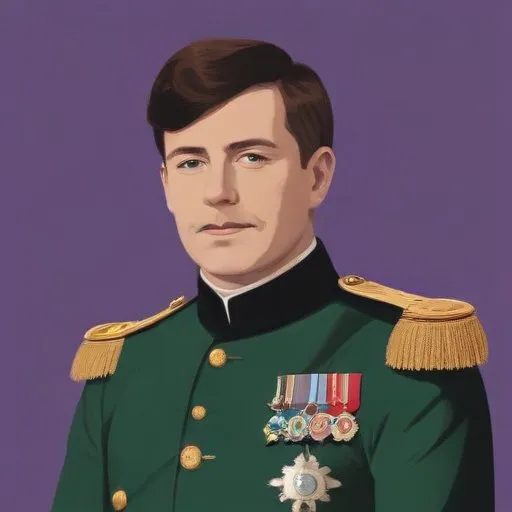
Irish general and politician who served as Lord Lieutenant of Ireland, playing a key role in the Restoration of the monarchy and the Anglo-Dutch Wars. He's known for his military victories and strategic alliances.
James Butler, 2nd Duke of Ormonde, was a prominent Irish statesman and soldier who served in various military campaigns and held significant positions of power in the late 17th and early 18th centuries. He is most notable for his involvement in the campaigns to put down the Monmouth Rebellion, the Williamite War in Ireland, the Nine Years War, and the War of the Spanish Succession.
James Butler was born on April 29, 1665, at Dublin Castle, the second but eldest surviving son of Thomas Butler and his wife Emilia van Nassau-Beverweerd. His father, known as Lord Ossory, was the heir apparent of James Butler, 1st Duke of Ormond. The Butler dynasty, an Old English family, descended from Theobald Walter, who was appointed Chief Butler of Ireland by King Henry II in 1177. James' mother was of Dutch origin, descending from a cadet branch of the House of Nassau. Both parents were Protestant.
James was educated in France and later at Christ Church, Oxford. Following the death of his father on July 30, 1680, he became Baron Butler in the English peerage and the 7th Earl of Ossory in the Irish Peerage. In 1683, he obtained command of a cavalry regiment in Ireland and served against the Duke of Monmouth at the Battle of Sedgemoor in July 1685. Having succeeded his grandfather as 2nd Duke of Ormonde on July 21, 1688, he was appointed a Knight of the Order of the Garter on September 28, 1688.
In 1688, James also became Chancellor of the University of Dublin and Chancellor of the University of Oxford. His military career continued to flourish, with commands in the Williamite War in Ireland and the Nine Years War. He played a significant role in the War of the Spanish Succession, serving as the commander-in-chief of the British forces in Spain from 1705 to 1707.
In 1715, James was accused of treason and went into exile following the Jacobite rising of 1715. Despite his prominent position and military achievements, his later years were marked by controversy and exile.
James Butler, 2nd Duke of Ormonde, left a lasting impact on Irish and British history, serving as a statesman, soldier, and leader in various capacities. His legacy is complex, marked by both military achievements and controversy. Nevertheless, his contributions to the Williamite War in Ireland, the Nine Years War, and the War of the Spanish Succession remain significant in the annals of military history.
As a Protestant, James Butler, 2nd Duke of Ormonde, held strong religious beliefs that influenced his actions and decisions throughout his life. His commitment to the Protestant cause was evident in his military campaigns and political affiliations.
Born in 1599
Leader of the Parliamentarian forces during the English Civil War, who later ruled England, Scotland, and Ireland as a republican dictator, known for his military victories and radical reforms.
