


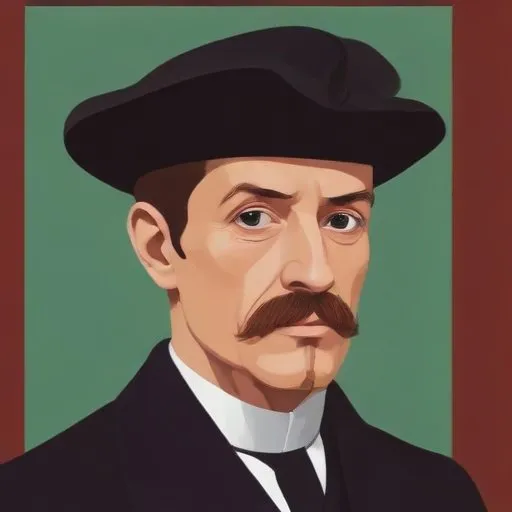
A Scottish Quaker who pioneered the tea trade in India and founded the Finlayson company, which became a major textile manufacturer.
James Finlayson, a British Quaker, is renowned for bringing the Industrial Revolution to Tampere, Finland, by founding the Finlayson company in 1820. This pioneering entrepreneur is credited with transforming the Finnish textile industry and leaving an indelible mark on the city of Tampere.
Born on August 29, 1772, in Penicuik, Scotland, Finlayson was a self-trained engineer who went on to make a significant impact in the world of textiles. In 1817, he moved to St. Petersburg, Russia, where he founded a textile factory with the support of Tsar Alexander I.
In 1819, Finlayson visited the Grand Duchy of Finland, which was then under Russian rule, on a religious mission to sell Bibles. During his trip, he stopped in Tampere, where he was struck by the potential of the Tammerkoski rapids to power industrial machinery.
The following year, Finlayson received permission from the Senate of Finland to build a factory in Tampere, leveraging the water power of the rapids. He moved to Tampere with his wife, Margaret Finlayson, and began constructing his factory.
The first factory, completed in 1823, was built with the aid of a state loan, which stipulated that the technology employed could be freely inspected by the public to promote civic technological advancement. Initially, Finlayson manufactured machinery suitable for the textile industry, but in 1828, he shifted his focus to cotton mills.
In addition to his industrial endeavors, Finlayson founded an orphanage, demonstrating his commitment to the well-being of the local community.
On March 1, 1836, Finlayson sold his factory to Georg Rauch and Karl Samuel Nottbeck, conditional on the retention of his name for the factory. The new owners honored this request, founding Finlayson Compagnie.
Finlayson worked in an advisory capacity for a couple of years before returning to the United Kingdom. He passed away in 1852 in Edinburgh, leaving behind a lasting legacy in Tampere.
The Finlayson company grew to become Tampere's largest employer, at its peak, employing over 3,000 people. Although the original factory buildings in the city center were closed down in 1995, they were converted into a commercial and entertainment district, preserving the historical significance of Finlayson's industrial heritage.
A weaving hall, completed in 1877, was once the largest in the Nordic countries, housing 1,200 power looms. This testament to Finlayson's innovative spirit continues to inspire generations.
Through his pioneering spirit and philanthropic endeavors, James Finlayson left an indelible mark on Tampere, earning his place as a revered figure in the city's industrial history.
Born in 1621
A 17th-century naval commander and politician who played a significant role in the English Civil War and was a member of the Council of State during the Interregnum. He's also known for his victories against the Dutch Republic.
Born in 1720
A pioneering Quaker abolitionist, he passionately advocated for the emancipation of slaves and equal rights, leaving a lasting impact on American social justice.
Born in 1793
A pioneering Quaker minister and women's rights activist who fought for abolition and women's suffrage, playing a key role in the Seneca Falls Convention.
Born in 1780
A pioneering advocate for humane treatment of prisoners, she worked tirelessly to improve jail conditions and promote rehabilitation, earning her a revered place in history.
Born in 1760
Leading abolitionist who gathered evidence and testimony to end the slave trade, playing a crucial role in its eventual abolition in the British Empire.
