


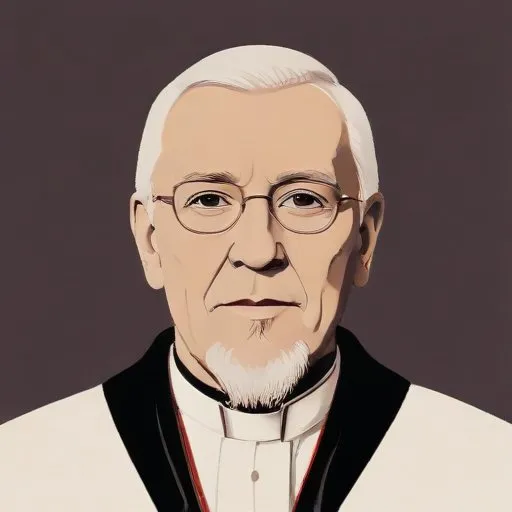
An Episcopal bishop who advocated for civil rights and social justice, known for his progressive views and televised sermons.
James Pike, a pioneering American Episcopal bishop, writer, and television personality, was a trailblazer in his time, known for his outspoken views on theology, social justice, and paranormal phenomena. His unorthodox approach to Christianity and advocacy for women's ordination and racial desegregation within mainline churches made him a household name and a lightning rod for controversy.
Born on February 14, 1913, in Oklahoma City, Oklahoma, Pike's early life was marked by tragedy when his father died when he was just two years old. He moved to California with his mother, who later remarried. Pike's intellectual curiosity and spiritual searching took him to various institutions, including Santa Clara University, the University of California at Los Angeles, and the University of Southern California, where he earned his undergraduate degree in 1934 and a law degree in 1936.
After completing his education, Pike worked as a staff attorney for the Securities and Exchange Commission in Washington, D.C., and later established his own law firm. However, it was his foray into television that catapulted him to national fame. As one of the first mainline religious figures to appear regularly on TV, Pike's charismatic personality and provocative views on faith and social issues made him a regular guest on popular shows.
Pike's vocal support for the ordination of women and racial desegregation within mainline churches sparked heated debates and criticism from his fellow bishops.
His exploration of spiritualism and psychic phenomena, particularly after the death of his son, raised eyebrows among those who saw it as incompatible with traditional Christian teachings.
Pike's chain-smoking habit and struggles with alcoholism led to public scrutiny and raised questions about his fitness for leadership.
Despite the controversies surrounding him, Pike's theological contributions and philosophical beliefs remain significant. He was an early advocate for ecumenism and interfaith dialogue, believing that Christian unity was essential for social change. Pike's emphasis on the importance of individual spiritual experience and his critiques of institutional religion resonated with many seeking a more authentic faith.
1958: Pike became the fifth Bishop of California, a position he held until 1966.
1965: Pike's son, James Jr., died in a tragic accident, leading Pike to explore spiritualism and psychic phenomena.
1969: Pike resigned as Bishop of California, citing health reasons and a desire to focus on writing and broadcasting.
James Pike's unconventional approach to Christianity and his advocacy for social justice have left an indelible mark on American religious and cultural landscapes. While his legacy is complex and multifaceted, Pike's courage to challenge traditional norms and his commitment to dialogue and understanding continue to inspire new generations of religious leaders and social activists.
"The church should be a prophetic voice, not an echo of the status quo."
"Faith is not a set of dogmatic principles, but a living, growing, and changing experience."
"The only way to have a friend is to be a friend."
Born in 1921
A Catholic priest who wrote poetry and protested war and nuclear proliferation through nonviolent civil disobedience, inspiring a generation of activists.
Born in 1923
A Catholic priest who protested the Vietnam War and nuclear proliferation through nonviolent civil disobedience, including burning draft files and hammering on nuclear warhead nose cones.
97 Years Old
A prominent leader in the civil rights movement, advocating for racial equality and social justice through nonviolent means, leaving a lasting impact on American history.
Born in 1926
A prominent leader in the American Civil Rights Movement, he worked closely with Martin Luther King Jr. to advocate for racial equality and social justice through nonviolent means.
94 Years Old
A prominent civil rights leader and diplomat who served as a key advisor to Martin Luther King Jr. and later became the first African American to hold a top post in an American presidential administration.
95 Years Old
A prominent religious leader and human rights advocate who fought against apartheid and racism, known for his tireless efforts to promote equality and forgiveness.
