


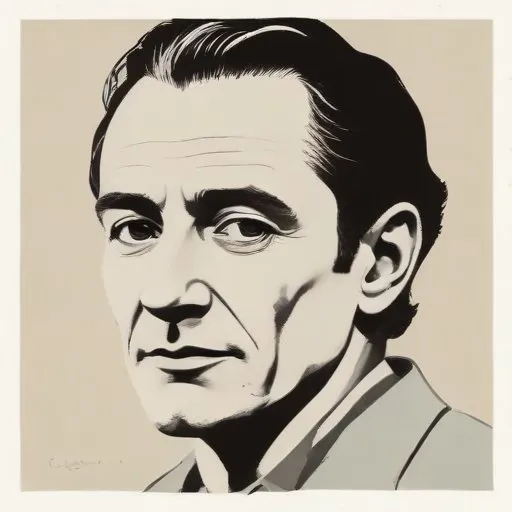
A prominent figure in the New York School of poetry, known for their lyrical and introspective style, which explored themes of nature, identity, and relationships.
Renowned for his exceptional skill in crafting evocative, introspective, and deeply personal poetry, James Schuyler was a central figure in the New York School, a movement that revolutionized American poetry in the mid-20th century. His work earned him the prestigious Pulitzer Prize for Poetry in 1980, solidifying his place among the pantheon of great American poets.
Born on November 9, 1923, in Chicago, Illinois, Schuyler spent his formative years in East Aurora, New York. His father, Marcus Schuyler, was a journalist, and his mother, Margaret Daisy Connor Schuyler, instilled in him a love for literature. Schuyler's early life was marked by a sense of restlessness, which would later inform his poetry.
Schuyler's move to New York City in the late 1940s marked the beginning of his association with the New York School, a circle of poets that included John Ashbery, Frank O'Hara, Kenneth Koch, and Barbara Guest. This group of poets sought to challenge traditional poetic forms and explore new modes of expression. Schuyler's early work, characterized by its lyricism and introspection, found a natural home within this movement.
Schuyler's poetry collections, including Freely Espousing (1969), The Crystal Lithium (1972), and The Morning of the Poem (1980), showcase his remarkable skill in capturing the intimate and the mundane. The latter collection earned him the Pulitzer Prize for Poetry, cementing his status as a master poet.
Schuyler's personal life was marked by struggles with manic depression and a series of traumatic experiences, including a near-death encounter in a fire. Despite these challenges, he maintained a close circle of friends and partners, including William Aalto and John Button. Schuyler's poetry often hinted at his personal struggles, but he remained private about his life, earning him the label of "intimist" from his friend and fellow poet, Barbara Guest.
Schuyler's innovative approach to poetry, which emphasized the everyday and the personal, has had a profound impact on modern poetry. His work has influenced generations of poets, from the New York School to contemporary writers. His Pulitzer Prize-winning collection, The Morning of the Poem, remains a touchstone for poets exploring the intersections of life and art.
James Schuyler's legacy extends beyond his remarkable poetry to his role as a central figure in the New York School. His ashes were interred at the Little Portion Friary Episcopal in Mt. Sinai, Long Island, New York, a testament to his enduring presence in the world of American poetry. Schuyler's life and work serve as a reminder of the power of poetry to capture the human experience in all its complexity and beauty.
As Schuyler once wrote, "The past is not a riddle to be solved, but a poem to be read." His poetry continues to captivate readers, offering a glimpse into the intricate and beautiful tapestry of human experience.
"The past is not a riddle to be solved, but a poem to be read." - James Schuyler
99 Years Old
A celebrated poet of the New York School, known for his surreal, dreamlike, and often humorous poetry that explores the human condition and the nature of language. His work is characterized by its complexity, wit, and playfulness.
Born in 1926
A prominent figure in the New York School of poets, known for his spontaneous, conversational style and poems that capture the essence of urban life and the human experience.
Born in 1925
A celebrated poet, playwright, and professor, known for his witty and imaginative works that blend humor and intellectualism. His poetry is often praised for its accessibility and clever wordplay.
Born in 1923
A pioneer of Pop Art, creating provocative and humorous works that blended high and low culture, often incorporating found objects and everyday imagery.
Born in 1907
A pioneering figure in American art, known for capturing the subtleties of everyday life through intimate, realist paintings and writings that explored the intersection of art and criticism.
Born in 1924
An American artist who blended abstract expressionism with representational art, capturing the beauty of everyday life in her paintings and poetry. Her work often featured intimate, domestic scenes and still lifes.
97 Years Old
A pioneering abstract expressionist artist, known for her innovative "soak-stain" technique, which involved pouring thinned paint onto raw canvas to create vibrant, lyrical works. Her style blurred the lines between painting and printmaking.
Born in 1925
A pioneer of pop art, combining found objects and images to create innovative, thought-provoking works that blurred the lines between art and everyday life.
