


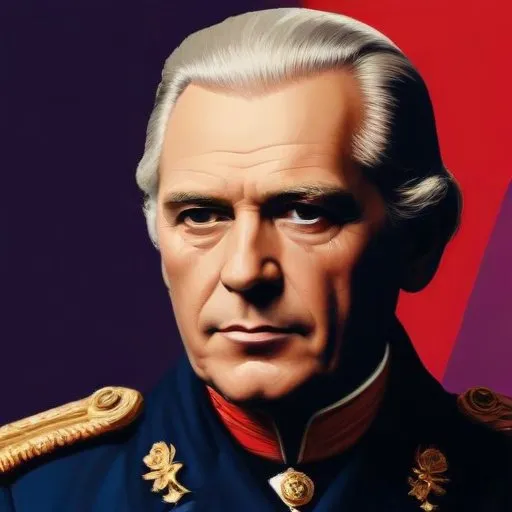
A decorated war hero and skilled diplomat who played a crucial role in shaping US foreign policy during the Cold War, particularly in Korea and Greece.
James Van Fleet was a renowned United States Army officer who left an indelible mark on the annals of military history. With a storied career spanning three wars – World War I, World War II, and the Korean War – Van Fleet distinguished himself as a brilliant tactician, a compassionate leader, and a champion of freedom.
Born on March 19, 1892, in Coytesville, New Jersey, Van Fleet's family relocated to Florida when he was an infant. He grew up in the Sunshine State, receiving his high school education at the Summerlin Institute in Bartow, Florida. In 1911, he secured an appointment to the United States Military Academy at West Point, New York, where he excelled as a cadet, playing fullback on the undefeated Army football team of 1914.
Van Fleet graduated from West Point in 1915, part of the legendary Class of 1915, which boasted an impressive array of future generals, including Dwight D. Eisenhower and Omar Bradley. This distinguished group earned the moniker "the class the stars fell on," a testament to the exceptional leadership that emerged from this cohort.
Commissioned as a second lieutenant into the Infantry Branch of the United States Army, Van Fleet served in various capacities during World War I, including a stint on the Mexican border. During World War II, he commanded regiments, divisions, and corps, earning a reputation as a skilled and fearless leader. In the Korean War, he served as the commanding general of United States Army and other United Nations forces, playing a pivotal role in shaping the conflict's outcome.
Throughout his military career, Van Fleet demonstrated unwavering dedication, strategic brilliance, and a deep commitment to his troops. His leadership inspired loyalty and admiration, earning him numerous accolades, including the Distinguished Service Cross, the Silver Star, and the Legion of Merit.
Van Fleet's military philosophy emphasized the importance of adaptability, initiative, and unity of command. He believed that effective leadership required empathy, trust, and communication, values he instilled in his troops throughout his career.
As a testament to his enduring legacy, James Van Fleet's remarkable career serves as a shining example of selfless service, unwavering dedication, and unshakeable commitment to the values of freedom and democracy.
Born in 1880
A highly decorated war hero and master strategist who led troops to victory in World War I and II, and later became a prominent figure in the occupation of Japan.
Born in 1895
Led the US Eighth Army to victory in the Korean War, credited with turning the tide of the conflict and earning a reputation as a skilled military strategist.
Born in 1893
Led the US Army in World War II and became the last five-star general, playing a crucial role in shaping post-war American military strategy. He's also known for his humble and unassuming leadership style.
Born in 1880
A highly decorated military leader and statesman who played a crucial role in shaping post-WWII foreign policy and was awarded the Nobel Peace Prize for his efforts. He's most known for authoring the Marshall Plan, a massive economic aid program that helped rebuild war-torn Europe.
