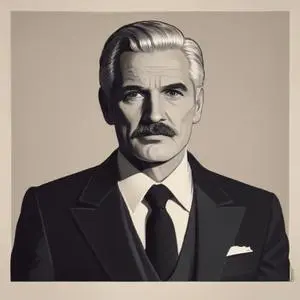
James Whitmore: The Prolific American Actor and Theatre Icon
A Legacy of Excellence in Film, Television, and Theatre
James Whitmore was a renowned American actor, revered for his exceptional talent and versatility in a wide range of film, television, and theatre roles. With a career spanning over five decades, Whitmore received numerous accolades, including a Golden Globe Award, a Grammy Award, a Primetime Emmy Award, a Theatre World Award, and a Tony Award, in addition to two Academy Award nominations.
Early Life and Education
Born on October 1, 1921, in White Plains, New York, to Florence Belle (née Crane) and
James Allen Whitmore Sr., a park commission official, Whitmore attended Amherst Central High School in Snyder, New York, for three years. He then transferred to the Choate School in Wallingford, Connecticut, on a football scholarship. At Yale University, he initially pursued a major in government, but his passion for acting led him to join the Yale Dramatic Society. Whitmore graduated with a degree in government in 1944.
Military Service
During World War II, Whitmore enlisted in the United States Marine Corps Reserve in 1942, while finishing his degree. He trained at Parris Island and Quantico, Virginia, and was commissioned as a second lieutenant. After further training, he was assigned to the 4th Marine Division on Saipan in July 1944. While at Tinian, he contracted amoebic dysentery and was hospitalized. Following his hospitalization, he served guard duty at the Panama Canal Zone until his discharge in March 1946.
Awards and Honors
Whitmore's remarkable career was marked by numerous awards and honors, including:
- Golden Globe Award for Best Actor in a Motion Picture – Drama for "Give 'em Hell, Harry!" (1975)
- Grammy Award for Best Spoken Word Recording for "Give 'em Hell, Harry!" (1976)
- Primetime Emmy Award for Outstanding Lead Actor – Miniseries or a Movie for "The Asphalt Jungle" (1961)
- Theatre World Award for "Command Decision" (1947)
- Tony Award for Best Actor in a Play for "Will Rogers' USA" (1974)
Notable Roles and Performances
Some of Whitmore's most notable roles include:
- Harry S. Truman in "Give 'em Hell, Harry!" (1975)
- Will Rogers in "Will Rogers' USA" (1974)
- Brooks Hatlen in "The Shawshank Redemption" (1994)
- Admiral William F. Halsey Jr. in "The Gallant Hours" (1960)
- Abraham Lincoln in "The Great White Hope" (1970)
Personal Life and Legacy
Whitmore married Nancy Mygatt in 1947, and they had three sons before divorcing in 1971. The eldest son,
James III, also pursued a successful career in television acting and directing. Whitmore's legacy extends beyond his impressive body of work, as he inspired generations of actors and continues to be revered as a theatre icon.
Quotes and Memorable Sayings
Whitmore's wisdom and wit are reflected in his quotes, including:
"I think the most important thing in life is self-awareness. I think it's the key to everything."
Influence on Modern Society
Whitmore's impact on modern society is evident in his contributions to the world of entertainment, as well as his influence on actors and artists who followed in his footsteps. His commitment to his craft and his dedication to his roles continue to inspire new generations of performers.
FAQ
What was James Whitmores most memorable film role?
James Whitmores most memorable film role was Brooks Hatlen in the 1994 film The Shawshank Redemption, a critically acclaimed drama starring Tim Robbins and Morgan Freeman.
How did James Whitmore get his start in acting?
James Whitmore began his acting career on the Broadway stage, where he appeared in numerous productions throughout the 1940s and 1950s. He transitioned to film in the late 1950s, initially playing supporting roles.
What awards did James Whitmore win for his acting?
James Whitmore won two Academy Award nominations for Best Actor for his roles in Battleground and Give em Hell, Harry! He also won an Emmy Award for his performance in the TV series The Twilight Zone.
What was James Whitmores approach to playing characters?
James Whitmore was known for his intense preparation and research when playing characters. He was particularly drawn to roles that allowed him to explore the human condition and bring complex characters to life.
What is James Whitmores legacy in American cinema?
James Whitmores legacy is that of a talented and versatile actor who brought depth and nuance to a wide range of film and television roles. He remains a beloved figure in American cinema.