


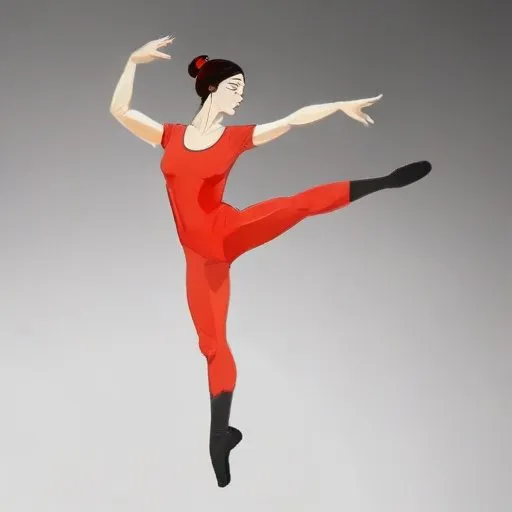
A renowned French dancer and choreographer who revolutionized contemporary dance with his unique fusion of ballet and modern techniques, creating a new language of movement.
French dancer and choreographer Jean Babile, known for his mesmerizing performances and provocative style, is widely regarded as one of the greatest performers of modern ballet. With a career spanning over three decades, Babile's impact on the world of dance is still felt today, earning him the title of "the enfant terrible of dance."
Born Jean Gutmann on February 3, 1923, in Paris, France, Babile's early life was marked by turmoil. His Jewish heritage on his father's side made him a target during World War II, forcing him to flee Paris in 1940 as the Wehrmacht approached the city. He returned to dance with the Paris Opera Ballet in early 1942, narrowly escaping deportation to Auschwitz during the Vel d'Hiv Roundup.
In early 1943, Babile left Paris to avoid compulsory deportation to Germany as a forced laborer. He joined the French Resistance, fighting with the Maquis in Touraine, where he remained until the end of the war. This period would later influence his approach to dance, imbuing his performances with a sense of defiance and resistance.
After the war, Babile returned to dance, joining the Soires de la Danse, which later became Les Ballet des Champs Elyses. It was during this time that he adopted his mother's maiden name, Babile, for professional use. His breakout performances with Les Ballets des Champs Elyses and Les Ballets de Paris cemented his reputation as a dancer of unparalleled physical prowess.
From 1945 to 1950, Babile was principal dancer of the Ballets des Champslyses, creating roles in iconic ballets such as Jeu de cartes, Le Jeune Homme et la Mort, L'Amour et son amour, and Till Eulenspiegel. His partnership with his wife, featured ballerina Nathalie Philippart, added an extra layer of elegance to his performances.
Babile's dances were renowned for their provocative nature, often pushing the boundaries of what was considered acceptable on stage. In the 1946 premiere of Le Jeune Homme et la Mort, he hung by his neck on a gallows for one minute, supported only by wrapping one arm around a pillar. This bold move earned him both criticism and acclaim, solidifying his reputation as a true original.
Jean Babile's influence on modern ballet is undeniable. His innovative approach to dance, coupled with his exceptional physicality, has inspired generations of dancers and choreographers. Through his work, he has left an indelible mark on the world of dance, ensuring his title as "the enfant terrible of dance" remains unwavering.
88 Years Old
A renowned Russian-French dancer and choreographer who revolutionized ballet with his powerful stage presence and iconic performances, particularly in productions like "Swan Lake" and "Romeo and Juliet".
78 Years Old
A renowned Russian-American dancer, choreographer, and actor who revolutionized ballet with his athletic style and charismatic stage presence, starring in films like "The Turning Point" and "White Nights".
Born in 1925
A renowned Russian-Lithuanian ballerina, choreographer, actress, and director, celebrated for her powerful stage presence and iconic performances with the Bolshoi Ballet. She is a cultural icon in the world of dance.
Born in 1910
A renowned Russian actress and ballerina, celebrated for her mesmerizing stage presence and iconic performances in classical ballets like Giselle and Romeo and Juliet.
Born in 1919
A renowned British ballerina, celebrated for her technical precision and dramatic intensity, particularly in her iconic partnership with Rudolf Nureyev.
