


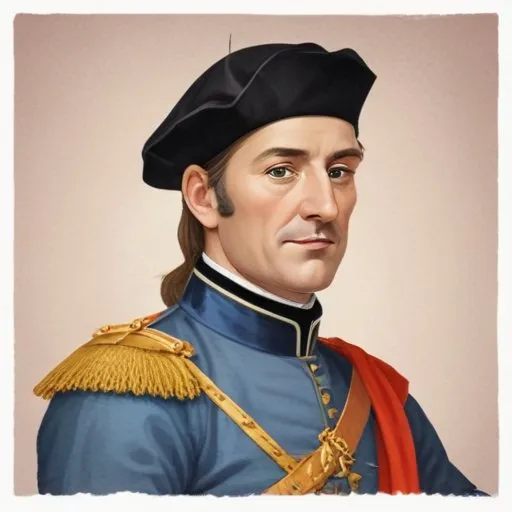
A pioneer in the field of art history, he traveled extensively to document and study ancient and Renaissance art, producing a comprehensive catalog of his findings. His work laid the groundwork for modern art historical research.
Jean Baptiste Seroux dAgincourt, a French archaeologist and historian, is renowned for his groundbreaking contribution to the field of art history, meticulously documenting the remains of ancient art from the 4th century to the 16th century. Through his lifetime dedication, he produced the monumental work, L'Histoire de l'Art par les monuments, a comprehensive six-volume masterpiece with 325 plates, which remains an unprecedented achievement in the realm of art historical research.
Born on April 5, 1730, in Beauvais, France, Seroux dAgincourt was a descendant of the counts of Namur. His early life was marked by military service as an officer in a regiment of cavalry. However, following the death of his parents, he took on the responsibility of caring for his younger brothers, and in 1755, he was appointed a farmer-general by King Louis XV.
In 1777, Seroux dAgincourt embarked on an extensive journey through England, Germany, and the Dutch Republic, which laid the groundwork for his subsequent travels to Italy in 1778. This odyssey was driven by his passion to explore and document the remnants of ancient art, a pursuit that would consume his life's work.
Settling in Rome, Seroux dAgincourt devoted himself to meticulously recording and researching the artifacts of ancient civilizations. His Roman sojourn spanned several decades, during which he amassed an extraordinary collection of archaeological findings, meticulously transcribing and illustrating his discoveries.
Seroux dAgincourt's magnum opus, L'Histoire de l'Art par les monuments, was published posthumously in 1823, with the assistance of M. Gence. This exhaustive tome consists of six folio volumes, featuring 325 plates that showcase the evolution of art from the 4th century to the 16th century. This monumental work is a testament to Seroux dAgincourt's unwavering dedication to the field of art history.
Jean Baptiste Seroux dAgincourt's pioneering work has left an indelible mark on the realm of art history. His meticulous documentation of ancient artifacts has facilitated a deeper understanding of the artistic trajectory of Western civilization. As a forerunner in the field, he paved the way for subsequent generations of art historians, archaeologists, and scholars.
Jean Baptiste Seroux dAgincourt's extraordinary legacy serves as a testament to his unwavering passion for uncovering the secrets of ancient art. His meticulous research and dedication have forever altered the landscape of art historical inquiry, cementing his position as a true pioneer in the field.
Born in 1712
A pioneering thinker who shaped modern democracy and education with his ideas on social contracts, general will, and the importance of early childhood education. His writings influenced the French Revolution and modern political thought.
Born in 1694
A witty and insightful 18th-century writer and philosopher who used satire to critique societal norms and advocate for reason, tolerance, and human rights.
Born in 1689
A French lawyer and philosopher who developed the concept of separation of powers, which divides a government into legislative, executive, and judicial branches to prevent abuse of power. His ideas greatly influenced modern democracy.
Born in 1717
A French Enlightenment thinker who made significant contributions to mathematics, physics, and philosophy, particularly in the fields of fluid dynamics and the study of vibrating strings. He's also known for his work on the Encyclopedia, a comprehensive reference work that aimed to compile all knowledge of the time.
Born in 1749
Developed nebular hypothesis of the origin of the solar system and formulated Laplace's equation, a fundamental concept in mathematics and physics. He's considered the founder of celestial mechanics.
