


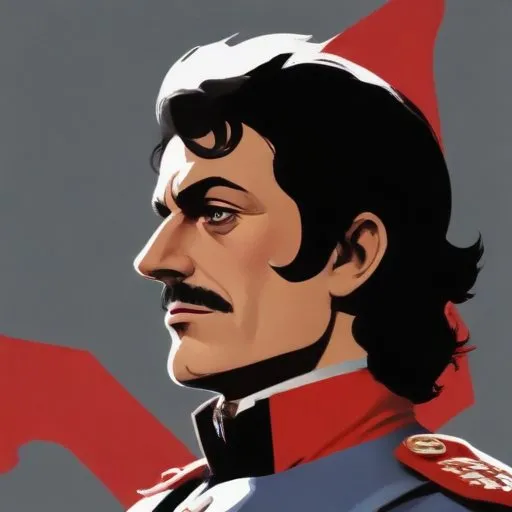
Leader of the Camisard rebellion, a Protestant uprising against the French Catholic monarchy, known for his bravery and military tactics in the late 17th century.
Jean Cavalier, a fearless and charismatic leader, is best known for his instrumental role in the Camisard rebellion, a fierce and bloody uprising against the French monarchy in the early 18th century. As the chief of the Camisards, Cavalier led a ragtag group of Huguenot peasants in a guerrilla war against the powerful French army, earning him a reputation as a brilliant military strategist and a champion of religious freedom.
Born on November 28, 1681, in the small hamlet of Mas Roux, near Anduze, southern France, Cavalier was raised in a family of modest means. His father, an illiterate peasant, was forced to convert to Catholicism, but his mother secretly instilled in him the Protestant faith. This early exposure to persecution and secrecy would shape Cavalier's worldview and fuel his future rebellious spirit.
In his early twenties, Cavalier became a shepherd, and later, an apprentice to a baker. However, his Protestant beliefs made him a target for persecution, and he was forced to flee to Geneva in 1701. It was during this time that the Camisard rebellion began to take shape, sparked by the murder of the Abbé du Chayla at Pont-de-Monvert on July 24, 1702. Cavalier returned to the Cévennes region, where he rose to become the leader of the Camisards, his natural charisma and military prowess earning him the respect and loyalty of his followers.
Cavalier's leadership and tactical brilliance were instrumental in holding off the French army, led by Marshal Villars and Count Victor Maurice de Broglie. He organized the Camisard forces, imposing a severe discipline that earned him the admiration of his enemies. His guerrilla warfare tactics, which included ambushes, sabotage, and hit-and-run attacks, allowed the Camisards to exploit the rugged terrain of the Cévennes to their advantage.
Cavalier's oratory skills were legendary, and he drew inspiration from the prophets of Israel to rally his troops and fuel their enthusiasm. He held religious assemblies, including a famous gathering on Christmas Day 1702, at the gates of Alais, which he defended against the local militia. His leadership style was marked by a deep respect for his followers, and he inspired them to fight for their liberty of conscience.
Although the Camisard rebellion was eventually crushed, Cavalier's bravery and leadership left an indelible mark on French history. He remains a celebrated figure in the fight for religious freedom and a testament to the power of inspired leadership. Today, his legacy continues to inspire people around the world, serving as a reminder of the importance of standing up against oppression and fighting for what is right.
"Liberty of conscience is the most precious of all liberties, and it is worth dying for."
By examining the life and legacy of Jean Cavalier, we are reminded of the power of courage, leadership, and conviction. His story serves as a beacon of hope, inspiring us to stand up against injustice and fight for what is right, even in the face of overwhelming odds.
Born in 1710
The monarch who ruled France from 1715 to 1774, known as the "Sun King's" great-grandson, and remembered for his extravagance, absolutism, and the decline of the French monarchy.
Born in 1619
A 17th-century mastermind who centralized France's economy, creating a powerful and efficient financial system that fueled the country's growth and prosperity. He's renowned for his innovative economic policies and reforms.
Born in 1760
French journalist and politician who sparked the French Revolution with his impassioned speeches and writings, advocating for democracy and social reform.
Born in 1759
A leading figure of the French Revolution, instrumental in the overthrow of the monarchy and establishment of the First French Republic, known for his radical Jacobin ideology.
Born in 1755
A key figure in the French Revolution, leading the coup that overthrew Maximilien Robespierre and later serving as a key advisor to Napoleon Bonaparte. He played a crucial role in shaping French politics during a tumultuous period.
