


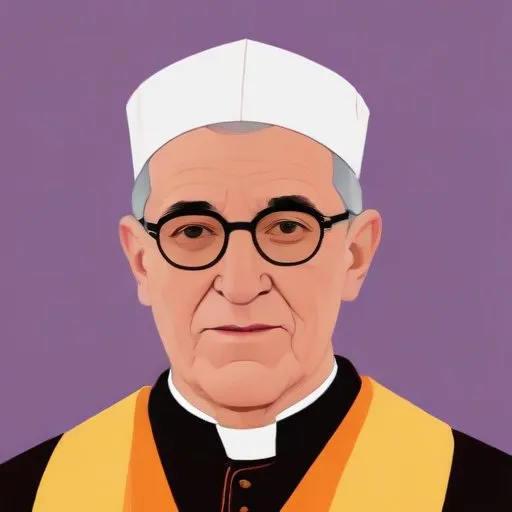
A French-Canadian Catholic bishop who served as the Archbishop of Montreal from 1939 to 1950, known for his efforts to promote Catholic education and social justice.
Jean-Jacques Lartigue is renowned as the first Catholic Bishop of Montreal, a title he held with dignity and devotion from 1820 until his passing in 1840. Throughout his remarkable tenure, he worked tirelessly to establish a strong Catholic presence in Lower Canada, earning him a revered place in Canadian history.
Born on June 20, 1777, in Montreal, Lartigue was the only son of Jacques Lartigue, a respected surgeon, and Marie-Charlotte Cherrier. He received a solid education at the Collège Saint-Raphaël and later at the Petit Séminaire de Montréal, followed by two years at an English school run by the Sulpicians. This foundation in education would eventually inspire him to pursue a career in the Catholic priesthood.
In 1797, Lartigue abandoned a promising legal career to follow his calling to the priesthood. He received minor orders and later the diaconate from Bishop Pierre Denaut of Quebec and taught at the Séminaire Saint-Raphaël while studying for the priesthood under the Sulpicians. On October 28, 1799, he was ordained a deacon, and Bishop Denaut appointed him as his secretary.
On September 21, 1800, Lartigue was ordained a priest by Bishop Denaut at the Church of Saint-Denis on the banks of the Richelieu River. As a priest, he assisted in the administrative affairs of the diocese and helped with pastoral duties at Longueuil, where the bishop resided as curé. Despite his poor health, he accompanied the bishop on pastoral visits in 1803 to the Maritimes, part of the diocese, where no bishop had visited since the late 17th century.
Following Bishop Denaut's death in 1806, Lartigue joined the Society of Saint-Sulpice, seeking a more contemplative and intellectual life. He was the first native Canadian to enter the Society and was assigned to help in the Parish of Notre-Dame in Montreal.
In 1820, Lartigue was appointed the first Catholic Bishop of Montreal by Pope Pius VII. He worked diligently to establish a strong Catholic presence in Lower Canada, founding the Ecole de Médicine in 1823 and the Séminaire de Saint-Sulpice in 1840. His dedication to the Canadian Catholic community earned him the respect and admiration of his peers and the faithful.
Jean-Jacques Lartigue's legacy extends far beyond his remarkable tenure as the first Catholic Bishop of Montreal. He played a pivotal role in establishing a strong Catholic presence in Lower Canada, shaping the country's religious landscape, and inspiring generations of Canadian Catholics. His commitment to education, social welfare, and pastoral care solidified his place as one of Canada's most revered Catholic leaders.
Through his remarkable life and legacy, Jean-Jacques Lartigue continues to inspire Canadians and Catholics around the world, serving as a testament to the power of dedication, faith, and service to others.
Born in 1504
Leader of the Catholic Church during the Counter-Reformation, he excommunicated Queen Elizabeth I and played a key role in the Council of Trent.
Born in 1881
Reformed the Catholic Church, introducing progressive reforms and ecumenical dialogue, and convened the Second Vatican Council.
Born in 1417
A 15th-century pope who played a significant role in the fall of the Western Schism, ending the division in the Catholic Church. He's also known for his lavish spending and nepotism.
Born in 1920
Leader of the Catholic Church from 1978 to 2005, known for helping to end communism in Poland and being a charismatic advocate for human rights and social justice.
