


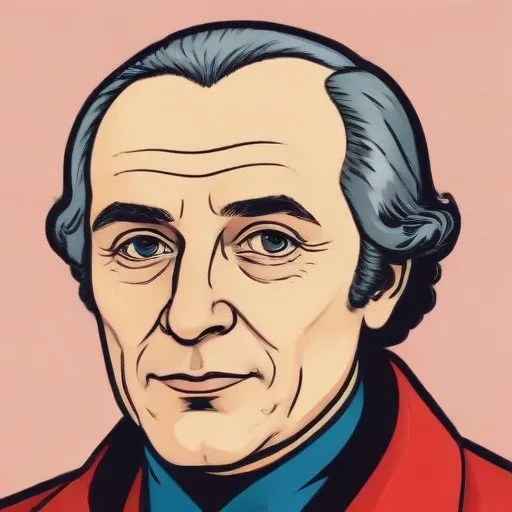
French geophysicist and astronomer who studied the Earth's magnetic field and discovered the daily variation of the magnetic declination, making significant contributions to the field of geophysics. He also made observations on the aurora borealis and its connection to the Earth's magnetic field.
Jean-Jacques d'Ortous de Mairan, a French natural philosopher and physicist, is renowned for his groundbreaking discoveries in the field of biological circadian rhythms, pioneer work in astronomy, and contributions to ancient texts. Born on November 26, 1678, in Béziers, France, de Mairan's remarkable life spanned over nine decades, leaving behind a legacy that continues to influence modern science.
Orphaned at a young age, de Mairan lost his father, François d'Ortous, at four and his mother twelve years later. Despite these challenges, he pursued his education with zeal, attending college in Toulouse from 1694 to 1697, where he focused on ancient Greek. In 1698, he moved to Paris to study mathematics and physics under the guidance of Nicolas Malebranche.
De Mairan's lifelong passion for astronomy and plant rhythms led to numerous significant discoveries. In 1719, he discussed the varying obliquity of light that causes cold in winter and heat in summer, postulating that the sun's heating effect was related to the square of the sine of its declination. This work laid the foundation for the study of biological circadian rhythms.
De Mairan's work on circadian rhythms has had a profound impact on our understanding of the natural world and human biology. His discoveries have influenced fields such as medicine, psychology, and environmental science, shaping our understanding of the intricate relationships between living organisms and their environments.
De Mairan's remarkable life was marked by numerous personal milestones, including his election into various scientific societies and his appointment as secretary to the Duke of Orléans. He was also known for his close relationships with prominent figures, including the Prince of Conti, who showered him with extravagant gifts.
Jean-Jacques d'Ortous de Mairan's legacy extends far beyond his remarkable discoveries. He embodied the spirit of curiosity and inquiry, inspiring generations of scientists to explore the natural world. His work continues to influence modern science, a testament to the power of human ingenuity and intellectual curiosity.
De Mairan passed away on February 20, 1771, at the age of 92, leaving behind a rich legacy that continues to inspire and intrigue us today.
Born in 1564
Pioneering astronomer, physicist, and mathematician who played a major role in the Scientific Revolution, making key discoveries that challenged Aristotelian views and laid the foundation for modern science.
Born in 1749
Developed nebular hypothesis of the origin of the solar system and formulated Laplace's equation, a fundamental concept in mathematics and physics. He's considered the founder of celestial mechanics.
Born in 1736
Developed calculus, number theory, and celestial mechanics, making significant contributions to the fields of mathematics and astronomy.
Born in 1752
Developed the theory of elliptic integrals, and his work on number theory laid the foundation for modern cryptography.
Born in 1777
A pioneer in mathematics and physics, he made major contributions to number theory, algebra, and electromagnetism, shaping our understanding of the natural world.
Born in 1854
A pioneer in mathematics and physics, he laid the foundations for modern chaos theory, topology, and relativity, making groundbreaking contributions to our understanding of space and time.
