


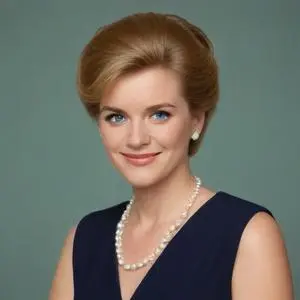
The first female US Ambassador to Ireland, serving from 1993 to 1998, known for her diplomatic efforts in the Northern Ireland peace process. She played a key role in helping to bring about the Good Friday Agreement.
Jean Kennedy Smith, a distinguished American diplomat, humanitarian, and author, is renowned for her instrumental role in the Northern Ireland peace process during her tenure as the United States Ambassador to Ireland from 1993 to 1998. As a member of the esteemed Kennedy family, she leveraged her diplomatic acumen to foster international cooperation and understanding, leaving an indelible mark on global relations.
Born on February 20, 1928, in Dorchester, Massachusetts, Jean Ann Kennedy was the eighth of nine children to Joseph P. Kennedy Sr. and Rose Fitzgerald. Her siblings included President John F. Kennedy, Senator Robert F. Kennedy, Senator Edward M. Kennedy, and Eunice Kennedy Shriver, founder of the Special Olympics. This illustrious family upbringing instilled in her a strong sense of public service and commitment to humanitarian causes.
As Ambassador to Ireland, Smith played a pivotal role in the Northern Ireland peace process, working closely with President Bill Clinton to facilitate dialogue between rival factions. Her efforts led to the granting of a visa to Sinn Féin President Gerry Adams, a move widely criticized at the time but later recognized as a crucial step towards the Provisional IRA's 1994 ceasefire declaration. In recognition of her service to Ireland, President Mary McAleese conferred honorary Irish citizenship upon her in 1998.
Smith was the founder of Very Special Arts (VSA), a non-profit organization dedicated to providing arts programs for people with disabilities. Through VSA, she championed the cause of inclusive arts education, empowering individuals with disabilities to express themselves creatively. Her tireless advocacy earned her the Presidential Medal of Freedom in 2011, the highest civilian honor in the United States, bestowed upon her by President Barack Obama.
Smith's life was marked by significant personal milestones, including her marriage to Stephen Edward Smith, a decorated war hero, and the birth of their four sons. Her family was deeply invested in her humanitarian pursuits, with her husband serving as the chairman of the Very Special Arts Advisory Board.
Jean Kennedy Smith's multifaceted career and humanitarian endeavors have left an enduring legacy, inspiring generations of diplomats, activists, and arts enthusiasts. Her commitment to promoting peace, understanding, and inclusivity has cemented her position as a champion of international cooperation and a beacon of hope for those seeking to make a positive impact on the world.
"The arts have the power to bring people together, to transcend borders, and to inspire us to be our best selves."
"In a world filled with conflict and division, we must seek out opportunities for dialogue, understanding, and cooperation."
Smith's accomplishments are often likened to those of her siblings, who similarly dedicated their lives to public service and humanitarian pursuits. Like her brother John F. Kennedy, she was a proponent of diplomatic engagement and international cooperation, while her work with VSA mirrored the compassion and empathy exemplified by her sister Eunice Kennedy Shriver.
Smith's close relationship with her siblings and extended family was instrumental in shaping her worldview and informing her humanitarian pursuits. Her family's collective commitment to public service and philanthropy instilled in her a strong sense of responsibility to use her platform for the greater good.
Jean Kennedy Smith's remarkable life serves as a testament to the transformative power of diplomacy, humanitarianism, and the arts. Her unwavering dedication to promoting peace, understanding, and inclusivity continues to inspire individuals from all walks of life, motivating them to make a positive impact on the world.
Born in 1917
The 35th President of the United States was a charismatic leader who navigated the country through the Cuban Missile Crisis and advocated for civil rights, leaving a lasting legacy in American politics.
Born in 1925
A Navy officer, lawyer, and politician who served as US Attorney General, playing a key role in the Civil Rights Movement and advocating for social justice. He was a prominent figure in American politics during the 1960s.
94 Years Old
A prominent figure in American politics, serving nearly 47 years in the Senate, championing liberal causes, and playing a significant role in shaping the country's healthcare and civil rights policies.
97 Years Old
The 37th First Lady of the United States was a fashion icon and cultural phenomenon, known for her elegance, style, and influential role in shaping American culture.
Born in 1921
Co-founder of the Special Olympics, a global sports organization empowering people with intellectual disabilities through athletic competition and inclusive communities. Known for her tireless advocacy and dedication to promoting acceptance and equality.
Born in 1923
A member of the Rat Pack, a group of entertainers that included Frank Sinatra and Dean Martin, known for his charismatic on-screen presence and iconic films like "Ocean's 11".
Born in 1915
A decorated war hero, lawyer, and politician who served as a U.S. Ambassador to France, known for his leadership in shaping the Peace Corps and other social programs.
