


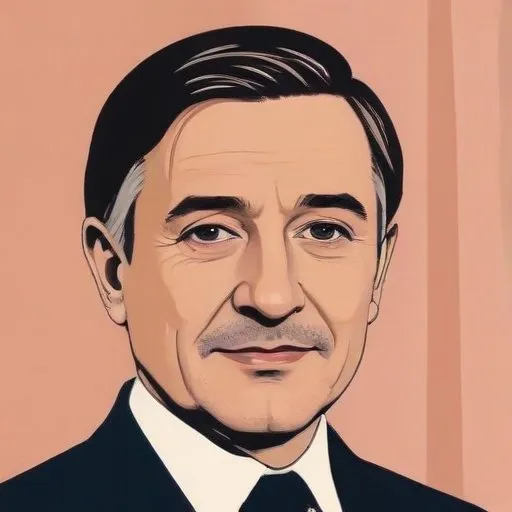
A Canadian journalist-turned-politician who served as the 38th Mayor of Quebec City, known for his efforts to revitalize the city's economy and preserve its cultural heritage.
Known for his unwavering dedication to the city of Quebec, Jean-Paul L'Allier served as the 38th Mayor of Quebec City from 1989 to 2005, leaving an indelible mark on the city's cultural, economic, and social landscape. As a two-term Member of the National Assembly of Quebec and a prominent figure in Quebec politics, L'Allier's legacy continues to inspire and shape the city's future.
Born on August 12, 1938, in Hudson, Montérégie, L'Allier pursued a degree in law from the University of Ottawa, which laid the foundation for his future endeavors in politics and public service. His early years as a lawyer in the Ottawa and Outaouais regions in the 1960s instilled in him a deep understanding of the intricacies of governance and community development.
L'Allier's foray into politics began in 1970, when he won the Liberal nomination for the district of Deux-Montagnes, subsequently winning the election. His impressive stint as a Member of the National Assembly of Quebec earned him a cabinet position in 1970, where he served as Minister of Communications until 1975 and Minister of Cultural Affairs from 1975 to 1976. Although defeated in the 1976 election, L'Allier's passion for public service remained unwavering, and he continued to be an influential voice in Quebec politics.
In 1989, L'Allier ran as the Rassemblement populaire candidate for Mayor of Quebec City, winning against Progrès civique de Québec candidate Jean-François Bertrand. His three-term tenure as mayor was marked by several notable achievements, including:
Throughout his illustrious career, Jean-Paul L'Allier remained committed to his core values of liberalism, sovereigntism, and social democracy. His tireless efforts to promote cultural and economic growth in Quebec City earned him widespread recognition and respect. As a testament to his dedication, L'Allier's legacy continues to inspire future generations of leaders, ensuring that his vision for a thriving Quebec City remains a beacon of hope and progress.
Jean-Paul L'Allier passed away on January 5, 2016, leaving behind a rich legacy of public service, leadership, and devotion to the people of Quebec City. His unwavering commitment to the betterment of his community serves as a shining example to all who aspire to make a difference in the world.
Born in 1922
A charismatic leader who championed Quebec's independence and shaped the province's distinct identity through his passionate politics and journalism. He's revered for his role in Quebec's Quiet Revolution.
Born in 1919
The charismatic leader who championed Canadian unity and implemented progressive policies, known for his iconic style and influential legacy in shaping modern Canada.
92 Years Old
The 20th Prime Minister of Canada, serving from 1993 to 2003, known for his leadership during the Quebec sovereignty movement and his role in shaping Canada's national unity. He implemented policies like the Clarity Act and the National Child Benefit.
87 Years Old
The 27th Premier of Quebec, a key figure in the Quebec sovereignty movement, known for leading the province's separatist government and negotiating with Canada's federal government.
95 Years Old
A Canadian economist and politician who served as the 26th Premier of Quebec, leading the province's sovereignty movement and playing a key role in the 1995 Quebec referendum. He's known for his strong nationalist views and efforts to gain independence for Quebec.
70 Years Old
A Canadian politician and sociologist who served as Minister of the Environment, known for his advocacy on climate change and implementation of the Kyoto Protocol. He led the Liberal Party of Canada and was a key figure in shaping the country's environmental policies.
77 Years Old
The 30th Premier of Quebec, a Canadian social worker and politician, is known for her advocacy of Quebec sovereignty and her efforts to promote the French language and culture. She played a significant role in shaping Quebec's politics and identity.
