


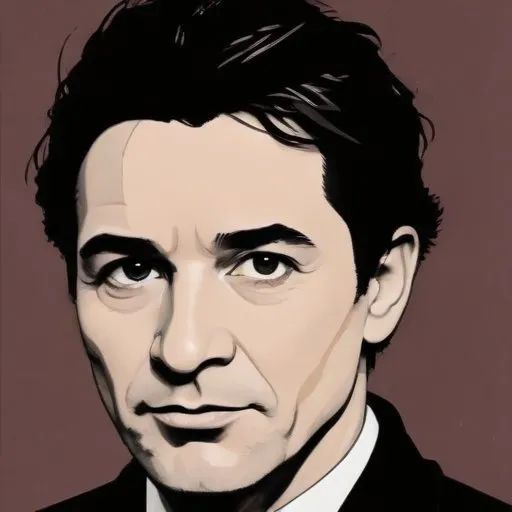
A prominent figure in Canadian modern art, known for vibrant, abstract paintings and sculptures that explore the relationship between color and emotion.
Renowned for his bold, mosaic-like paintings that blended abstract expressionism with a sculptural quality, Jean-Paul Riopelle was a trailblazing Canadian artist who left an indelible mark on the world of modern art. With a career spanning over five decades, Riopelle's innovative style, which often featured vibrant colors and textures, earned him widespread international recognition, making him the first Canadian painter since James Wilson Morrice to achieve such acclaim.
Born on October 7, 1923, in Montreal, Quebec, Riopelle's artistic inclinations were encouraged by his parents from a young age. He began taking drawing lessons in 1933, which continued until 1938, under the guidance of Henri Bisson, a well-known artist and educator. Riopelle's academic pursuits took him to the cole polytechnique de Montral, where he studied engineering, architecture, and photography in 1941. He later enrolled at the cole des beaux-arts de Montral, but shifted his focus to the cole du meuble, graduating in 1945.
Ripopelle's artistic journey was heavily influenced by his association with the Automatistes, a group of Montreal artists who explored Surrealist techniques, particularly automatic drawing. It was during this period that he met Paul-Émile Borduas, a prominent artist and educator, under whom he studied in the 1940s. In 1948, Riopelle was one of the 16 signatories of the Refus global, a manifesto that rejected clericalism and provincialism, marking a significant turning point in Quebec's artistic landscape.
In the early 1950s, Riopelle's artistic style underwent a radical transformation. He abandoned the traditional paintbrush, opting instead to use a palette knife to apply paint to canvas, creating a distinctive sculptural quality. This innovative technique, which he referred to as "mosaic painting," earned him widespread recognition and critical acclaim. His paintings from this period, characterized by vibrant colors and textures, are considered some of his most iconic works.
Riopelle's international breakthrough came in the 1950s, with his participation in several prominent exhibitions, including the São Paulo Biennial in 1955 and the Venice Biennale in 1958. His work was met with critical acclaim, solidifying his position as a leading figure in the Lyrical Abstraction movement. Throughout his career, Riopelle received numerous awards and honors, including the Grand Prize for Painting at the 1962 São Paulo Biennial.
Jean-Paul Riopelle's contributions to modern art are immeasurable. His pioneering work in Lyrical Abstraction paved the way for future generations of artists, and his influence can be seen in the works of many contemporary artists. Riopelle's legacy extends beyond the art world, with his commitment to creativity and innovation serving as an inspiration to people from all walks of life. Today, his works can be found in prominent museums and private collections around the world, a testament to his enduring impact on the world of art.
Riopelle's artistic philosophy was deeply rooted in his belief in the power of the subconscious mind. He saw art as a means of tapping into the unconscious, allowing the creativity and imagination to flow freely. This philosophy is reflected in his spontaneous and intuitive approach to painting, which often resulted in works that were both unexpected and innovative.
Born in 1881
A pioneering artist who transformed modern art with pioneering Cubist works, creating a new visual language that continues to inspire and influence art, design, and culture.
Born in 1869
A pioneering artist who revolutionized modern art with bold, expressive, and colorful works that blurred the lines between painting and sculpture, creating a new language of form and color.
Born in 1893
A renowned Spanish artist, famous for his vibrant, dreamlike paintings and sculptures that blended abstraction and surrealism, creating a unique visual language. His works often featured bold colors, biomorphic forms, and a sense of playfulness.
Born in 1904
A renowned surrealist master of bizarre, dream-like paintings and sculptures that blur reality and fantasy, known for iconic works like "The Persistence of Memory" and "The Elephants".
Born in 1898
A Belgian surrealist painter who challenged perceptions by depicting everyday objects in unexpected contexts, creating thought-provoking and witty visual paradoxes.
Born in 1887
A dreamlike painter and poet who blended fantasy and reality, creating vibrant, emotive works that explored Jewish culture and the human experience.
Born in 1882
A pioneer of Cubism, creating fragmented forms and multiple perspectives in art, revolutionizing modern art movements.
Born in 1881
A pioneer of Cubism, this artist's bold, geometric works blended modernity with ancient forms, influencing generations of artists and designers.
