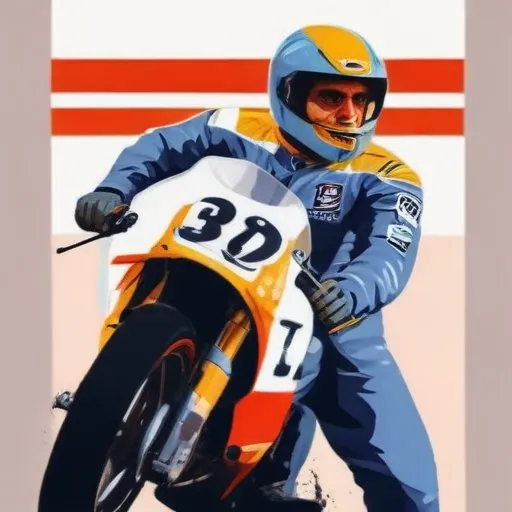
The Unyielding French Racer: Jean-Pierre Beltoise
Jean-Pierre Beltoise, a French racing icon, left an indelible mark on the world of motorsports with his impressive career spanning over three decades. Best known for his victories in Grand Prix motorcycle road racing and Formula One, Beltoise's name echoes the thrill and excitement of high-speed racing.
Early Life and Career
Born on April 26, 1937, in Paris, France, Beltoise's passion for racing was ignited early on. His impressive stint in motorcycle road racing earned him 11 French national titles in just three years. Between 1962 and 1964, he participated in international Grand Prix motorcycle racing, competing in various classes, including 50, 125, 250, and 500 cc.
The Formula One Years
In 1964, Beltoise's career took a dramatic turn when he suffered a severe arm injury during a 12-hour sports car endurance race in Reims. Despite the setback, he made a remarkable comeback in 1965, winning the Reims Formula 3 race. This triumph propelled him to Formula 2 for the following season. His Formula One debut came in 1966, driving a Formula Two Matra MS5-Cosworth at the German Grand Prix. Although he finished one lap down, he won the F2 class.
Beltoise's Formula One journey continued, with him competing in three Grands Prix in 1967, eventually securing a seventh-place finish at both Watkins Glen and Mexico City. His notable victory in the 1967 Buenos Aires Grand Prix, outside the World Championship calendar, showcased his exceptional driving skills.
Racing Highlights and Controversies
Beltoise's most significant Formula One victory came at the 1972 Monaco Grand Prix, where he finished first, ahead of
Jack Brabham. Throughout his career, he achieved a total of eight podium finishes, including a second-place finish at the 1968 Dutch Grand Prix. His time with the Matra team was marked by controversy, particularly during the 1969 season, when he was temporarily replaced by Chris Amon.
Legacy and Impact
Beltoise's unwavering dedication to motorsports has inspired generations of racers. His impressive career, despite setbacks and controversies, cemented his status as a French racing icon. With 88 Grands Prix under his belt, Beltoise's name is etched in the annals of Formula One history.
Personal Life and Later Years
Jean-Pierre Beltoise passed away on January 5, 2015, leaving behind a legacy of speed, skill, and perseverance. His love for racing continued even after his retirement, as he remained involved in the motorsports community, sharing his expertise and passion with fellow enthusiasts.
Jean-Pierre Beltoise: A Life Fuelled by Speed and Determination
Trivia and Fun Facts
- Beltoise won the Reims Formula 3 race in 1965, marking his comeback to racing after a severe arm injury.
- He competed in various classes of motorcycle road racing, including 50, 125, 250, and 500 cc.
- Beltoise's Formula One debut was at the 1966 German Grand Prix, driving a Formula Two Matra MS5-Cosworth.
Remembering Jean-Pierre Beltoise: A True Racing Legend
FAQ
What was Jean-Pierre Beltoises most notable achievement in racing?
Jean-Pierre Beltoise won the 1972 Monaco Grand Prix, his only Formula One victory. He also competed in motorcycle racing, winning the French 250cc championship in 1964.
What teams did Jean-Pierre Beltoise drive for in Formula One?
Jean-Pierre Beltoise drove for several teams, including Matra, BRM, and Surtees, during his Formula One career from 1967 to 1974.
How did Jean-Pierre Beltoise transition from motorcycle racing to Formula One?
Jean-Pierre Beltoise began his racing career on motorcycles, competing in Grand Prix motorcycle racing before transitioning to Formula One in the late 1960s.
What is Jean-Pierre Beltoises legacy in motorsports?
Jean-Pierre Beltoise is remembered as a skilled and versatile racer, who competed at the highest levels in both Formula One and motorcycle racing. His achievements have inspired subsequent generations of French racing drivers.
What is Jean-Pierre Beltoise doing now?
After retiring from racing, Jean-Pierre Beltoise worked as a racing instructor and commentator. He remains involved in the motorsports community, attending vintage racing events and sharing his expertise with younger drivers.