


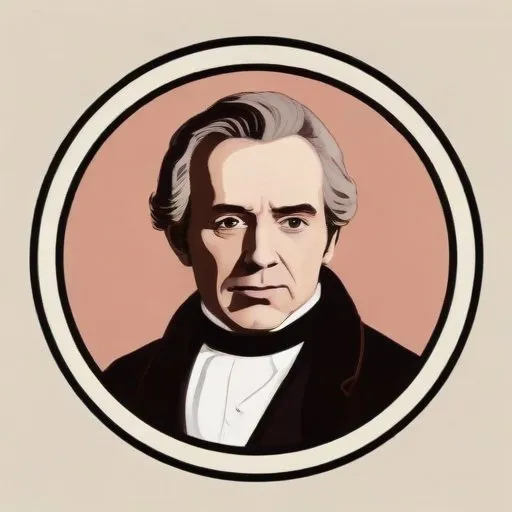
Astronomer and mathematician who calculated the orbit of Halley's Comet and later became a key figure in the French Revolution, serving as the first mayor of Paris. He played a crucial role in the early stages of the Revolution, helping to establish the National Assembly.
Known for his groundbreaking contributions to astronomy and mathematics, Jean Sylvain Bailly was a French luminary who left an indelible mark on the scientific community and the French Revolution. As a pioneering astronomer, he accurately predicted the return of Halley's Comet and went on to become a prominent figure in the revolution, serving as the mayor of Paris and presiding over the historic Tennis Court Oath.
Born on September 15, 1736, in Paris, Bailly was the son of Jacques Bailly, an artist and supervisor of the Louvre. Despite initially following in his family's footsteps, Bailly's passion for science and mathematics soon took center stage. Under the influence of renowned astronomer Nicolas de Lacaille, he devoted himself to the study of astronomy, making remarkable discoveries and earning recognition from the European scientific community.
Bailly published several seminal works, including:
Bailly's influence extended beyond the scientific realm as he became an influential figure in the French Revolution. He:
Despite his remarkable achievements, Bailly's life was cut short during the Reign of Terror. He was guillotined on November 12, 1793, a tragic victim of the very revolution he had helped shape.
Today, Jean Sylvain Bailly is remembered as a brilliant astronomer, mathematician, and revolutionary leader whose contributions continue to inspire and enrich our understanding of the universe and human history.
Born in 1749
Developed nebular hypothesis of the origin of the solar system and formulated Laplace's equation, a fundamental concept in mathematics and physics. He's considered the founder of celestial mechanics.
Born in 1736
Developed calculus, number theory, and celestial mechanics, making significant contributions to the fields of mathematics and astronomy.
Born in 1752
Developed the theory of elliptic integrals, and his work on number theory laid the foundation for modern cryptography.
Born in 1744
A French soldier, biologist, and academic who developed a theory of inheritance of acquired characteristics, proposing that organisms adapt to their environment and pass on those traits to their offspring.
Born in 1769
Founded the field of comparative anatomy, establishing extinction as a fact and creating a framework for understanding the natural world through fossil records.
Born in 1762
A French zoologist who classified and described numerous crustaceans and insects, laying the foundation for modern entomology. He's also credited with establishing the field of arachnology.
Born in 1743
Father of modern chemistry, discovered oxygen, and developed a systematic method of chemical nomenclature. He laid the foundation for modern chemistry and paved the way for future scientific discoveries.
Born in 1867
A pioneering scientist who pioneered radioactivity research, discovering elements polonium and radium, and paving the way for breakthroughs in medicine and energy.
