


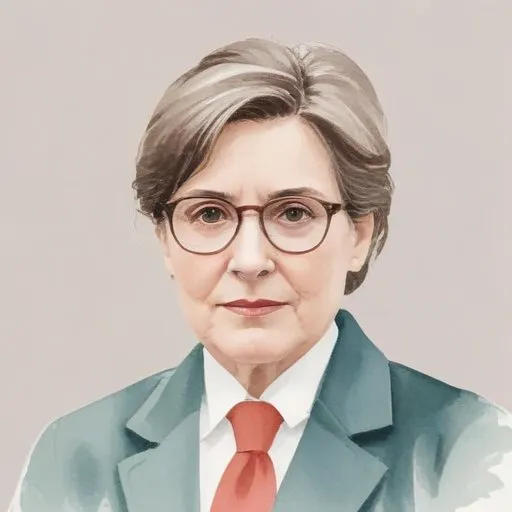
A pioneering female psychiatrist who contributed to the development of psychoanalytic theory and was a romantic partner of J. Robert Oppenheimer, influencing his work on the Manhattan Project.
Jean Tatlock was a renowned American psychiatrist, reporter, and writer, best known for her romantic relationship with J. Robert Oppenheimer, the director of the Manhattan Project's Los Alamos Laboratory during World War II. As a member of the Communist Party USA, Tatlock was a strong advocate for social change and equality, which greatly influenced her life and career.
Born on February 21, 1914, in Ann Arbor, Michigan, Jean Tatlock was the second child of John Strong Perry Tatlock, a prominent Old English philologist, and Marjorie ne Fenton. Her father's academic background and expertise in Geoffrey Chaucer had a significant impact on Tatlock's early life. She attended Cambridge Rindge and Latin School in Cambridge, Massachusetts, and later enrolled in Vassar College, graduating in 1935.
Tatlock's interest in psychiatry led her to pursue a medical degree at Stanford Medical School, where she graduated in 1939. Her academic achievements and dedication to her field earned her recognition as a talented and promising psychiatrist.
As a reporter and writer for the Western Worker, the Communist Party USA's publication, Tatlock's work was deeply rooted in her political beliefs. Her writings often reflected her commitment to social justice and equality, which resonated with many during a time of great turmoil.
In 1936, Tatlock began a romantic relationship with J. Robert Oppenheimer, a professor of physics at the University of California, Berkeley. This relationship, combined with her membership in the Communist Party, led to her being placed under surveillance by the FBI, and her phone was tapped. The scrutiny and pressure took a toll on Tatlock's mental health, and she struggled with clinical depression throughout her life.
On January 4, 1944, Jean Tatlock died by suicide, leaving behind a legacy of intellectual curiosity, passion, and commitment to social change. Her tragic end was a devastating loss to those who knew her and a reminder of the immense pressure and scrutiny she faced during her lifetime.
Jean Tatlock's life and work continue to inspire and educate people about the importance of social justice, equality, and mental health awareness. Her struggles and triumphs serve as a testament to the power of human resilience and the need for compassion and understanding.
Today, Tatlock's legacy is a powerful reminder of the impact one person can have on the world. Her commitment to her craft, her political beliefs, and her unwavering passion for life continue to inspire generations, making her an enduring figure in American history.
Born in 1856
Pioneering psychoanalyst who developed theories on the subconscious mind, childhood experiences, and the structure of personality, revolutionizing our understanding of human behavior and psychology.
Born in 1875
Developed the concept of collective unconscious and archetypes, and founded analytical psychology, which emphasizes the integration of opposites and the process of individuation.
Born in 1900
A German psychologist and sociologist who developed the concept of "social character" and explored the relationship between psychology and society, known for his humanistic and socialist approach.
Born in 1892
Developed the interpersonal psychoanalytic theory, which focuses on the role of relationships in shaping personality and behavior. Known for his work on the importance of human connections and relationships in mental health.
Born in 1908
Developed the Hierarchy of Needs, a pyramid-shaped model that prioritizes human needs, from basic physiological needs to self-actualization and personal growth. His work focuses on human motivation and the pursuit of happiness.
Born in 1902
Developed the theory of psychosocial development, which proposes that individuals go through eight stages of development from infancy to old age, each with its own unique challenges and opportunities. His work has had a significant impact on our understanding of human development and identity formation.
