


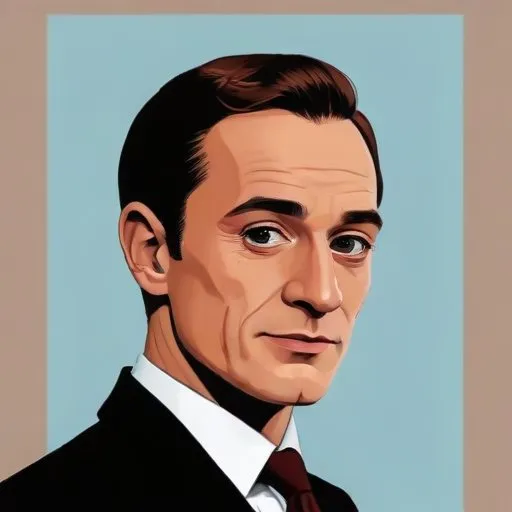
Jean Vilar, a French actor, and theatre director, is renowned for revolutionizing the theatrical landscape by making theatre accessible to the masses. His pioneering work in decentralizing theatre and creating institutions like the Festival d'Avignon and the Théâtre National Populaire has left an indelible mark on the world of performing arts.
Vilar's directorial philosophy was deeply rooted in the idea of making theatre accessible to all. He believed that theatre should be a reflection of the people, not just an elite form of entertainment for the upper class. This philosophy is evident in his commitment to decentralizing theatre, taking it out of the traditional bourgeoisie hubs and bringing it to the masses.
Vilar's work has had a profound impact on modern society. He has inspired a generation of theatre practitioners to rethink their approach to theatre, focusing on inclusivity and accessibility rather than exclusivity and elitism. His legacy can be seen in the numerous theatre festivals and institutions that have been established in his wake, all striving to democratize the art form.
Vilar was married to the artist André Vilar (1916-2009) and worked closely with his sister-in-law Valentine Schlegel at the Festival d'Avignon. He passed away on May 28, 1971, leaving behind a legacy that continues to inspire and influence the world of theatre.
In 1979, the theatre department of the Bibliothèque nationale de France, the city of Avignon, and the Association Jean Vilar established the Maison Jean Vilar in Avignon to further Vilar's work and promote the Festival d'Avignon, the OFF, and theatre and performance in the region. Vilar's final resting place is in the Cimetière Marin, Sète, alongside fellow French intellectual Paul Valéry.
"Theatre should be a place where the people can come together, not just a privileged few."
Through his vision, perseverance, and commitment to democratizing theatre, Jean Vilar has left an indelible mark on the world of performing arts, inspiring generations to come.
Vilar's work can be compared to that of his contemporaries, such as Bertolt Brecht and Konstantin Stanislavski, who also sought to revolutionize the theatre landscape through innovative approaches to performance and audience engagement.
Vilar's story is a testament to the power of vision, perseverance, and dedication. His unwavering commitment to his craft and his philosophy has inspired countless individuals to strive for excellence and to challenge the status quo.
Vilar's influence can be seen in the numerous theatre festivals and institutions that have been established in his wake, as well as in the work of theatre practitioners who have been inspired by his philosophy and approach to performance.
Vilar's work has been recognized and celebrated through various awards and honors, including the establishment of the Maison Jean Vilar in Avignon.
Jean Vilar's legacy continues to inspire and influence the world of theatre, a testament to the power of vision, perseverance, and dedication.
Born in 1910
A renowned French actor and director who pioneered the art of mime, bringing silence to life on stage and screen through his expressive gestures and poignant performances.
Born in 1900
A pioneering aviator and writer, known for his poetic and philosophical novels, particularly "The Little Prince", which has become a timeless classic of world literature.
Born in 1889
A renowned French creative force, celebrated for his innovative and surreal works that blurred the lines between literature, art, and cinema, leaving an indelible mark on 20th-century culture.
Born in 1901
A French historian, theorist, and author who wrote influential novels and essays on art, politics, and human condition, exploring the complexities of modern society.
Born in 1887
A renowned French actor and producer, known for his unique, expressive acting style and innovative theatrical productions that blended drama and comedy. He founded his own theatre company and produced numerous films and plays.
Born in 1905
A French-Italian actor and screenwriter, known for his iconic roles in classic films like "Les Enfants du Paradis" and "Eyes Without a Face", showcasing his versatility in drama and horror.
Born in 1921
A charismatic actor and singer who starred in iconic films like "On the Waterfront" and "Let's Make Love" alongside Marilyn Monroe, charming audiences with his rugged good looks and smooth vocals.
