


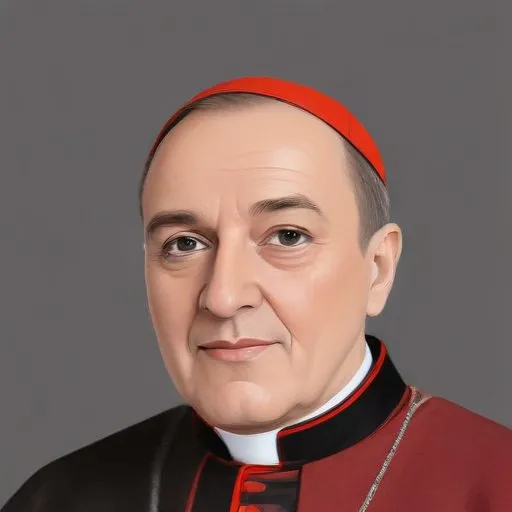
A French cardinal who played a key role in the French Revolution, advocating for the separation of church and state and helping to establish the Civil Constitution of the Clergy.
Jean de DieuRaymond de Cuc de Boisgelin, a French prelate, statesman, and cardinal, is renowned for his remarkable life of devotion to the Catholic Church and his outstanding contributions to the city of Aix in Provence. He is credited with implementing numerous public utility projects, including the construction of a canal bearing his name, which transformed the landscape of Provence.
Born on February 27, 1732, in Rennes, France, Boisgelin demonstrated exceptional academic prowess from a young age. He attended the prestigious seminary of Saint-Sulpice and later the Sorbonne, where he excelled in his studies. The unexpected death of his elder brother led to his decision to dedicate his life to the Catholic Church, forgoing his birthright.
Boisgelin's remarkable intellect and dedication propelled him through the ranks of the church. He was appointed Vicar-General of Pontoise, followed by his consecration as Bishop of Lavaur in 1765. Five years later, he became the Archbishop of Aix in Provence, a position that marked the pinnacle of his ecclesiastical career.
As Archbishop of Aix, Boisgelin earned a reputation as a skillful administrator and princely benefactor. He initiated various projects aimed at improving the lives of the people of Provence, including the construction of a canal, a bridge at Lavaur, and educational institutions for underprivileged children. His wisdom, generosity, and firm leadership during times of scarcity and political ferment earned him the respect and gratitude of the people.
Boisgelin was entrusted with the solemn duty of delivering the funeral orations of both of Louis XVI's parents, the Dauphin in 1765 and the Dauphine in 1767. This honor underscored his reputation as a distinguished prelate and statesman.
Jean de DieuRaymond de Cuc de Boisgelin's life exemplifies unwavering dedication to the Catholic Church and selfless service to humanity. His visionary leadership, philanthropic endeavors, and wise governance have left an indelible mark on the city of Aix in Provence, ensuring his legacy as a beacon of hope and inspiration for generations to come.
Through his remarkable life, Jean de DieuRaymond de Cuc de Boisgelin has inspired countless individuals, leaving behind a testament to the transformative power of faith, leadership, and philanthropy.
Born in 1504
Leader of the Catholic Church during the Counter-Reformation, he excommunicated Queen Elizabeth I and played a key role in the Council of Trent.
Born in 1876
The leader of the Catholic Church from 1939 to 1958, known for his controversial role during World War II, particularly in regards to the Holocaust. He is also remembered for his encyclicals on social justice and liturgical reforms.
Born in 1769
A French military leader who rose to prominence during the French Revolution and became Emperor of France, known for his military conquests and reorganization of Europe. He is also famous for his Napoleonic Code, which remains a foundation of modern law.
Born in 1785
The last king of the French monarchy before the French Revolution, known for his tragic and mysterious life, including his imprisonment and disputed death.
Born in 1338
The King of France from 1364 to 1380, known for his military victories and rebuilding of Paris, earning him the nickname "Charles the Wise".
Born in 1768
A French historian and politician who served as Minister of Foreign Affairs, known for his influential writings on French history and politics, shaping the country's identity and foreign policy.
