


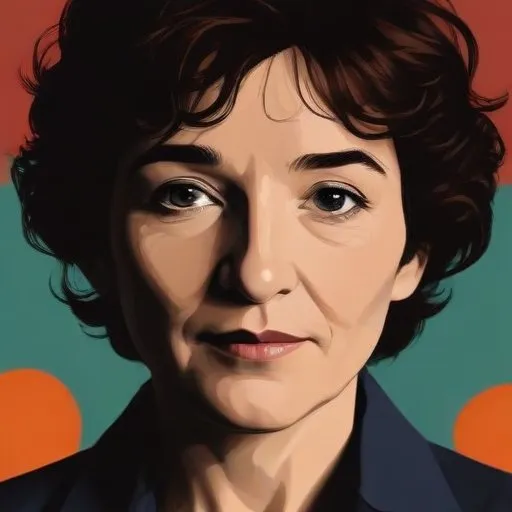
A celebrated author of inventive and lyrical fiction, exploring themes of love, identity, and human connection, with a distinctive, poetic writing style. Her novels often blur the lines between fiction and memoir.
Jeanette Winterson is a literary wizard, celebrated for her unflinching explorations of human sexuality, identity, and the intricate dance between technology and human emotions. Through her works, she has crafted a unique narrative voice that delves into the complexities of human experience, earning her a devoted readership and critical acclaim.
Born on August 27, 1959, in Manchester, England, Winterson was adopted by Constance and John William Winterson just 21 days later. Her upbringing in the Elim Pentecostal Church in Accrington, Lancashire, would later influence her writing, as she often grappled with the constraints of religious dogma and the complexities of her own sexuality.
At 16, Winterson came out as a lesbian and left home, embarking on a journey of self-discovery that would shape her artistic vision. She attended Accrington and Rossendale College, supporting herself through various odd jobs while studying English at St. Catherine's College, Oxford.
Winterson's debut novel, Oranges Are Not the Only Fruit, published in 1985, was a semiautobiographical tale of a lesbian teenager's rebellion against convention. The book won the Whitbread Prize for a First Novel, establishing Winterson as a rising star in the literary world.
Her subsequent works, such as The Passion (1987) and Sexing the Cherry (1989), continued to probe the boundaries of gender, sexuality, and human relationships. Winterson's writing often blurs the lines between fantasy and reality, weaving intricate narratives that defy categorization.
In the 1990s, Winterson adapted Oranges Are Not the Only Fruit for television, receiving a BAFTA Award for Best Drama. Her later novels, such as The PowerBook (2000) and The Stone Gods (2007), explored the intersections of technology and human experience, solidifying her reputation as a visionary storyteller.
Jeanette Winterson's contributions to literature have been profound, inspiring a generation of writers to explore the complexities of human sexuality and identity. Her work has been translated into nearly 20 languages, cementing her status as a global literary force.
Through her writing, Winterson has challenged societal norms and expectations, providing a platform for marginalized voices to be heard. Her legacy extends beyond her own work, as she has inspired countless readers and writers to embrace their true selves, without apology or compromise.
Jeanette Winterson's remarkable journey, marked by rebellion, self-discovery, and unbridled creativity, has left an indelible mark on the literary landscape. As a storyteller, teacher, and advocate, she continues to inspire and challenge, leaving us with a profound appreciation for the complexities and beauty of human experience.
Born in 1882
A pioneering author of modernist literature, known for experimental novels and essays that explored the human experience, blurring the lines between reality and fiction.
Born in 1919
A Nobel Prize-winning writer who explored themes of politics, psychology, and social issues through novels, poetry, and plays, leaving a lasting impact on 20th-century literature.
86 Years Old
A renowned novelist, poet, and literary critic, known for her prophetic and poignant works that explore the human condition, feminism, and environmentalism. Her writing often weaves together mythology, history, and science to create thought-provoking narratives.
Born in 1918
A Scottish novelist celebrated for her witty, insightful, and nuanced portrayals of human relationships, morality, and the search for meaning in post-war Britain.
90 Years Old
A celebrated author of novels, short stories, and poetry, known for her richly detailed and imaginative works that often blend fantasy and reality. Her writing explores themes of art, history, and the human experience.
51 Years Old
A critically acclaimed novelist and essayist, known for exploring themes of identity, culture, and social inequality in her works, which often blend elements of fiction and non-fiction.
Born in 1873
The 42nd Governor of New York was a prominent figure in American politics, known for being the first Catholic to run for President and a strong advocate for social justice and progressive reforms. He played a significant role in shaping the Democratic Party's platform during the 1920s and 1930s.
60 Years Old
A celebrated author of historical fiction, particularly known for her lesbian themes and atmospheric, suspenseful storytelling, often exploring the darker aspects of human nature.
