


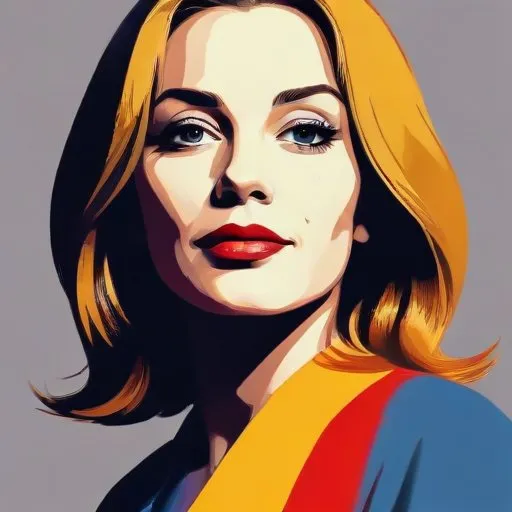
Pioneering actress and screenwriter who broke into Hollywood's male-dominated industry, penning scripts for Cecil B. DeMille and starring in silent films.
Jeanie MacPherson was a trailblazing American silent film actress, writer, and director, known for her groundbreaking work in the early days of cinema, as well as her collaborations with legendary directors D.W. Griffith and Cecil B. DeMille. As a founding member of the Academy of Motion Picture Arts and Sciences, MacPherson left an indelible mark on the film industry.
Born Abbie Jean MacPherson on May 18, 1886, in Boston, Massachusetts, she hailed from a wealthy family of European Spanish, Scottish, and French descent. Her parents, John S. MacPherson and Evangeline C. Tomlinson, sent her to Mademoiselle DeJacques school in Paris, but her family's financial struggles forced her return to the United States. She later earned a degree from the Kenwood Institute in Chicago and began her career as a dancer and stage performer.
MacPherson made her film debut in 1908 with The Fatal Hour, directed by D.W. Griffith. Her dark hair led to her frequent casting in roles of ethnicities other than her own, often playing Gypsy or Spanish characters. Between 1908 and 1917, she accumulated an impressive 146 acting credits, working with Griffith and later with the Universal Company.
In 1913, MacPherson wrote, directed, and starred in The Tarantula, a film about a Spanish-Mexican girl who seduces men before killing them. At just 27, she became the youngest director in motion picture history. This pioneering achievement cemented her status as a trailblazer in the male-dominated film industry.
MacPherson's contributions to the film industry went beyond her on-screen performances. As a founding member of the Academy of Motion Picture Arts and Sciences, she played a crucial role in shaping the organization's early years. Her legacy serves as an inspiration to women in film, demonstrating the importance of perseverance and determination in the face of adversity.
MacPherson's health issues forced her to take a temporary hiatus from the film industry. However, she rebounded, continuing to work in the industry until her passing on August 26, 1946.
As MacPherson once said, "The camera is a medium of expression, a means of conveying thought and emotion. It is not merely a mechanical device."
In recognition of her trailblazing work, MacPherson has been recognized as a pioneer in the film industry, leaving behind a lasting legacy that continues to inspire generations of filmmakers.
Born in 1875
Pioneering filmmaker behind groundbreaking silent movies, credited with developing innovative camera techniques and narrative storytelling styles.
Born in 1892
A pioneering actress, producer, and screenwriter who co-founded United Artists, revolutionizing the film industry with her creative vision and business acumen. She was a silent film star and one of the most popular actresses of her time.
Born in 1893
Pioneering silent film star and director, known for her iconic performances in classics like "The Birth of a Nation" and "Broken Blossoms".
Born in 1883
A swashbuckling pioneer of silent films, known for his daring stunts and charming on-screen presence, revolutionizing the action-adventure genre.
Born in 1889
A pioneer of silent film, he is renowned for his iconic "Little Tramp" character and groundbreaking work in writing, directing, and starring in his own movies.
Born in 1895
A pioneering silent film comedian, known for his deadpan expression and ingenious physical comedy, who wrote, directed, and starred in his own films.
Born in 1893
Pioneering silent film star and stunt master, known for performing daring physical comedy and iconic scenes, such as hanging from a clock tower.
Born in 1895
Silent film heartthrob and sex symbol, known for his iconic roles in films like "The Four Horsemen of the Apocalypse" and "The Sheik", captivating audiences with his exotic good looks and charming on-screen presence.
