


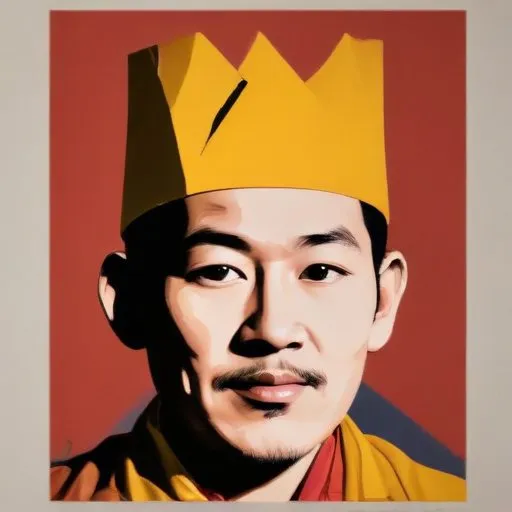
The 5th King of Bhutan is the monarch who introduced democracy to the country, transitioning from an absolute monarchy to a constitutional one, while also prioritizing sustainable development and environmental conservation. He is revered for his progressive vision and commitment to his people's welfare.
Jigme Khesar Namgyel Wangchuck, the fifth Dragon King of Bhutan, is revered for his visionary leadership and commitment to the Gross National Happiness (GNH) philosophy, a unique development paradigm that prioritizes the well-being of his people and the environment.
Born on February 21, 1980, in Kathmandu, Nepal, King Khesar, as he is affectionately known, is the eldest son of the fourth Dragon King, Jigme Singye Wangchuck, and Queen Ashi Tshering Yangdon. With his coronation in 2008, Bhutan marked 100 years of monarchy, and the young king embarked on a journey to modernize his country while preserving its rich cultural heritage.
King Khesar's early life was marked by a strong emphasis on education. He completed his higher secondary studies at Yangchenphug High School in Bhutan before moving to the United States, where he attended Phillips Academy in Andover and Cushing Academy in Ashburnham. He later studied at Wheaton College in Massachusetts and attended the Diplomatic Studies Programme at Magdalen College, Oxford.
As Crown Prince, King Khesar accompanied his father on numerous tours throughout Bhutan, engaging with the people and understanding their needs. He also represented Bhutan at several international events, including the 27th UN General Assembly, where he made his debut speech in 2002, emphasizing the welfare of millions of children worldwide. In 2004, he was awarded the Red Scarf by his father, a symbol of honor and distinction.
Upon his accession to the throne, King Khesar continued to prioritize GNH, a concept introduced by his father. He has worked tirelessly to promote sustainable development, environmental conservation, and social justice, earning Bhutan recognition as a global leader in sustainable tourism and eco-friendly practices.
The King's commitment to GNH has inspired a new generation of leaders and policymakers to rethink traditional development models. His emphasis on preserving Bhutan's unique culture and environment has created a blueprint for sustainable development that prioritizes the well-being of people and the planet.
King Khesar's leadership has inspired a new wave of social entrepreneurs, environmentalists, and development experts to explore innovative solutions for sustainable development. His commitment to GNH has also sparked a global conversation about redefining success and happiness beyond economic growth.
"Gross National Happiness is a development philosophy that is based on the premise that true development can take place only when material progress is balanced with the spiritual and emotional well-being of our people."
King Khesar's reign marks a significant chapter in Bhutan's history, as the country navigates the challenges of modernization while preserving its unique cultural identity. His leadership has cemented Bhutan's position as a beacon of sustainable development and environmental stewardship, inspiring future generations to follow in his footsteps.
In conclusion, King Jigme Khesar Namgyel Wangchuck is a visionary leader who has redefined the role of a monarch in the 21st century. His commitment to the people and the environment has created a lasting legacy that will continue to inspire and motivate generations to come.
70 Years Old
The fourth king of Bhutan, who introduced democracy and modernized the country while prioritizing Gross National Happiness over economic growth. He's known for his unique approach to development and governance.
