


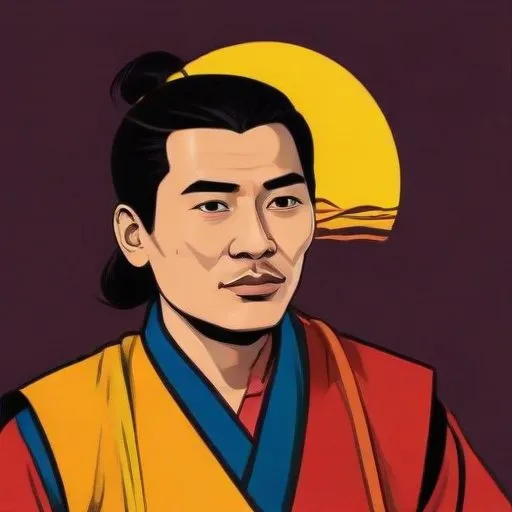
The fourth king of Bhutan, who introduced democracy and modernized the country while prioritizing Gross National Happiness over economic growth. He's known for his unique approach to development and governance.
Jigme Singye Wangchuk is best known for his innovative approach to governance, introducing the concept of Gross National Happiness (GNH) as a measure of success, moving away from the traditional GDP-focused model. As the fourth king of Bhutan, he ruled from 1972 to 2006, leaving an indelible mark on the country's development, economy, and environment.
Born on November 11, 1955, in Thimphu, Bhutan, Jigme Singye Wangchuk was the eldest son of King Jigme Dorji Wangchuck and Queen Ashi Kesang Choden. He received his early education in Bhutan and later attended schools in India and the UK. In 1972, at the age of 16, he ascended to the throne following the sudden death of his father.
King Jigme Singye Wangchuk's commitment to GNH was rooted in his belief that economic growth should be balanced with social and environmental well-being. He envisioned a society where material progress was harmonious with spiritual growth, cultural heritage, and environmental conservation. This philosophy has inspired a global movement, with many countries now adopting similar approaches to measuring national success.
King Jigme Singye Wangchuk's vision has inspired a new generation of leaders and policymakers worldwide. His emphasis on GNH has sparked a global debate on redefining success and well-being, encouraging countries to adopt more holistic approaches to development.
In 1979, King Jigme Singye Wangchuk married four sisters,Ashi Dorji Wangmo, Ashi Tshering Pem, Ashi Tshering Yangdon, and Ashi Sangay Choden, in a unique polyandrous marriage. He has ten children, including the current king, Jigme Khesar Namgyel Wangchuck.
King Jigme Singye Wangchuk's commitment to his people and the environment has earned him international recognition and admiration. He is often compared to other visionary leaders, such as Nelson Mandela and Mahatma Gandhi, who have also left an indelible mark on the world.
"Gross National Happiness is more important than Gross National Product."
The concept of GNH has inspired numerous documentaries, articles, and books, cementing King Jigme Singye Wangchuk's status as a thought leader in the global community.
King Jigme Singye Wangchuk has received several international awards, including the Champions of the Earth award in 2005, for his outstanding contributions to environmental conservation and sustainable development.
| 1955 | Birth of Jigme Singye Wangchuk |
| 1972 | Ascension to the throne |
| 1979 | Marriage to four sisters |
| 2005 | Receipt of Champions of the Earth award |
| 2006 | Abdication and transition to constitutional monarchy |
King Jigme Singye Wangchuk is an accomplished archer and has represented Bhutan in international archery competitions.
As the world continues to grapple with the challenges of sustainable development, King Jigme Singye Wangchuk's vision of GNH is likely to become an increasingly important benchmark for measuring success and well-being.
The king has been involved in various charitable initiatives, including the Tarayana Foundation, which focuses on rural development and poverty alleviation in Bhutan.
King Jigme Singye Wangchuk's commitment to his people and the environment serves as a powerful inspiration to leaders and individuals around the world, encouraging them to prioritize the well-being of both people and the planet.
97 Years Old
The third king of Bhutan, who introduced modernization and democratization to the country, transforming it from a medieval society to a modern, constitutional monarchy. He's also known for his commitment to sustainable development and environmental conservation.
