


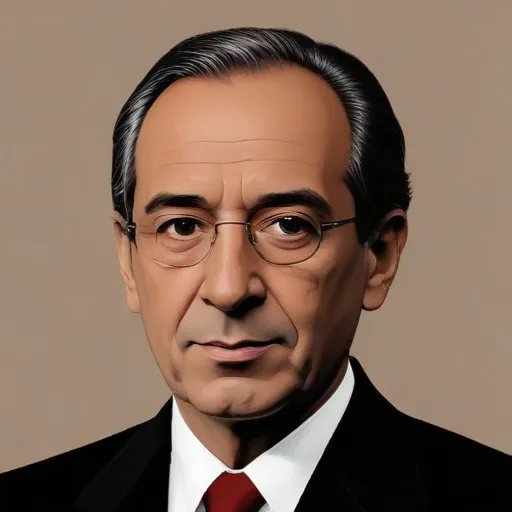
Portuguese Minister of Economy and Treasury and MP who served from 1976 to 1980, known for implementing economic reforms and stabilizing the country's finances.
Joaquim Pina Moura, a stalwart figure in Portuguese politics, is renowned for his unwavering commitment to economic development and his pivotal role in shaping the country's financial landscape. As a seasoned economist and politician, Moura's illustrious career spanned across multiple domains, earning him a reputation as a champion of progressive reforms and sustainable growth.
Born on February 22, 1952, Joaquim Pina Moura pursued his higher education at the University of Porto, where he enrolled in mechanical engineering courses. However, it was his subsequent degree in economics and doctorate in monetary and financial economics that laid the foundation for his future endeavors.
Moura's foray into politics began in 1972, when he joined the Portuguese Communist Party. The following year, he became an integral part of the Opposition Congress, fighting against the authoritarian regime of Estado Novo. This rebellious spirit and commitment to democracy ultimately led him to join the Socialist Party in 1995.
During his tenure, Moura worked tirelessly to promote economic growth, modernize the country's financial infrastructure, and foster international cooperation. His leadership and vision played a significant role in shaping Portugal's economic trajectory, earning him widespread recognition and respect.
As a member of the European Bank for Reconstruction and Development, Moura worked closely with international organizations to foster economic cooperation and development in Eastern Europe and beyond. His expertise and diplomatic acumen enabled him to navigate complex global economic landscapes, solidifying Portugal's position on the world stage.
Joaquim Pina Moura's passing on February 20, 2020, at the age of 67, marked the end of an era in Portuguese politics. His remarkable career and contributions to economic progress, democratic reform, and international cooperation continue to inspire future generations of leaders and policymakers. Moura's unwavering dedication to the betterment of his country and the global community serves as a beacon of hope for a brighter, more prosperous future.
Born in 1924
A Portuguese historian, lawyer, and politician who served as the 17th President of Portugal, known for leading the country's transition from authoritarianism to democracy. He played a key role in Portugal's decolonization and European integration.
77 Years Old
The first Portuguese to lead the United Nations, he's a champion of global cooperation, human rights, and sustainable development. He's a prominent voice on the world stage, advocating for climate action and social justice.
87 Years Old
The 19th President of the Portuguese Republic was a prominent economist and politician who served from 2006 to 2016, known for his economic reforms and leadership during the European sovereign-debt crisis. He is also a published author on economics and politics.
70 Years Old
The first Prime Minister of Portugal to serve two consecutive terms, known for his efforts to reform the country's economy and his later role as President of the European Commission.
70 Years Old
The 118th Prime Minister of Portugal, a lawyer-turned-politician who led the country's government from 2004 to 2005. He's known for his brief but tumultuous tenure, marked by controversy and a no-confidence vote.
Born in 1889
A dictator who ruled Portugal from 1933 to 1968, implementing a corporatist authoritarian regime and maintaining a neutral stance during World War II. He's known for his economic reforms and nationalist policies.
