


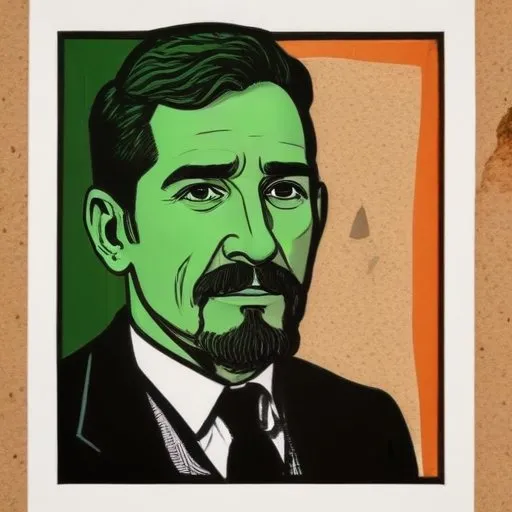
An Irish-American republican who participated in the 1920 Cork hunger strike, sacrificing his life for Irish independence.
Joe Murphy, an Irish officer in the Irish Republican Army, is remembered for his unwavering dedication to the cause of Irish independence and his ultimate sacrifice during the 1920 Cork hunger strike. His brave stance against British rule and his willingness to give his life for his country's freedom have cemented his place in Irish history as a hero and a martyr.
Murphy was born on May 10, 1895, in Lynn, Massachusetts, to Irish parents Timothy Murphy and Nora O'Brien. Shortly after, the family returned to their native Cork City, where Joe was educated at Togher National School. He developed a passion for Gaelic sports, particularly hurling, Gaelic football, and road bowling, which would later become an integral part of his identity as an Irish Republican.
In 1917, Murphy joined the Irish Volunteers, a militant Irish nationalist organization, and rose through the ranks to become Commandant of H Company. He was involved in several attacks on British police and military posts, including the high-profile assault on Farran police barracks. This act of defiance against British rule earned him the attention of the authorities, leading to his arrest on July 15, 1920.
Imprisoned in Cork County Gaol, Murphy faced a Military Tribunal but was not convicted or sentenced for any crime. In response, he joined a large group of prisoners on a hunger strike, led by the Lord Mayor of Cork, Terence McSwiney, on August 11, 1920. After 76 days without food, Murphy succumbed to his hunger strike, passing away on October 25, 1920.
Murphy's sacrifice, along with that of Michael Fitzgerald, who died eight days prior, served as a catalyst for the 1923 Irish Hunger Strikes, the largest hunger strike in Irish history. His bravery and devotion to the cause of Irish independence have inspired generations of Irish Republicans and cemented his place in the annals of Irish history.
"The Republic guarantees religious and civil liberty, equal rights and equal opportunities to all its citizens, and declares its resolve to pursue the happiness and prosperity of the whole nation and of all its parts, cherishing all the children of the nation equally." - A quote from the 1916 Proclamation of the Irish Republic, reflecting Murphy's commitment to Irish independence and equality
Murphy's story serves as a powerful reminder of the sacrifices made by Irish Republicans during the struggle for independence. His bravery and devotion to the cause have left an indelible mark on Irish history, inspiring future generations to continue the fight for freedom and self-determination.
Born in 1879
An Irish republican politician who served as Lord Mayor of Cork and famously died after a 74-day hunger strike in 1920, inspiring widespread international sympathy and support for the Irish independence movement.
Born in 1843
A pioneering Australian writer, known for his vivid depictions of rural life and struggles, crafting novels that explored the country's identity and culture. His works remain a testament to Australia's literary heritage.
Born in 1885
Irish republican activist who died in 1917 after a hunger strike in prison, sparking widespread outrage and contributing to the Irish independence movement.
