


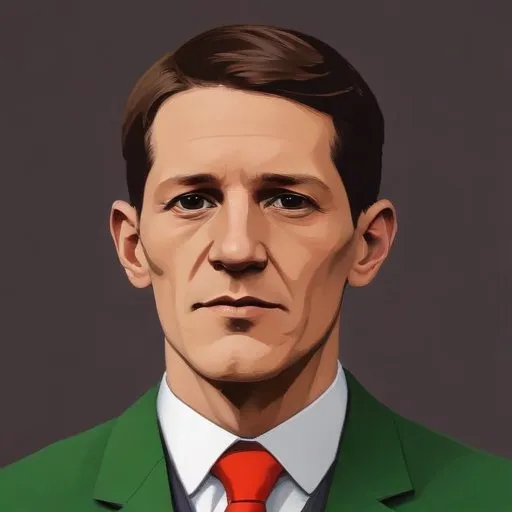
An Irish republican politician who served as Lord Mayor of Cork and famously died after a 74-day hunger strike in 1920, inspiring widespread international sympathy and support for the Irish independence movement.
Terence MacSwiney, a trailblazing Irish playwright, author, and politician, is best known for his 74-day hunger strike in 1920, which galvanized international attention towards the Irish Republican campaign. As the Lord Mayor of Cork during the Irish War of Independence, MacSwiney's unwavering dedication to the cause of Irish independence earned him a legendary status in the annals of Irish history.
Born on March 28, 1879, in Cork, Ireland, MacSwiney was one of eight children to John MacSwiney and Mary (née Wilkinson). His father, a schoolteacher turned tobacco factory owner, emigrated to Australia in 1885, leaving his family in the care of his wife and eldest daughter. MacSwiney's mother, an English Catholic with strong Irish nationalist opinions, played a significant role in shaping his political views.
MacSwiney received his education from the Christian Brothers at the North Monastery school in Cork city. He left school at 15 to support his family and became an accountancy clerk. However, he continued his studies, matriculating successfully and graduating from the Royal University with a degree in Mental and Moral Science in 1907.
In 1901, MacSwiney co-founded the Celtic Literary Society, and in 1908, he established the Cork Dramatic Society with Daniel Corkery. He wrote several plays for the society, including his debut work, The Last Warriors of Coole, produced in 1910. His fifth play, The Revolutionist (1915), explored the theme of a lone individual's political stand.
Described as a "sensitive poet-intellectual," MacSwiney's writings and politics drew attention from the British government. In 1920, he was elected as the Lord Mayor of Cork, but shortly after, he was arrested on charges of sedition and imprisoned in Brixton Prison.
In response to his imprisonment, MacSwiney embarked on a 74-day hunger strike, which began on August 12, 1920. His selfless act of defiance drew international attention to the Irish Republican cause, and his eventual death on October 25, 1920, sparked widespread outrage and mourning.
Terence MacSwiney's unwavering commitment to Irish independence has inspired generations of Irish republicans. His literary works continue to be celebrated for their intellectual depth and emotional resonance. As a symbol of resistance against oppression, MacSwiney's legacy extends beyond Ireland, influencing anti-colonial movements globally.
In conclusion, Terence MacSwiney's remarkable life and tragic death have cemented his place in Irish history as a champion of freedom, equality, and self-determination. His literary and political contributions continue to inspire and educate, ensuring his legacy will endure for generations to come.
Born in 1890
Leader of the Irish independence movement, instrumental in negotiating the Anglo-Irish Treaty, and a key figure in the Irish War of Independence.
Born in 1882
Leader of Ireland's struggle for independence from Britain, serving as both Prime Minister and President, and key figure in shaping the country's modern identity.
Born in 1871
Leader of the Irish independence movement and key negotiator of the Anglo-Irish Treaty, shaping Ireland's path to independence.
Born in 1902
Irish revolutionary who fought in the Anglo-Irish War and was executed by the British at 18, becoming a martyr for the Irish independence movement.
Born in 1879
Irish revolutionary leader who sparked the Easter Rising, a pivotal event in Ireland's struggle for independence. He's remembered for his bravery and poetic writings.
Born in 1868
A Scottish-born Irish rebel leader who played a key role in the Easter Rising of 1916, advocating for Irish independence from British rule through socialist and republican ideologies.
Born in 1885
Irish republican activist who died in 1917 after a hunger strike in prison, sparking widespread outrage and contributing to the Irish independence movement.
