


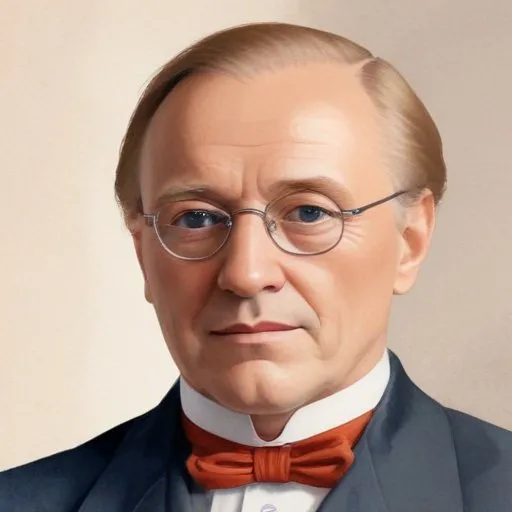
A 17th-century German scholar and critic, renowned for his meticulous editing and commentary on classical texts, particularly Roman poetry and drama.
Johann Friedrich Gronovius, a German classical scholar, librarian, and critic, left an indelible mark on the world of classical studies. Known for his meticulous editing and annotation of ancient texts, Gronovius was a master of his craft, producing works that would shape the field for generations to come.
Born on September 8, 1611, in Hamburg, Germany, Gronovius embarked on a journey of academic excellence, studying at various universities and traveling extensively throughout England, France, and Italy. This exposure to diverse academic environments and cultural landscapes would later inform his approach to classical scholarship.
In 1643, Gronovius was appointed professor of rhetoric and history at Deventer, a position that marked the beginning of his illustrious academic career. Fifteen years later, he assumed the Greek chair at Leiden University, where he would remain until his passing in 1671. During his tenure, he succeeded Antonius Thysius the Younger as the sixth Librarian of Leiden University, a testament to his growing reputation as a scholar and administrator.
Gronovius's editorial prowess is evident in his annotated editions of celebrated ancient authors, including Statius, Plautus, Livy, Tacitus, Aulus Gellius, and Seneca's tragedies. His Commentarius de sestertiis (1643) and edition of Hugo Grotius's De jure belli et pacis (1660) are notable examples of his dedication to scholarship. His Observationes contain a collection of brilliant emendations, showcasing his remarkable attention to detail and critical thinking.
Gronovius's son, Jakob Gronovius, followed in his father's footsteps, becoming a classical scholar in his own right. The elder Gronovius's legacy extends beyond his family, however, as his works continue to influence classical scholarship to this day. His meticulous approach to editing and annotation has set a high standard for subsequent generations of scholars.
Gronovius's contributions to classical scholarship have had a lasting impact on our understanding of ancient cultures and their contributions to modern society. His works have inspired generations of scholars, fostering a deeper appreciation for the classical heritage that underpins Western civilization.
In an era marked by intellectual curiosity and a thirst for knowledge, Gronovius's dedication to classical scholarship stands as a testament to the power of human ingenuity and perseverance. His legacy serves as a reminder of the importance of preserving and transmitting cultural knowledge, ensuring that the heritage of antiquity continues to enrich our lives.
Born in 1662
A renowned classical scholar and theologian who made significant contributions to the field of biblical criticism and was a master of ancient Greek, editing and commenting on the works of famous authors like Homer and Milton.
Born in 1646
Developed calculus independently of Isaac Newton, and made major contributions to the fields of philosophy, politics, and history.
Born in 1668
A 17th-century scholar and author who wrote extensively on literature, philosophy, and theology, producing influential works that shaped the intellectual landscape of his time.
Born in 1632
A 17th-century Benedictine monk and scholar who pioneered paleography, the study of ancient handwriting, and developed a scientific approach to historical research. He's known for his meticulous work in authenticating medieval manuscripts.
