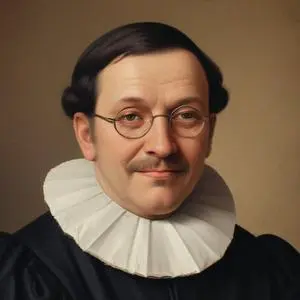
Hugo Grotius: The Father of International Law
A Pioneer in Philosophy, Politics, and Law
Hugo Grotius, a Dutch polymath, is renowned for laying the foundations of international law, a feat that has earned him the title of "Father of International Law." His groundbreaking works, particularly "De jure belli ac pacis" (On the Law of War and Peace) and "Mare Liberum" (The Free Seas), have had a lasting impact on the development of international law, influencing the course of political thought and practice for centuries.
Early Life and Education
Born on April 10, 1583, in Delft, Netherlands, Grotius was a child prodigy who demonstrated exceptional intellectual abilities from an early age. He studied at Leiden University, where he excelled in various subjects, including literature, philosophy, and law.
Major Works and Contributions
Grotius' most notable contributions to international law are:
- De jure belli ac pacis (On the Law of War and Peace): This treatise, dedicated to Louis XIII of France, is considered a foundational text in international law, outlining the principles of just war, sovereignty, and the laws governing warfare.
- Mare Liberum (The Free Seas): In this work, Grotius argued that the seas are free and belong to no nation, a concept that has shaped the development of maritime law and international relations.
Influence on Modern Society
Grotius' ideas have had a profound impact on modern society, shaping the way nations interact with each other and influencing the development of international law and institutions. His concept of natural law, which posits that certain universal principles are inherent in human nature, has influenced the development of human rights and international justice.
Philosophical Contributions and Beliefs
Grotius' philosophical contributions are characterized by his emphasis on natural law, human rights, and the importance of international cooperation. He believed that sovereign nations should be governed by a set of universal principles, rather than force or arbitrary power.
Personal Milestones and Key Life Events
Grotius' life was marked by significant events, including:
- Imprisonment in Loevestein Castle for his involvement in controversies over religious policy in the Dutch Republic
- Escape from prison, hidden in a chest of books, and subsequent exile in France
- Appointment as ambassador to France, where he wrote many of his major works
Legacy and Impact
Grotius' legacy extends far beyond his own lifetime, influencing generations of thinkers, politicians, and jurists. His ideas have shaped the development of international law, human rights, and global politics, earning him a place among the greatest minds in history.
Controversies and Public Perception
Grotius' life and works were not without controversy. His involvement in the controversies over religious policy in the Dutch Republic led to his imprisonment, and his views on sovereignty and natural law were often criticized by his contemporaries.
Quotes and Memorable Sayings
Grotius' writings are peppered with memorable sayings and quotes, including:
- "The law of nations is the law of nature applied to nations."
- "The seas are free, and belong to no nation."
Historical Context and Legacy
Grotius' contributions must be understood within the historical context of the 16th and 17th centuries, a time of great upheaval and transformation in Europe. His ideas have endured, influencing the development of international law and institutions, and continue to shape modern global politics.
FAQ
What were the key contributions of Hugo Grotius to the field of international law?
Hugo Grotius, a Dutch philosopher and jurist, is considered the father of international law. He wrote De Jure Belli ac Pacis, a foundational text that established the principles of international law.
What was Hugo Grotiuss role in the Dutch Revolt?
Hugo Grotius played a significant role in the Dutch Revolt, serving as a lawyer and advisor to the Dutch States-General. He helped to justify the Dutch resistance against Spanish rule.
What were Hugo Grotiuss views on natural law and human rights?
Hugo Grotius believed in the concept of natural law, arguing that certain universal principles governed human behavior. He also advocated for human rights, including the right to life, liberty, and property.
How did Hugo Grotius contribute to the development of Dutch Golden Age?
Hugo Grotius was a key figure in the Dutch Golden Age, promoting intellectual and cultural development in the Netherlands. He encouraged the study of classical literature and philosophy.
What is Hugo Grotiuss legacy in the field of international relations?
Hugo Grotiuss legacy in the field of international relations is marked by his development of international law, his contribution to the concept of human rights, and his role in shaping modern diplomacy. He is remembered as a visionary thinker who shaped the course of international relations.