


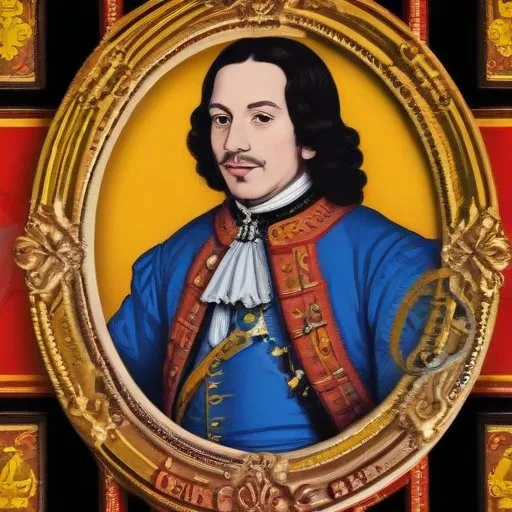
King of France from 1610 to 1643, known for establishing absolute monarchy and centralizing power, shaping modern France's government and politics.
Louis XIII, the 16th-century monarch of France, is often overshadowed by his more illustrious successor, Louis XIV. However, Louis XIII played a pivotal role in shaping the fate of France, earning the nickname "Just" for his fair and impartial rule.
Born on September 27, 1601, Louis XIII was the eldest son of Henry IV and Marie de' Medici. His father's assassination in 1610 propelled the nine-year-old prince to the throne, with his mother serving as regent.
As Louis XIII matured, he began to assert his authority, eventually replacing his mother as the dominant force in French politics. In 1617, he exiled his mother to the Château de Blois, marking the beginning of his solo reign.
Louis XIII's military campaigns expanded French territories, particularly in Europe. He fought against the Huguenots, a Protestant faction, and successfully quelled their rebellion. His diplomatic efforts led to the Treaty of Cherasco (1631), which ended the War of the Mantuan Succession.
A significant aspect of Louis XIII's reign was his collaboration with Cardinal Richelieu, his chief minister. Richelieu's counsel helped the monarch consolidate power, reform the government, and eliminate threats from Protestant nobles. Their partnership earned them the nickname "the Cardinal's pawn."
Louis XIII was a patron of the arts, commissioning works from renowned artists, including Nicolas Poussin and Philippe de Champaigne. The monarch's love for architecture led to the construction of the Palais-Royal and the Louvre's expansion.
Louis XIII's marriage to Anne of Austria produced two sons, including the future Louis XIV. His reign was marked by controversy, including allegations of homosexuality and his supposed affair with the Duke of Orléans. Despite this, Louis XIII's contributions to French history earned him a lasting legacy.
"Il est plus important d'être juste que d'être aimé." ("It is more important to be just than to be loved.") - Louis XIII
Louis XIII's reign bridged the gap between the Renaissance and the Age of Absolutism. His cooperation with Cardinal Richelieu laid the groundwork for the centralized monarchy that would define France for centuries to come.
In comparison to his contemporaries, Louis XIII's reign was marked by relative stability and vision. While England's James I struggled with parliamentary conflicts, Louis XIII consolidated power and expanded France's borders.
Louis XIII's reign, though often overshadowed by his successor's grandeur, played a vital role in shaping France's destiny. His commitment to justice, diplomacy, and the arts has left an indelible mark on French history.
Louis XIII has appeared in various literary and cinematic works, including Alexandre Dumas' The Three Musketeers and the film Vatel (2000), where he was portrayed by French actor Julien Boisselier.
Born in 1585
A powerful and cunning statesman who dominated French politics during the 17th century, known for his ruthless suppression of dissent and centralization of power. He was a master strategist and diplomat who shaped the course of European history.
Born in 1601
The queen who ruled France alongside her son Louis XIV, known as the Sun King, and played a significant role in shaping the country's politics and culture during the 17th century. She was a skilled diplomat and strategist who helped to establish France as a dominant European power.
Born in 1519
King of France from 1547 to 1559, known for his cultural and artistic patronage, and his role in the Italian Wars.
