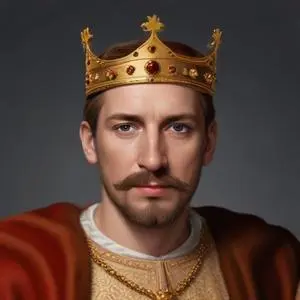
Henry II of France: The King of France and His Lasting Legacy
A King of War and Art
Henry II of France, born on March 31, 1519, is famously known for his reign as the King of France from 1547 until his tragic death in 1559. During his rule, he pursued his father's policies, Francis I, in matters of art, war, and religion, leaving a lasting impact on French history.
A Life of Luxury and Captivity
Born in the royal Château de Saint-Germain-en-Laye, near Paris, Henry was the second son of King Francis I and Claude, Duchess of Brittany. However, his early life was not one of luxury and comfort. Along with his elder brother, Francis, Henry was held captive in Spain for over four years as hostages in exchange for their father. This experience would shape his worldview and influence his future decisions as king.
Persevering in the Italian Wars
As king, Henry continued his father's policies, particularly in the Italian Wars against the Habsburgs. Although the wars drained the French treasury, Henry persevered, hoping to gain control over Italy. The April 1559 Peace of Cateau-Cambrésis, which ended the Italian Wars, resulted in France renouncing its claims in Italy but gaining other territories, including the Pale of Calais and the Three Bishoprics. These acquisitions strengthened French borders and provided greater flexibility in foreign policy.
A Patron of the Arts
Henry was a great patron of the arts, supporting renowned artists and architects. His love for art and architecture led to the construction of magnificent buildings, including the Louvre Palace and the Château de Fontainebleau. His court attracted prominent figures, such as the poet Joachim du Bellay and the musician Josquin des Prez.
A Tragic End
Henry's life was cut short in a jousting tournament held to celebrate the Treaty of Cateau-Cambrésis on June 30, 1559. He was injured in the tournament and died ten days later due to a wound inflicted by Gabriel de Montgomery, the captain of his Scottish Guard. His surgeon, Ambroise Paré, was unable to cure the wound, leading to Henry's untimely death.
A Legacy of Controversy
Although Henry's reign was marked by controversy, he left a lasting legacy. He had four young sons, who would eventually become kings of France, and a widow,
Catherine de' Medici, who would play a significant role in French politics. However, the succession crisis that followed Henry's death, coupled with the unpopularity of Catherine's regency, contributed to the French Wars of Religion between Catholics and Protestants, ultimately leading to the downfall of the House of Valois as France's ruling dynasty.
Philosophical Contributions and Beliefs
Henry's reign was marked by a strong belief in Catholicism, and he actively sought to suppress the Reformation, even as Huguenot numbers were increasing in France. He also sought to promote the arts, recognizing their importance in French culture and identity.
Personal Relationships and Anecdotes
Henry's relationships were often tumultuous, particularly with his wife, Catherine de' Medici. However, he also had a close relationship with his physician and astrologer, Nostradamus, who served him during his reign.
Historical Context and Legacy
Henry II's reign marked a significant turning point in French history, with the end of the Italian Wars and the beginning of the French Wars of Religion. His legacy is complex, with both positive and negative contributions to French society and culture. Despite his flaws, Henry II remains an important figure in French history, remembered for his patronage of the arts and his role in shaping the country's destiny.
Trivia and Fun Facts
- Henry II was known for his love of jousting, which ultimately led to his death.
- He was a strong supporter of the arts, commissioning works from famous artists and architects.
- Henry's court was renowned for its extravagance, with lavish parties and events.
- He was the first French king to be crowned with the new coronation ritual, which included the anointing of the king.
Conclusion
Henry II of France remains a fascinating and complex figure in French history. His reign was marked by controversy, war, and extravagance, but also by a deep love for the arts and a passion for French culture. Despite his flaws, Henry II left a lasting legacy, shaping the course of French history and leaving behind a rich cultural heritage.