


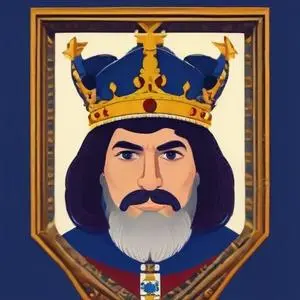
The last Bourbon king of France, ruling from 1824 to 1830, known for his ultra-royalist views and attempts to restore absolute monarchy, leading to the July Revolution.
Charles X of France, also known as Charles Philippe, is renowned for his monarchist ideologies and his brief yet tumultuous reign as the King of France from 1824 to 1830. As the uncle of the uncrowned Louis XVII and younger brother of reigning kings Louis XVI and Louis XVIII, Charles fervently supported the latter in exile, shaping his future as a staunch advocate for absolute monarchy.
Following the Bourbon Restoration in 1814, Charles emerged as the leader of the ultraroyalists, a faction within the French court that upheld the principles of absolute monarchy by divine right. This radical ideology positioned him as a formidable force, opposed to the constitutional monarchy concessions and guarantees of civil liberties granted by the Charter of 1814.
Upon ascending to the throne in 1824, Charles's reign was marked by controversy and unpopularity amongst the liberal factions in France. His coronation in 1825, which attempted to revive the practice of the royal touch, was met with widespread disapproval. The governments appointed under his reign made concessions to former landowners, reimbursing them for the abolition of feudalism at the expense of bondholders, and increased the power of the Catholic Church.
In an effort to divert attention from domestic issues, Charles approved the French conquest of Algeria and forced Haiti to pay a substantial indemnity in exchange for lifting a blockade and recognizing Haitian independence. This move further solidified his reputation as a monarch willing to assert French power at any cost.
Charles's appointment of Prince Jules de Polignac as Prime Minister led to the July Ordinances, which dissolved the Chamber of Deputies, limited franchise, and reinstated press censorship. In response, Paris erupted into urban riots, culminating in the July Revolution of 1830, which ultimately led to his abdication and the election of Louis Philippe I as King of the French.
"I will make no concessions, no sacrifices. I will not reign as a liberal king."
Charles X of France's reign serves as a poignant reminder of the complexities and contradictions of the French monarchy during the 19th century. His unyielding commitment to absolute monarchy ultimately led to his downfall, yet his legacy continues to shape our understanding of the French Revolution and the rise of constitutional monarchy.
Born in 1769
A French military leader who rose to prominence during the French Revolution and became Emperor of France, known for his military conquests and reorganization of Europe. He is also famous for his Napoleonic Code, which remains a foundation of modern law.
Born in 1755
The last queen of France before the French Revolution, known for her extravagance and mismanagement of the French economy, which contributed to the downfall of the monarchy.
Born in 1758
Radical leader of the French Revolution, instrumental in the Reign of Terror, and advocate for the execution of King Louis XVI.
Born in 1759
A leading figure of the French Revolution, instrumental in the overthrow of the monarchy and establishment of the First French Republic, known for his radical Jacobin ideology.
Born in 1755
A key figure in the French Revolution, leading the coup that overthrew Maximilien Robespierre and later serving as a key advisor to Napoleon Bonaparte. He played a crucial role in shaping French politics during a tumultuous period.
Born in 1760
French journalist and politician who sparked the French Revolution with his impassioned speeches and writings, advocating for democracy and social reform.
