


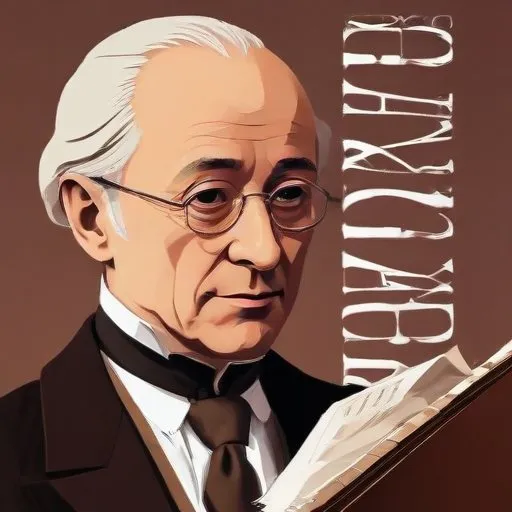
A renowned 18th-century pianist and composer, known for his virtuosic keyboard skills and contributions to the development of Classical-era music.
Johann Gottfried Mthel, a German composer and exceptional keyboard virtuoso, is renowned for being the first to use the term "fortepiano" in a published work, revolutionizing the music world. Alongside C.P.E. Bach, he championed the Sturm und Drang style of composition, leaving an indelible mark on the classical music landscape.
Born on January 17, 1728, in Mlln, Duchy of Lauenburg, Mthel was the fifth of nine children to Christian Caspar, an organist and friend of Georg Philipp Telemann. His father's influence introduced him to music at a tender age, and he later studied with Johann Paul Kunzen in Lbeck.
At just 19 years old, Mthel became a court organist and harpsichordist for Duke Christian Ludwig II of Mecklenburg-Schwerin in Schwerin. In 1750, he was granted leave to study under the great Johann Sebastian Bach in Leipzig, becoming his last pupil. During this time, Mthel notated several of Bach's final works, including parts of the Orgelbchlein. He was also present at Bach's deathbed and took over his duties for nine weeks.
Following Bach's passing, Mthel traveled extensively, meeting notable composers along the way. One of the most significant encounters was with C.P.E. Bach, with whom he maintained a lifelong friendship and correspondence. This connection led to a deeper understanding of the Sturm und Drang style, which became a hallmark of Mthel's compositions.
In 1756, Mthel published his first works in Riga, where he had moved to work as a conductor. Although most of his compositions remained in manuscript during his lifetime, his published works showcased his innovative approach to music. Mthel's legacy lies in his contribution to the development of the fortepiano, as well as his role in shaping the Sturm und Drang style.
Mthel maintained a close relationship with his brother, who eventually replaced him at the ducal court. He also spent time in Riga, where one of his brothers had moved. Despite the challenges he faced, Mthel's passion for music remained unwavering, driving him to continually innovate and create.
Mthel's pioneering work with the fortepiano paved the way for future generations of composers and musicians. His contribution to the Sturm und Drang style also influenced the development of Romantic music. Today, his legacy continues to inspire musicians and musicologists alike.
Born in 1756
A child prodigy and master of classical music, he composed over 600 works, including symphonies, operas, and chamber music, that continue to inspire and influence musicians today.
Born in 1770
A musical genius who expanded the possibilities of classical music, creating iconic symphonies and piano sonatas that continue to inspire and influence generations of artists.
Born in 1714
A renowned 18th-century musician, he was a prolific composer and virtuosic performer, known for his expressive and innovative keyboard music that bridged the Baroque and Classical styles. His compositions, particularly for harpsichord and piano, showcased his mastery of counterpoint and harmony.
Born in 1685
A master of Baroque music, he composed over 1,000 works, including orchestral suites, cantatas, and passions, that still inspire and influence musicians today. His innovative use of counterpoint and harmony raised the bar for classical music.
Born in 1714
A pioneering opera composer who revolutionized the art form with his innovative and expressive works, blending music and drama in a way that captivated audiences.
Born in 1782
A virtuosic violinist and composer who revolutionized the instrument's technical possibilities, leaving an indelible mark on classical music.
Born in 1811
A virtuosic pianist and composer who revolutionized classical music with his technically demanding and emotionally expressive works, blending Hungarian folk influences with Romantic-era drama.
Born in 1810
A Polish pianist and composer renowned for his delicate, expressive, and technically demanding piano music that evokes deep emotions and continues to inspire generations of musicians and music lovers. His nocturnes, waltzes, and preludes are staples of classical music.
