


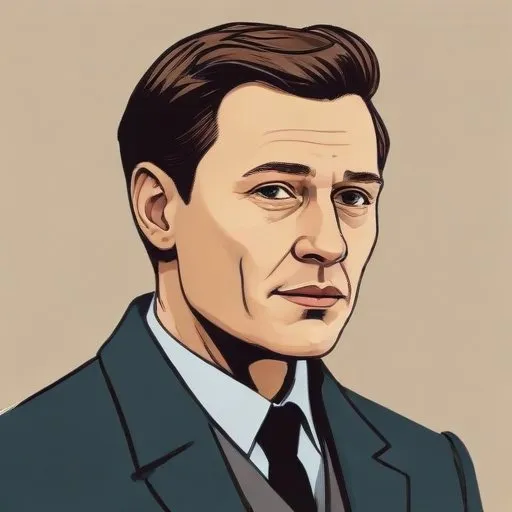
A pioneering Estonian journalist and poet who played a crucial role in promoting Estonian national identity and language through his writings, particularly during the Estonian national awakening period.
Johann Voldemar Jannsen is the renowned Estonian journalist and poet who penned the words to the iconic national anthem, "Mu isamaa, mu õnn ja rõõm". This patriotic song has become an integral part of Estonian identity and culture, and its significance cannot be overstated.
Born on May 4, 1819, in Vändra, Kreis Pernau, Livonia, Russian Empire, Jannsen's early life was marked by a passion for literature and poetry. He went on to become a prominent figure in the Estonian National Awakening, a cultural and literary movement that sought to promote Estonian language and culture.
Jannsen's personal life was also marked by triumph, as he fathered the celebrated poet Lydia Koidula. Her poems and writings would later become an integral part of Estonian literary heritage, carrying on her father's legacy.
In 1869, Jannsen played a pivotal role in organizing the first nationwide Song Festival in Tartu. This event brought together thousands of Estonians from across the country, fostering a sense of national unity and pride. The Song Festival would go on to become a beloved tradition, with Jannsen's anthem at its heart.
Throughout his life, Jannsen worked tirelessly to promote Estonian culture and language. As the leader of the choral society, he helped to preserve and popularize traditional Estonian folk songs. His contributions to the Estonian National Awakening earned him a place in the hearts of his countrymen.
Johann Voldemar Jannsen's legacy extends far beyond his literary works. He played a crucial role in shaping Estonian identity and culture, leaving an indelible mark on the nation's history. His national anthem continues to inspire and unite the Estonian people, a testament to the power of art and literature.
Johann Voldemar Jannsen's life was a testament to the power of art and literature to shape a nation's identity and culture. His legacy continues to inspire and unite the Estonian people, a fitting tribute to a life dedicated to the pursuit of cultural awakening.
"Mu isamaa, mu õnn ja rõõm" - a phrase that has become synonymous with Estonian identity and pride, a reminder of the power of art to unite and inspire.
Johann Voldemar Jannsen passed away on July 1, 1890, but his legacy endures. His contributions to Estonian culture and literature continue to inspire generations, a testament to the impact of his life's work.
Born in 1841
Estonian journalist and politician who advocated for Estonian independence from Russia and was a key figure in the country's struggle for self-governance. He's known for his passionate writings and speeches that inspired a nation.
Born in 1843
Estonian poet and playwright who wrote about love, nature, and social issues, and is considered the founder of Estonian theatre.
Born in 1864
Estonian organist, composer, and conductor who pioneered women's roles in music, particularly in sacred music, and founded the Estonian Composers' Union. Known for her contributions to Estonian musical heritage.
