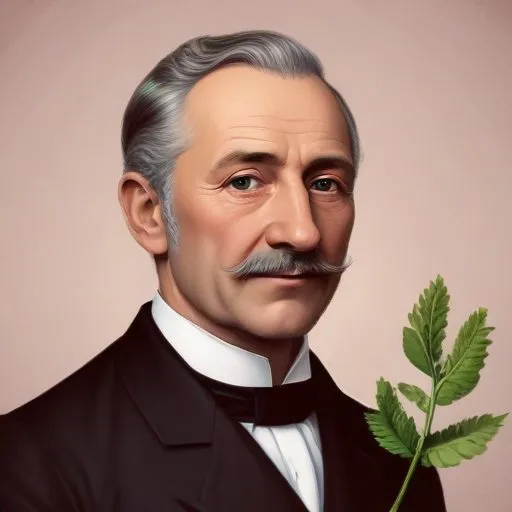
Johann Wilhelm Weinmann: The Apothecary-Botanist Behind a Groundbreaking Florilegium
Johann Wilhelm Weinmann is revered for his monumental creation, the
Phytanthoza iconographia, an eight-volume florilegium that showcases over 1,000 hand-colored engravings of numerous plant species. This magnum opus, published between 1737 and 1745, has inspired subsequent works, including the Japanese medicinal book
Honzo Zufu (1828) by Iwasaki Tsunemasa and
Somokudzusetsu (1856) by Yokusai Iinuma.
Early Life and Career
Born on March 13, 1683, in Gardelegen, Germany, Weinmann was the son of Matthias Christian Weinmann, a barber. Little is known about his early life, but it is recorded that he settled in Regensburg (Ratisbon) in 1710 and worked as an assistant to an apothecary. His business acumen and diligence soon paid off, enabling him to purchase a house and apothecary shop in 1712.
Rise to Prominence
Weinmann's personal life was marked by two marriages: first to Isabella Catharina Frst, the daughter of a wealthy wine merchant, and later to Christine Catharina Pfaffenreuther, the daughter of a town official, after Isabella's passing in 1732. His business ventures flourished, and he successfully turned a bankrupt apothecary shop into a profitable enterprise.
Conflict and Resolution
In 1713, Weinmann's appointment as Hospital Apothecary sparked a protracted dispute with local apothecaries and physicians. The conflict was finally resolved in 1715 with the intervention of the Town Council, which reprimanded Weinmann and instructed his adversaries to cease their provocations.
Public Service and Botanical Pursuits
Undeterred, Weinmann continued to excel in his career, becoming a town councillor in 1722, a commercial assessor in 1725, and a city assessor in 1733. His business success granted him the freedom to pursue his passion for botany, leading to the creation of a botanical garden in Regensburg. He also published the
Catalogus Alphabetico ordine exhibens Pharmaca in 1723 and contributed botanical notes to the
Breslauer Sammlungen.
Legacy and Impact
Weinmann's
Phytanthoza iconographia remains an invaluable resource for botanists and historians, offering a comprehensive representation of plant species in the 18th century. His work has inspired generations of botanists and continues to influence the field of botany.
Timeline of Major Works and Achievements
- 1710: Settled in Regensburg and worked as an apothecary's assistant
- 1712: Purchased a house and apothecary shop
- 1713: Appointed Hospital Apothecary, sparking a dispute with local apothecaries and physicians
- 1715: Dispute resolved with the intervention of the Town Council
- 1722: Became a town councillor
- 1723: Published Catalogus Alphabetico ordine exhibens Pharmaca
- 1725: Became a commercial assessor
- 1732: Married Christine Catharina Pfaffenreuther
- 1733: Became a city assessor
- 1737-1745: Published Phytanthoza iconographia
A Lasting Impact on Botany
Weinmann's life and work serve as a testament to the power of dedication and passion. His groundbreaking florilegium,
Phytanthoza iconographia, continues to inspire and educate botanists, historians, and enthusiasts to this day, solidifying his legacy as a pioneer in the field of botany.
FAQ
What was Johann Wilhelm Weinmanns contribution to botany?
Johann Wilhelm Weinmann made significant contributions to botany, particularly in the field of plant classification and the discovery of new plant species.
What is the significance of Weinmanns book Phytanthoza Iconographia?
Weinmanns book Phytanthoza Iconographia is significant because it provided detailed descriptions and illustrations of plant species, contributing to a greater understanding of plant classification and taxonomy.
How did Weinmanns work influence subsequent botanists?
Weinmanns work influenced subsequent botanists, including Carl Linnaeus, who built upon his discoveries and classifications.
What was Weinmanns approach to plant classification?
Weinmanns approach to plant classification emphasized the use of visual descriptions and illustrations, as well as a focus on the morphology of plant species.
How is Weinmann remembered in the field of botany?
Weinmann is remembered in the field of botany as a pioneering botanist who made significant contributions to our understanding of plant classification and taxonomy.