


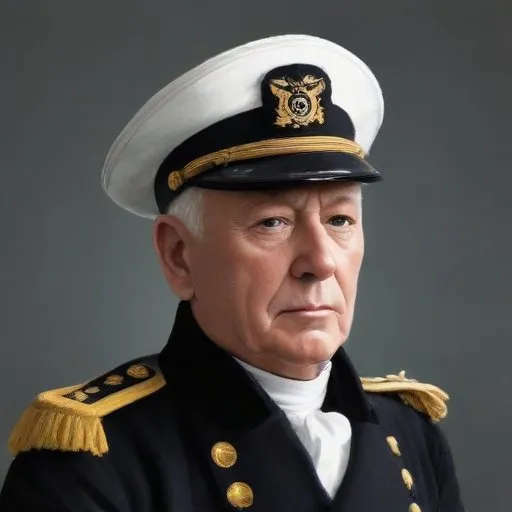
Developed innovative naval artillery and was a pioneer in the development of modern naval warfare, earning the nickname "Father of American Torpedo Warfare."
John A. Dahlgren, a trailblazing United States Navy officer, is renowned for his groundbreaking contributions to the field of ordnance, revolutionizing gunnery and leaving an indelible mark on the U.S. Navy's arsenal. His most notable achievement, the Dahlgren gun, became the standard armament for the U.S. Navy, significantly increasing range and accuracy.
Born on November 13, 1809, in Philadelphia, Pennsylvania, Dahlgren was the son of Bernhard Ulrik Dahlgren, a merchant and Swedish Consul. This marked the beginning of a life dedicated to service and innovation.
Dahlgren joined the United States Navy in 1826 as a midshipman, later becoming an ordnance officer in 1847. During his tenure at the Washington Navy Yard, he established the U.S. Navy's Ordnance Department, which became the nucleus of his innovative endeavors.
Dahlgren's meticulous research and experimentation led to the development of the Dahlgren gun, a cast-iron muzzle-loading cannon. This pioneering invention used gauges to measure pressure differences in the cannon barrel, significantly enhancing range and accuracy. The Dahlgren gun soon became the U.S. Navy's standard armament, solidifying Dahlgren's position as a visionary in the field of ordnance.
In 1863, Dahlgren took command of the South Atlantic Blockading Squadron, playing a crucial role in supporting William Tecumseh Sherman's campaign to secure Savannah, Georgia. Dahlgren's dedication to the U.S. Navy and his contributions to the war effort earned him the rank of rear admiral.
John A. Dahlgren's illustrious career and groundbreaking contributions to the field of ordnance have left a lasting impact on the U.S. Navy and the world of gunnery. His legacy continues to inspire innovation and excellence in the pursuit of military advancements.
Dahlgren's work not only transformed the U.S. Navy's arsenal but also paved the way for future generations of engineers, inventors, and military leaders. His commitment to the development of new technologies and his passion for improving gunnery have made him an icon in the world of ordnance.
Today, Dahlgren's name is synonymous with excellence and innovation, a testament to the enduring impact of his work on the U.S. Navy and the world of military technology.
Born in 1801
Led the Union Navy to several victories during the American Civil War, including the Battle of Mobile Bay, famously declaring "Damn the torpedoes, full speed ahead!"
Born in 1822
Led the Union Army to victory in the Civil War and later became President, known for issuing the Emancipation Proclamation and strengthening federal authority.
Born in 1809
Led the United States through its Civil War and ultimately abolished slavery, leaving a lasting legacy in American history.
Born in 1826
A Union general during the American Civil War, he's infamous for his cautious tactics and disagreements with President Lincoln, later becoming a governor of New Jersey.
Born in 1820
A renowned Union general during the American Civil War, he's infamous for his scorched earth tactics and march through the Confederacy, leaving destruction in his wake.
Born in 1807
A Confederate general during the American Civil War, he surrendered to Sherman, ending the war, and later served as a US Congressman.
Born in 1807
Led the Confederate States Army during the American Civil War, surrendering to Union forces at Appomattox, marking the war's effective end.
Born in 1786
Led the United States Army to victory in the Mexican-American War and was a presidential candidate in 1852, known for his military strategy and leadership.
