


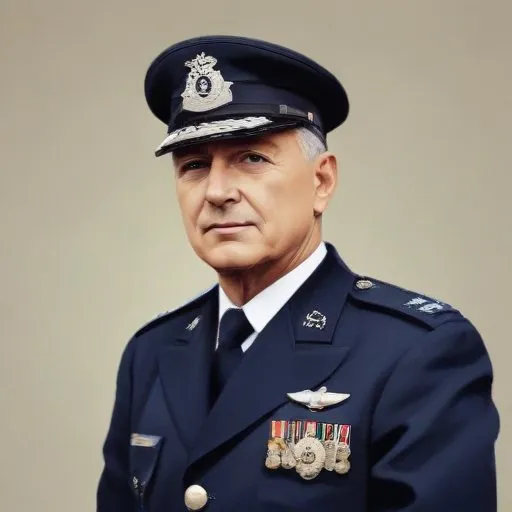
A Royal Air Force commander who played a key role in the Allied victory in World War II, particularly in the Mediterranean and North African theaters. He was also a pioneer in the development of air power strategy.
Air Chief Marshal Sir John Wakeling Baker was a renowned commander in the Royal Air Force (RAF) during the mid-20th century, celebrated for his bravery and leadership skills during World War I and II. He is best known for his gallant service in Waziristan, where he earned the Distinguished Flying Cross in 1925.
Baker's journey in the RAF began in February 1916, when he was commissioned into the Royal Garrison Artillery. Later that year, he transferred to the Royal Flying Corps as a Gunnery Liaison Officer. His exceptional skills and courage earned him the Military Cross in 1918, with a commendation that praised his "conspicuous gallantry and devotion to duty" during low-flying reconnaissance and contact patrols under heavy fire.
In 1924, Baker was appointed a Flight Commander in No. 60 Squadron, where he played a crucial role in Pinks War in Waziristan. His exceptional service during this period led to his appointment as Officer Commanding No. 33 Squadron in 1935. He then joined the Directing Staff at the RAF Staff College in 1939, where he honed his leadership skills and prepared for the upcoming war.
During World War II, Baker served as Deputy Director of Plans at the Air Ministry and later as Director of Bomber Operations from February 1941. His experience and strategic thinking made him an invaluable asset to the RAF. He continued his war service as Senior Air Staff Officer, first at Headquarters, Air Forces in India and then at Southeast Asia Command.
Baker's remarkable career was marked by several honors and awards, including the Distinguished Flying Cross, the Military Cross, and his knighthood in 1953. He retired from the RAF in 1958, leaving behind a legacy of bravery, leadership, and devotion to duty. Air Chief Marshal Sir John Wakeling Baker's contributions to the Royal Air Force continue to inspire generations of airmen and women.
Baker was born on October 23, 1897, and passed away on March 10, 1978. During his lifetime, he was known for his courage, strategic thinking, and exceptional leadership skills, which earned him the respect and admiration of his peers and superiors alike.
80 Years Old
Notorious British serial killer behind the brutal murders of 13 women, mostly sex workers, in the 1970s and 1980s, earning the nickname "The Yorkshire Ripper".
Born in 1905
Britain's last hangman, known for executing over 400 people, including notorious serial killers, during a 25-year career. His unique approach to the role sparked controversy and public fascination.
