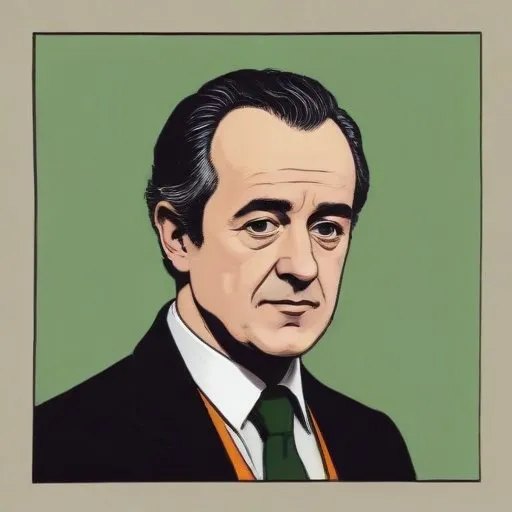
John Banville: The Maestro of Literary Prose
The Heir to Proust's Legacy
John Banville, born on December 8, 1945, is an Irish novelist, short story writer, adapter of dramas, and screenwriter of unparalleled finesse. With a repertoire that boasts a unique blend of lyrical prose, philosophical introspection, and historical depth, Banville has earned himself a reputation as one of the most distinguished literary voices of our time.
A Literary Odyssey
Banville's literary journey began with the publication of his first novel,
Nightspawn, in 1971. This was followed by
Birchwood two years later, which marked the beginning of his exploration of the human condition. The Revolutions Trilogy, comprising
Doctor Copernicus,
Kepler, and
The Newton Letter, cemented his reputation as a master of literary fiction. This trilogy, published between 1976 and 1982, delved into the lives of renowned scientists, weaving a tapestry of historical richness and philosophical inquiry.
The Frames Trilogy and Beyond
The Frames Trilogy, consisting of
The Book of Evidence,
Ghosts, and
Athena, further solidified Banville's standing as a literary giant. This sequence of novels explored the intersection of art, identity, and morality, showcasing his remarkable ability to craft narratives that are at once intimate and expansive. In 2005, his novel
The Sea won the prestigious Booker Prize, a testament to his unwavering commitment to literary excellence.
Creative Duality: The Benjamin Black Persona
Banville's artistic versatility is further underscored by his alter ego, Benjamin Black, under which he publishes crime novels. This pseudonym has given rise to a series of gripping mysteries, featuring the iconic character of Quirke, an Irish pathologist based in Dublin. This dual creative identity has allowed Banville to tap into diverse narrative modes, experimenting with genre and style while maintaining his signature literary flair.
Awards and Accolades
Throughout his illustrious career, Banville has been recognized with numerous awards and honors, including the James Tait Black Memorial Prize, the International Nonino Prize, the
Franz Kafka Prize, the Austrian State Prize for European Literature, and the Prince of Asturias Award for Literature. In 2007, he was elected a Fellow of the Royal Society of Literature, and in 2017, he was conferred the title of Cavaliere of the Ordine della Stella d'Italia, Italy's highest civilian honor.
A Legacy of Literary Excellence
As a contender for the Nobel Prize in Literature, John Banville continues to inspire generations of writers and readers alike. His work serves as a testament to the power of literature to illuminate the human condition, to probe the depths of existence, and to captivate the imagination. Through his writing, Banville has created a profound and lasting impact on modern literature, ensuring his legacy as one of the greatest literary voices of our time.
FAQ
What is John Banvilles writing style known for?
John Banvilles writing style is known for its lyrical prose, complex characters, and philosophical themes. He is often praised for his ability to craft intricate plots and explore the human condition.
What awards has John Banville won for his writing?
John Banville has won several awards for his writing, including the Man Booker Prize for his novel The Sea. He has also been shortlisted for the prize several times and has won numerous other literary awards.
What themes does John Banville explore in his writing?
John Banville explores a range of themes in his writing, including identity, morality, and the human condition. He is particularly interested in exploring the complexities of human relationships and the search for meaning in life.
How does John Banvilles work reflect his Irish heritage?
John Banvilles work reflects his Irish heritage through its exploration of Irish history, culture, and identity. His writing is often infused with Irish mythology and folklore, and he draws on the countrys rich literary tradition.
What is John Banvilles approach to storytelling?
John Banvilles approach to storytelling is characterized by its complexity and nuance. He is known for his use of non-linear narratives and unreliable narrators, which adds depth and complexity to his stories.