


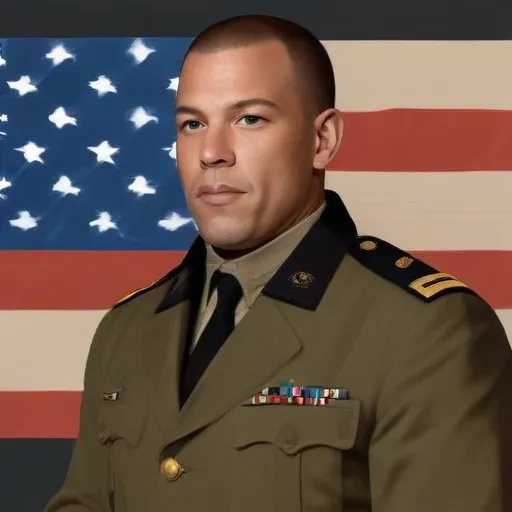
The 11th Governor of Massachusetts, a decorated war hero, and politician who played a significant role in shaping the state's early development. He's most known for his military bravery and governorship during a tumultuous period in American history.
John Brooks, born in 1752, is best known for his remarkable contributions as a doctor, military officer, and politician from Massachusetts. He served as the 11th Governor of Massachusetts from 1816 to 1823, leaving an indelible mark on American history.
Born in Medford, Massachusetts, Brooks was the son of Caleb and Ruth Albree Brooks, local farmers. He pursued his education in the local schools and later studied medicine under Dr. Simon Tufts alongside Benjamin Thompson. In his free time, Brooks engaged in military drills with other local boys, observing the maneuvers of British Army troops stationed in nearby Boston.
When the American Revolutionary War broke out, Brooks, then 22, led his troops in the Battles of Lexington and Concord. He served under George Washington in the New York and New Jersey campaign of 1776, although he missed the Battle of Trenton due to illness. In 1777, Brooks was part of the relief force for the Siege of Fort Stanwix and led a successful assault against British positions in the key Second Battle of Saratoga.
Brooks played a significant role in the 1783 Newburgh Conspiracy, helping to quash ideas of mutiny in the Continental Army. His leadership and diplomatic skills were instrumental in preventing a potentially disastrous outcome.
After the war, Brooks returned to medical practice, but continued to be active in the state militia, helping to put down Shays' Rebellion in 1787. He served in the militia during the War of 1812, after which he was elected governor, becoming a popular and politically moderate leader.
Brooks' governorship personified the Era of Good Feelings that followed the war. He retired in 1823, and died two years later, leaving behind a legacy of military bravery, medical expertise, and political acumen. His contributions to American history are a testament to his dedication to public service and his unwavering commitment to his country.
John Brooks' remarkable life and achievements serve as a testament to his dedication, bravery, and leadership. His contributions to American history continue to inspire and educate generations, cementing his place as an unsung hero of the American Revolution.
Born in 1737
First Governor of Massachusetts, instrumental in American independence and famously signed the Declaration of Independence with a large, bold signature .
Born in 1722
A leading figure in the American Revolution, he played a key role in shaping the country's independence and democracy. He's also famous for his Boston Beer Company, which still brews his namesake beer today.
79 Years Old
A Pulitzer Prize-winning composer, known for blending minimalism with complex rhythms, creating a unique sound that resonates with audiences worldwide.
Born in 1735
This American patriot and artisan is famous for his midnight ride during the American Revolution, warning colonists that the British were coming, and for his iconic engravings, including the Boston Massacre depiction.
Born in 1725
A leading advocate for American independence from Britain, known for his passionate arguments against taxation without representation, inspiring the Boston Patriots and shaping the Revolution.
Born in 1745
The 6th Governor of Massachusetts was a prominent figure in the state's early development, serving from 1800 to 1807 and again from 1812 to 1816, and is known for his strong Federalist policies and leadership during the War of 1812.
Born in 1753
Physician and politician who served as the 12th Governor of Massachusetts, playing a key role in the state's early development and growth. He also fought in the American Revolutionary War.
