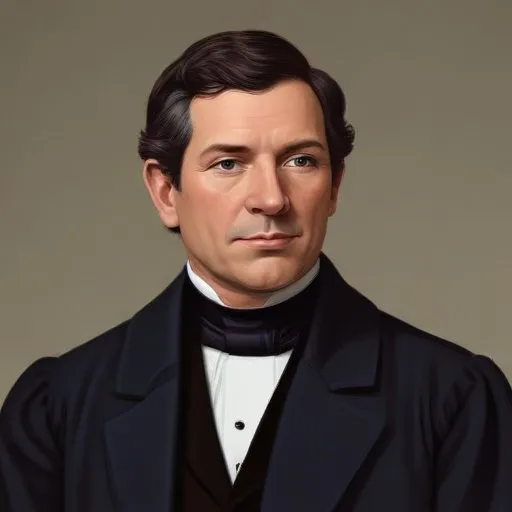
William Eustis

William Eustis

William Eustis was born on June 10th, 1753

Full Name: William Eustis
Place of Birth: Cambridge, Massachusetts
Nationality: American
Occupation: Physician and Politician
Era: War of 1812
Notable: 12th Governor of Massachusetts
Party: Democratic-Republican
Service: United States Secretary of War

Physician and politician who served as the 12th Governor of Massachusetts, playing a key role in the state's early development and growth. He also fought in the American Revolutionary War.

Written by: Sofia Garcia Sofia Garcia

William Eustis: A Diplomat, Doctor, and Statesman of Distinction

A Legacy of Service and Leadership

William Eustis (1753-1825) was a multifaceted American personality, renowned for his remarkable contributions to the fields of medicine, politics, and diplomacy. Throughout his illustrious career, he served as a physician, military surgeon, politician, Secretary of War, Minister to the Netherlands, and Governor of Massachusetts, leaving an indelible mark on the early American landscape.

Early Life and Education

Born on June 10, 1753, in Cambridge, Massachusetts, Eustis was the second surviving son of Dr. Benjamin Eustis, a prominent Boston doctor, and Elizabeth Hill Eustis. He received his education at the Boston Latin School and later graduated from Harvard College in 1772. During his time at Harvard, he was part of the Martimercurian Band, an undergraduate militia unit.

Military Service and Medical Career

Eustis's medical career began under the tutelage of Dr. Joseph Warren, a well-known Patriot political leader. When the American Revolutionary War broke out, Eustis and Warren worked together in the field, tending to the injured revolutionaries. Eustis's military service spanned several years, including his role as a military surgeon during the Battle of Bunker Hill.

Political Career and Diplomatic Service

Eustis's foray into politics began with several terms in the Massachusetts state legislature. He was elected to the United States Congress in 1800, where he served as a moderate Democratic-Republican. Although he lost reelection in 1804, he was appointed Secretary of War by President James Madison in 1809. Unfortunately, his lack of experience in managing the army led to military failures in the early months of the War of 1812, resulting in his resignation. Madison subsequently appointed Eustis as Minister to the Netherlands, a position he held from 1814 to 1818.

Late Life and Governorship

After his diplomatic stint, Eustis returned to politics, serving in Congress once more. He was elected Governor of Massachusetts in 1822, succeeding the long-serving John Brooks. Eustis's tenure as governor was cut short by his death on February 6, 1825.

Legacy and Personal Life

Eustis's Boston mansion, built in the 1750s by royal governor William Shirley, is now known as the Shirley-Eustis House and is a National Historic Landmark. Throughout his life, Eustis was driven by a strong sense of public service and dedication to his country. His legacy is a testament to his unwavering commitment to the American people.
Timeline
1753
Birth of William Eustis
William Eustis was born on June 10, 1753, in Cambridge, Massachusetts Bay Colony.
1772
Graduates from Harvard College
Eustis graduated from Harvard College, where he studied medicine.
1794
Elected to the U.S. Congress
Eustis was elected to the U.S. Congress, where he represented Massachusetts.
1822
Becomes Governor of Massachusetts
Eustis became the 12th Governor of Massachusetts, serving from 1822 to 1823.
1825
Death of William Eustis
William Eustis died on February 6, 1825, in Boston, Massachusetts.
William Eustis

William Eustis Quiz

What was William Eustis's profession before entering politics?

Score: 0/5
FAQ
What was William Eustiss role in American politics?
William Eustis was an American physician and politician who served as the 12th Governor of Massachusetts from 1823 to 1825. He was a strong advocate for public education and infrastructure development.
What were William Eustiss contributions to the field of medicine?
Eustis was a skilled physician who made significant contributions to the field of medicine, particularly in the areas of surgery and epidemiology. He was one of the first American doctors to use ether as an anesthetic.
What was William Eustiss role in the American Revolution?
Eustis served as a surgeon in the Continental Army during the American Revolution, providing medical care to wounded soldiers. He later became a strong advocate for veterans rights and benefits.
What were some of William Eustiss notable achievements as Governor of Massachusetts?
During his time as Governor, Eustis worked to improve the states infrastructure, including the construction of roads, bridges, and canals. He also supported the establishment of public schools and libraries.
How did William Eustiss legacy impact American politics?
Eustiss legacy as a physician, politician, and patriot had a lasting impact on American politics and medicine. He set an important precedent for public service and advocacy for the common good.

Related People:

John Hancock

Born in 1737

First Governor of Massachusetts, instrumental in American independence and famously signed the Declaration of Independence with a large, bold signature .

Samuel Adams

Born in 1722

A leading figure in the American Revolution, he played a key role in shaping the country's independence and democracy. He's also famous for his Boston Beer Company, which still brews his namesake beer today.

John Adams

79 Years Old

A Pulitzer Prize-winning composer, known for blending minimalism with complex rhythms, creating a unique sound that resonates with audiences worldwide.

Thomas Jefferson

Born in 1743

The principal author of the Declaration of Independence and a strong advocate for individual liberties and limited government, shaping America's foundational principles. He oversaw the Louisiana Purchase, doubling the country's territory.

James Madison

Born in 1751

The 4th President of the United States, often referred to as the "Father of the Constitution," played a crucial role in drafting the US Constitution and Bill of Rights, shaping the country's government and laws. He was a strong advocate for individual liberties and limited government power.

James Monroe

Born in 1758

The 5th President of the United States was a skilled military leader and statesman who oversaw the acquisition of Florida from Spain and issued the Monroe Doctrine, a policy of opposing European colonization in the Americas. He is also known for being the last of the Founding Fathers to hold the presidency.

John Quincy Adams

Born in 1767

The 6th President of the United States was a skilled diplomat and leader who played a key role in shaping America's foreign policy and expansion. He's also known for being the son of a president and a president himself, making him part of a unique American political dynasty.

Andrew Jackson

Born in 1767

A fiery leader who expanded democracy and shaped the country's economy, known for his populist policies and controversial decisions, including the forced relocation of Native Americans.