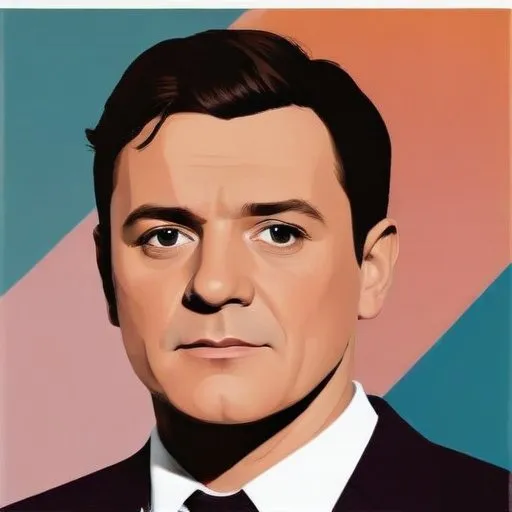
John Brownlee: The Australian Baritone Who Conquered the World's Opera Stages
A Life of Music and Performance
John Brownlee was renowned for his powerful, rich baritone voice, which captivated audiences across the globe. As an Australian operatic baritone, he spent most of his professional career performing in Europe and the United States, leaving an indelible mark on the world of opera.
Early Life and Discovery
Born on January 7, 1900, in Geelong, Victoria, Australia, Brownlee's journey to stardom was far from conventional. As a junior naval cadet in the Royal Australian Navy, he served during World War I, before studying accounting. It was only after entering a singing contest in Ballarat, where he won first prize, that he discovered his true calling. This serendipitous event led to several singing engagements, including a performance of Messiah, which caught the attention of the legendary Nellie Melba.
Training and Debut
Melba's encouragement prompted Brownlee to pursue serious study with Dinh Gilly in Paris. His debut at Covent Garden on June 8, 1926, in La bohème, marked the beginning of an illustrious career. This performance was made all the more significant by Melba's farewell appearance on the same stage.
Rise to Prominence
The autumn of 1926 saw Brownlee engaged by the Paris Opera, a first for a British subject. His Paris debut in 1927 as Thaïs cemented his position as a rising star. He went on to appear in the 1934 film The Private Life of Don Juan, showcasing his talent beyond the opera stage.
Metropolitan Opera and Glyndebourne Festival
On February 17, 1937, Brownlee made his Metropolitan Opera debut in Rigoletto, solidifying his reputation as a master of the opera. He remained a regular performer at the Met, Covent Garden, and the Paris Opera, with his last performance at the Met in March 1957. Brownlee's greatest successes came in the Mozart repertory, particularly at the Glyndebourne Festival, where he shone in productions of Salome and Pelléas et Mélisande.
Beyond Singing
After retiring from singing, Brownlee transitioned to stage direction, making his directorial debut at the Met on November 27, 1958, with a production of Die Fledermaus. He also joined the voice faculty of Manhattan School of Music in 1953, eventually becoming the school's second president in 1956, leading a major expansion of the institution.
Legacy
John Brownlee's impact on the world of opera is still felt today. As a singer, director, and educator, he leaves behind a legacy of artistic excellence and dedication to the craft. His remarkable career serves as a testament to the power of perseverance and passion, inspiring generations of artists to come.
- "The voice is a divine instrument, and it is our duty to use it to elevate humanity." - John Brownlee
Timeline of Major Events
- 1900: Born on January 7 in Geelong, Victoria, Australia
- 1926: Debut at Covent Garden in La bohème
- 1927: Paris debut as Thaïs
- 1934: Appeared in the film The Private Life of Don Juan
- 1937: Metropolitan Opera debut in Rigoletto
- 1943: Starred as The Vagabond King at New York's Shubert Theater
- 1953: Joined the voice faculty of Manhattan School of Music
- 1956: Became president of Manhattan School of Music
- 1957: Last performance at the Met
- 1958: Made directorial debut at the Met with Die Fledermaus
- 1969: Passed away on January 10
FAQ
What are the early life and career of John Brownlee?
John Brownlee was born on February 6, 1900, in Geelong, Victoria, Australia. He began his career as a singer and actor in the 1920s, performing in various stage productions and eventually making his way to Londons West End.
What were John Brownlees notable opera performances?
John Brownlee was known for his powerful baritone voice and performed in numerous operas, including Verdis La Traviata, Puccinis La Bohème, and Mozarts Don Giovanni. He was particularly famous for his portrayal of Figaro in The Barber of Seville.
How did John Brownlee contribute to Australian opera?
John Brownlee was a pioneer of opera in Australia, performing with the Australian National Opera and helping to establish it as a prominent cultural institution. He also taught at the New South Wales Conservatorium of Music.
What awards and honors did John Brownlee receive?
John Brownlee was appointed an Officer of the Order of the British Empire (OBE) in 1962 for his services to music. He also received the Queen Elizabeth II Coronation Medal in 1953.
What was John Brownlees legacy in Australian entertainment?
John Brownlees legacy in Australian entertainment is cemented through his contributions to opera and musical theater. He inspired a generation of Australian performers and helped shape the countrys cultural identity.