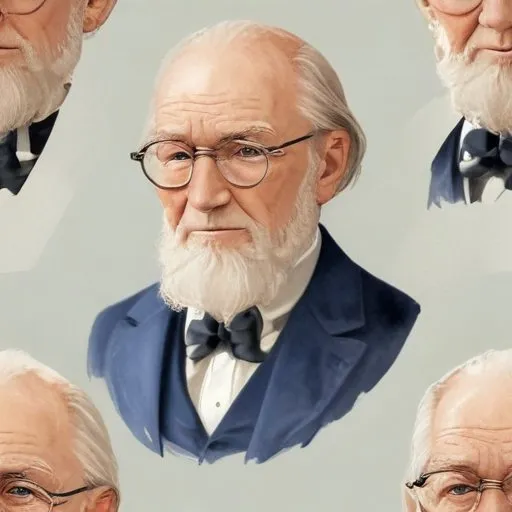
John Burroughs

John Burroughs

John Burroughs was born on April 3rd, 1837

Full Name: John Burroughs
Place of Birth: Roxbury, New York
Occupation: American botanist and author
Notable Work: Wake-Robin
Spouse: Ursula North Burroughs
Children: One son
College: Not attended
Death Date: March 29, 1921

A renowned naturalist and writer who explored the American wilderness, documenting its beauty and importance in numerous essays and books. He's celebrated for his poetic descriptions of nature and advocacy for conservation.

Written by: Oliver Wren Oliver Wren

A Pioneer in Nature Writing

John Burroughs, an American naturalist and nature essayist, is renowned for his lyrical writings that blend scientific observation with poetic flair. His pioneering work in nature writing has inspired generations of naturalists, writers, and environmentalists, cementing his place as a bridge between science and beauty.

Early Life and Influences

Born on April 3, 1837, in the Catskill Mountains of New York, Burroughs was the seventh of ten children to Chauncy and Amy Kelly Burroughs. Growing up on the family farm, he developed a deep affection for nature, which would later become the foundation of his life's work. The return of birds each spring, the songs of frogs, and the buzzing of bumblebees fascinated him, instilling a sense of wonder that would stay with him throughout his life.

The Making of a Literary Naturalist

Burroughs' early interest in learning was discouraged by his father, who believed that the basic education provided by the local school was sufficient. Undeterred, Burroughs left home at 17 to earn funds for college by teaching at a school in Olive, New York. He alternated periods of teaching with study at higher education institutions, including Cooperstown Seminary, until completing his studies in 1856.

A Career Dedicated to Nature Writing

Burroughs' first essay collection, Wake-Robin, was published in 1871, marking the beginning of a lifelong dedication to nature writing. His unique style, which blended scientific observation with literary flair, resonated with the American public. Over the course of his career, he wrote 27 books, including Winter Sunshine (1875), Birds and Bees (1884), and The Light of Day (1900).

Philosophical Contributions and Beliefs

Burroughs' writing was not only a reflection of his love for nature but also an expression of his philosophical beliefs. He believed in the interconnectedness of all living beings and the importance of living in harmony with nature. His work emphasized the need to preserve the natural world, making him a pioneer in the American conservation movement.

Influence on Modern Society

Burroughs' work has had a lasting impact on modern society. He inspired a new generation of nature writers, including Aldo Leopold and Rachel Carson, and played a significant role in shaping the American conservation movement. His writing has also influenced environmental policies, encouraging people to reevaluate their relationship with the natural world.

Personal Milestones and Key Life Events

Legacy and Impact

John Burroughs' work has left an indelible mark on American literature and the conservation movement. His writing continues to inspire people to appreciate the beauty of nature and to take action to protect it. As a literary naturalist, Burroughs bridged the gap between science and beauty, paving the way for future generations of nature writers and environmentalists.
Timeline
1837
Born in New York
John Burroughs was born on April 3, 1837, in New York, to a family of modest means.
1863
Published first book
Burroughs published his first book, Notes on Walt Whitman, which marked the beginning of his writing career.
1871
Became a nature writer
Burroughs began to focus on nature writing, publishing articles and books that explored the natural world.
1895
Published Wake-Robin
Burroughs published Wake-Robin, a series of nature essays that became highly popular and established him as a leading nature writer.
1921
Died in New York
John Burroughs died on March 29, 1921, in New York, at the age of 83, leaving behind a legacy as a celebrated nature writer.
John Burroughs

John Burroughs Quiz

What was John Burroughs primarily known for?

Score: 0/5
FAQ
What was John Burroughs most famous literary work?
John Burroughs is best known for his nature writing, particularly his book Wake-Robin, which celebrates the natural beauty of the American countryside.
How did John Burroughs love of nature inform his writing?
Burroughs profound appreciation for nature and his lifelong observation of the natural world deeply influenced his writing, which often explored the intersection of humanity and the environment.
What were John Burroughs contributions to American nature writing?
Burroughs was a pioneering figure in American nature writing, inspiring later writers such as Walt Whitman and Aldo Leopold with his lyrical and informative prose.
How did John Burroughs friendship with Walt Whitman shape his literary career?
Burroughs close friendship with Walt Whitman, whom he nicknamed the Good Gray Poet, had a significant impact on his writing style and introduced him to a wider literary circle.
What is John Burroughs legacy in American literary history?
John Burroughs legacy is marked by his innovative and influential nature writing, which has inspired generations of American writers and naturalists.

Related People:

Henry David Thoreau

Born in 1817

A 19th-century thinker who advocated for simple living, civil disobedience, and individualism, inspiring generations to reevaluate their relationship with nature and society.

Ralph Waldo Emerson

Born in 1803

A leading figure in the Transcendentalist movement, he advocated for individualism, self-reliance, and nature-inspired spirituality through his essays and poetry. His ideas continue to influence American thought and culture.

Walt Whitman

Born in 1819

A celebrated poet, essayist, and journalist who revolutionized American literature with his collection "Leaves of Grass", known for his free verse style and celebration of the human spirit.

Emily Dickinson

Born in 1830

A reclusive poet who crafted innovative, enigmatic, and emotionally charged verse that continues to captivate readers with its unique style and profound insights.

Mark Twain

Born in 1835

Witty writer of classics like "The Adventures of Tom Sawyer" and "The Adventures of Huckleberry Finn", known for humor and social commentary.

John Muir

Born in 1838

A pioneering conservationist and writer who advocated for the preservation of America's wilderness and national parks, inspiring generations to appreciate and protect the natural world.

Theodore Roosevelt

Born in 1858

A pioneering leader who championed progressive reforms, trust-busting, and conservation, earning a Nobel Peace Prize for mediating the Russo-Japanese War. He's also famous for his rugged outdoorsmanship and "big stick" diplomacy.

John James Audubon

Born in 1785

A pioneering ornithologist and artist, famous for meticulously illustrating and documenting North American bird species in his iconic book "The Birds of America". His work remains a cornerstone of ornithology and wildlife art.