


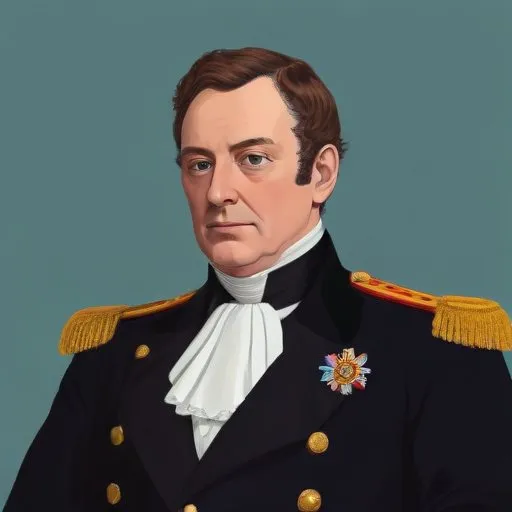
A British naval officer who governed Newfoundland and led expeditions to the Pacific, known for his bravery and navigational skills. He's also the grandfather of Lord Byron, the famous poet.
John Byron, affectionately known as Foul-Weather Jack, was a British Royal Navy officer and explorer who etched his name in the annals of history with his countless encounters with treacherous weather conditions at sea. His remarkable voyages around the world, governorship of Newfoundland, and heroic battles in the Seven Years War and the American Revolution make him a fascinating figure in the realm of maritime history.
Born on November 8, 1723, John Byron was the second son of William Byron, 4th Baron Byron, and Frances Berkeley, daughter of William, 4th Baron Berkeley. He began his educational journey at Westminster School, which would later lay the foundation for his illustrious naval career. At the tender age of 14, Byron joined the Royal Navy, setting sail on his first voyage aboard HMS Romney in 1738-40.
In 1740, Byron embarked on a remarkable journey with George Anson on his voyage around the world as a midshipman aboard one of the several ships in the squadron. However, their adventure took a dramatic turn on May 14, 1741, when HMS Wager, under Captain Cheap, was shipwrecked on the coast of Chile. Byron was one of the lucky survivors, and his determination to return to England led him to split from the group, sailing north along the Spanish colonial coast with Captain Cheap and a party of 19 men.
Following his return to England, Byron's exceptional seamanship and bravery earned him the distinction of being appointed Governor of Newfoundland in 1768, succeeding Hugh Palliser. During his tenure, he demonstrated exceptional leadership and strategic thinking. In 1764-66, he circumnavigated the world as a commodore with his own squadron, further solidifying his reputation as a master mariner.
Byron's military prowess was tested in the Seven Years War and the American Revolution, where he fought valiantly in several battles. His unwavering dedication to the Royal Navy earned him the rank of Vice Admiral of the White before his demise on April 1, 1786.
John Byron's family legacy continued through his grandsons, including the celebrated poet Lord Byron and George Anson Byron, admiral and explorer, who went on to become the 6th and 7th Baron Byron, respectively. Byron's remarkable life, marked by his unyielding spirit and passion for the sea, has inspired generations of sailors, explorers, and historians alike.
John Byron's life and achievements provide a fascinating glimpse into the Golden Age of Sail, a period marked by exploration, discovery, and naval superiority. His contributions to the Royal Navy, his governorship of Newfoundland, and his circumnavigation of the world have left an indelible mark on the annals of maritime history.
As we reflect on the life and times of John Byron, we are reminded of the power of human resilience, determination, and the unwavering pursuit of adventure. His legend continues to inspire us, and his name remains etched in the hearts of those who dare to venture into the unknown.
66 Years Old
A renowned jockey and trainer, he won numerous prestigious races, including the Epsom Derby and St. Leger Stakes, and was known for his exceptional riding skills and innovative training methods.
