


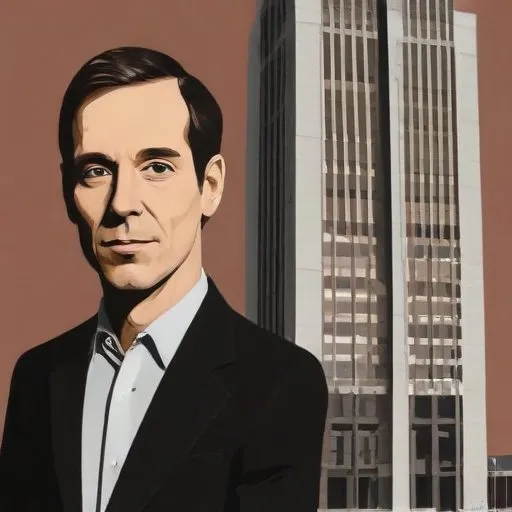
Designed iconic buildings that transformed urban landscapes, blending functionality with futuristic flair. Known for his innovative, large-scale architectural projects that redefined city skylines.
John C. Portman Jr. is renowned for revolutionizing the hospitality industry with his innovative neofuturistic designs, introducing the concept of multistoried interior atria to hotels and office buildings. His visionary approach has left an indelible mark on urban landscapes, particularly in his hometown of Atlanta, where his Peachtree Center complex has served as the city'sbusiness and tourism hub for decades.
Born on December 4, 1924, to John C. Portman Sr. and Edna Rochester Portman, John grew up with a passion for design and architecture. He graduated from the Georgia Institute of Technology in 1950, laying the foundation for a remarkable career that would span over six decades.
Portman's early projects included the Merchandise Mart (now AmericasMart) in downtown Atlanta, completed in 1961. However, it was his pioneering work on the Peachtree Center complex, begun in 1965, that catapulted him to fame. This multiblock development transformed the city's skyline, showcasing his signature symmetrical squares and circles design language.
Portman's most iconic innovation was the introduction of multistoried interior atria to hotels. His first atrium hotel, the Hyatt Regency Atlanta, opened in 1967 and set a new standard for hospitality design. This concept was replicated in subsequent projects, including the Westin Bonaventure Hotel in Los Angeles (1974-1976) and the New York Marriott Marquis (1982-1985).
Portman's influence extended beyond the United States, with notable projects in Asia, such as the Shanghai Centre (1990), featuring the luxurious Portman Ritz-Carlton, Shanghai. His work has been recognized globally, with a major exhibition at the Museum of Design Atlanta in 2009 highlighting his contributions to architecture and design.
Portman's designs were deeply rooted in his personal philosophy, emphasizing the importance of human connection and community. He believed that architecture should foster a sense of unity and belonging, reflecting his own values of harmony and balance.
John C. Portman Jr. passed away on December 29, 2017, leaving behind a legacy of innovation, creativity, and visionary design. His contributions to modern architecture and hospitality continue to inspire new generations of designers, architects, and developers.
Through his remarkable career, Portman has proven that architecture can be both functional and beautiful, transforming urban landscapes and redefining the hospitality experience. As we look to the future, his pioneering spirit and creative genius will remain an enduring testament to the power of human imagination and design excellence.
Born in 1917
A renowned architect who designed iconic buildings that blend modernity with cultural sensitivity, leaving an indelible mark on the urban landscape.
Born in 1867
Visionary architect behind iconic, harmonious structures that blend seamlessly into their surroundings, redefining modern American architecture.
Born in 1887
A pioneer of modern architecture, famous for designing innovative, functional, and visually striking buildings that transformed urban landscapes. His works continue to inspire architects and designers worldwide.
Born in 1886
A pioneering architect who revolutionized modern skyscraper design with sleek, minimalist, and functional buildings that redefined urban landscapes. His iconic creations continue to inspire architects and influence city skylines.
Born in 1910
A Finnish-American architect and furniture designer who created iconic, futuristic structures and designs that blended art and functionality, including the iconic Gateway Arch.
Born in 1892
A pioneering architect who designed iconic buildings that blended seamlessly into their surroundings, revolutionizing modernist architecture with his sleek, functional, and elegant style.
Born in 1883
A pioneer of modernist architecture, he designed iconic buildings that blended functionality with aesthetics, including the John F. Kennedy Federal Building. His work continues to inspire architects and designers today.
Born in 1901
A renowned architect celebrated for designing iconic, modernist buildings that blend functionality with aesthetic appeal, leaving a lasting impact on the world of architecture.
