


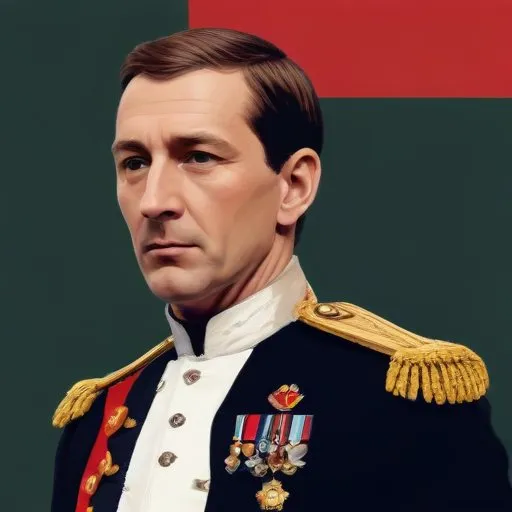
A 17th-century naval commander who fought against the Spanish Armada and later became a privateer, known for his bravery and cunning at sea.
John Cooke, a seasoned officer of the Royal Navy, is best known for his ultimate sacrifice during the Battle of Trafalgar in 1805, where he lost his life in hand-to-hand combat with French forces. His bravery and gallantry on that fateful day earned him a special place in the annals of naval history.
John Cooke was born on 17 February 1762, the second son of Francis Cooke and Margaret, née Baker. The Cooke family, hailing from Devon, had a long history of landownership and shipowning. John's father, Francis, was an Admiralty ledger writer and treasurer of the Greenwich Hospital, and later became a director of the Amicable Society for a Perpetual Assurance Office.
Cooke's naval career began at a young age, and he quickly rose through the ranks. He served during the American War of Independence, the French Revolutionary Wars, and the early years of the Napoleonic Wars. His proficiency and bravery earned him recognition among his peers and superiors, although he never sought to be a prominent society figure.
The Battle of Trafalgar, fought on 21 October 1805, was a turning point in the Napoleonic Wars. During the battle, Cooke's ship, HMS Bellerophon, was badly damaged and boarded by French sailors and marines. In the ensuing melee, Cooke was killed, but his crew fought valiantly and eventually forced the surrender of the French ship, Aigle.
Following Cooke's death, he was honored by his fellow officers and the British public. Memorials were placed in St. Paul's Cathedral and his local church in Wiltshire. These tributes recognized Cooke's bravery, selflessness, and dedication to his country.
Those who knew Cooke described him as a skilled and respected naval officer. He was well-liked by his peers and crew, and his leadership inspired confidence and loyalty. Cooke's ultimate sacrifice will always be remembered as a testament to his courage and devotion to duty.
Cooke's story serves as a reminder of the sacrifices made by naval officers during times of war. His bravery and sacrifice will always be remembered as a beacon of inspiration for future generations.
John Cooke's life may have been cut short, but his heroic actions will always be remembered as a shining example of bravery and dedication to duty.
Born in 1704
An 18th-century naval officer who governed Newfoundland and was court-martialed for failing to engage the enemy, leading to reforms in the British Navy's rules of engagement. He's infamous for being the first British admiral executed for cowardice.
66 Years Old
A renowned jockey and trainer, he won numerous prestigious races, including the Epsom Derby and St. Leger Stakes, and was known for his exceptional riding skills and innovative training methods.
